Tag Archives: ixd

The Great Touchscreen Con Job

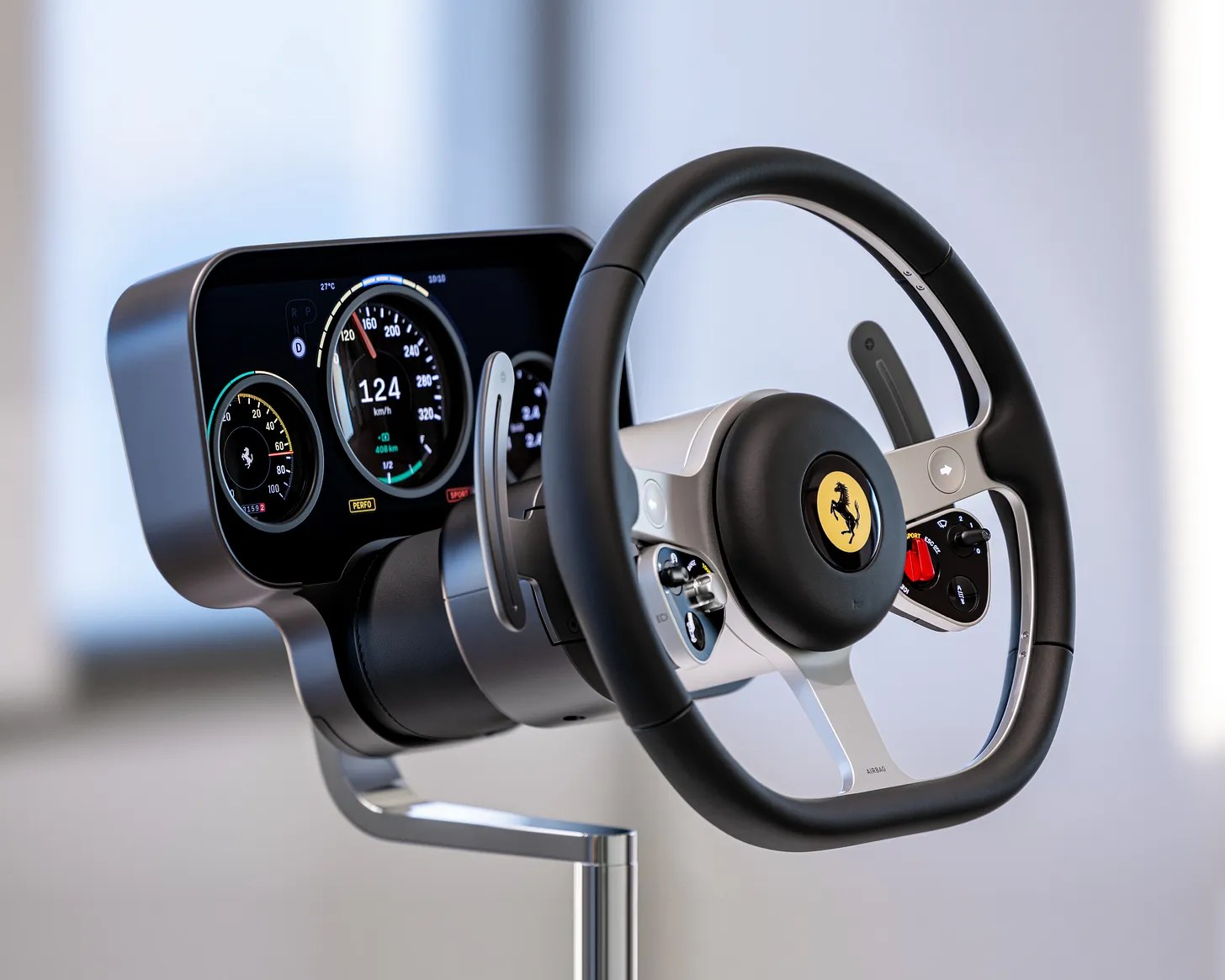
Some mistakes happen in a moment. A quick lapse of judgment, an ill-advised decision at 3 a.m., an email sent to Reply All. Others take years, unfolding in slow motion as warning signs are ignored, reasonable objections are silenced, and people in boardrooms nod sagely at their own catastrophic short-sightedness. The mass adoption of touchscreen-only controls in cars falls into the latter category.

Volkswagen has now admitted the error of its ways, vowing that physical buttons are back for good. “We will never, ever make this mistake again,” said their Chief of Design, as if they’d been tricked into it by some mysterious force, rather than actively championing the change.

It raises a bigger question. How did it happen in the first place? How did entire teams of HMI experts, human factors specialists, and UX researchers – people whose literal job is to stop this kind of nonsense – allow it to happen? Were they asleep at the wheel, or were they simply drowned out by design teams infatuated with minimalism and finance teams rubbing their hands at the thought of fewer moving parts?

The answer, of course, is all of the above.

The cult of minimalism, confusing more screens with innovation

At some point in the last decade, car designers decided that buttons were offensive. They cluttered up dashboards. They broke the sainted, uninterrupted lines of modern interior design. Worse, they weren’t futuristic. The ideal was a sleek, unbroken surface, like an iPhone, only larger and more expensive to replace if it b0rked.

This obsession with minimalism went unchecked because it looked fantastic in concept renders. Screens glowing with digital promise, smooth and uninterrupted by the ugliness of function. Never mind that the only reason buttons existed in the first place was that they worked. Never mind that people could reach for a dial without taking their eyes off the road, adjusting the temperature by feel alone, a level of usability that no amount of software updates could replicate.

Rob Tannen, a human-centred design specialist, summed it up recently on LinkedIn: “Fundamentally, the problem with touch-based interfaces is that they aren’t touch-based at all, because they need us to look when using them.” In a moving vehicle, that isn’t just bad design, it’s dangerous.

The significant point here though is that this was not a revelation. UX researchers have known it for years. The car industry had, in fact, already worked this out in the 1980s, which is why it spent decades refining tactile, mechanical controls that allowed drivers to focus on the road and remain at arm’s length. But in their rush to be seen as technologically advanced, OEMs decided to throw that institutional knowledge in the bin.

The accountant’s dream, confusing cost-cutting with innovation

Touchscreens are cheap. They replace dozens of mechanical components with a single panel of glass, a bit of wiring, and some off-the-shelf software. For car manufacturers looking to shave costs wherever possible, it was an irresistible proposition. Instead of painstakingly engineered switches, they could throw everything onto a digital interface and call it an upgrade.

Charles Mauro, a veteran in human factors (HF), called this for what it was: “We only have touch screens in vehicles because such interfaces provide a marketing and sales boost to new cars by lending the impression of ‘high-tech’ and modern feature sets. From HF’s perspective, they remain highly impoverished interfaces.”

In other words, it wasn’t about what was best for the driver. It was about what looked best in a press release.

But removing physical controls isn’t just an inconvenience, it’s actively worse. Simple tasks that once took a split-second, a quick flick of a switch, a half-turn of a dial, became a (painstaking) exercise in menu navigation. Climate control settings buried in submenus. Hazard lights requiring two taps and a prayer. Windscreen wipers accessed through a system designed by someone who apparently lives in the desert (i.e. Tesla).

The real irony? Some of the most expensive, high-end cars, the ones that supposedly define luxury, ended up with the worst interfaces. A £120,000 SUV with a laggy touchscreen that freezes in winter. A luxury saloon where temperature adjustments require you to gesture-swipe on visuals of air vents. The tech-driven future, they said.

The Silicon Valley delusion

Blame Tesla. When the upstart EV brand introduced its monolithic, screen-heavy interior, traditional carmakers panicked. If Tesla was doing it, surely that was the future?

OEMs, desperate not to look outdated, decided they had to copy the software-defined model. Everything should be digital, infinitely updatable, infinitely customisable. Who needs buttons when you can have a dynamically shifting interface?

This was a critical misunderstanding of why Tesla got away with it. Tesla’s approach worked (to an extent) because the entire car was designed around it. But for traditional manufacturers, retrofitting touchscreen interfaces onto vehicles that had been developed with physical controls made for a UX disaster.

The dream was that everything would be intuitive. The reality was that even basic tasks became a chore. Ford, in an attempt to embrace this brave new world, introduced ever larger screens into its cars. The result, as The Verge put it, was predictable: “Surveys have shown growing customer dissatisfaction with in-car tech, especially touchscreen software. People are overwhelmed, and Ford’s response seems to be to add more screens, which is not a guarantee for success.”

The data problem

There’s a particularly dangerous kind of UX research that looks at how often people use controls and decides that if something isn’t used frequently, it should be buried.

This is how Tesla ended up hiding the wiper controls inside a screen menu. Their reasoning? “People don’t use them often.” A brilliant insight in California, somewhat less so if you live somewhere with rain.

This logic led to cars where drivers had to dig through menus for basic functions. The entire point of a car interface is that when you do need something, it should be immediately accessible and context really, really matters. Nobody wants to enter a submenu for demisters when their windscreen is fogging up at 70mph. Auto Express’s report is well worth a read here

The Return of Sanity

Volkswagen’s public climbdown marks a turning point. Hyundai has followed suit. The backlash has been strong enough that manufacturers are now scrambling to put buttons back in their cars, pretending that they always intended to.

But it wasn’t customer complaints that forced the change. It wasn’t common sense prevailing. It was regulators.

Euro NCAP has mandated that, from 2026, cars will need physical buttons for key functions to qualify for a five-star safety rating. The industry had spent a decade ignoring drivers, but when the threat of lower safety scores loomed, suddenly they rediscovered their enthusiasm for good UX.

Where Do We Go From Here?

The great touchscreen experiment is over. Car interiors are moving back towards hybrid interfaces, a balance of digital and physical that prioritises usability over showroom aesthetics. Manufacturers are rethinking software-defined controls, realising that while over-the-air updates are useful, core functions need permanent, intuitive access.

Most importantly, UX research in automotive needs to be taken seriously again and their voices heard right up the product development and engineering chain. Not just as a box-ticking exercise, but as a genuine guide for what works.

For now, though, it’s a relief to know that the button is making a comeback. It turns out that some of the most futuristic technology in modern cars was there all along.

AI disclosure: Some article research was supported by AI, themes consolidated, article excerpt was AI generated. Article copy entirely author’s own.

Tagged , , , , , , , ,

Amazon’s UX: Why Customers Ignore the Chaos

Amazon’s interface is a mess. Everyone knows it, doesn’t matter if you’re in the industry or you just use it to buy lightbulbs, the odd book and some fancy Tupperware. It’s the digital equivalent of a hoarder’s house, clutter everywhere. A friend of mine once memorably described looking for something as like “rummaging through a warehouse with a torch”, but [she does it because] “I know the bloody thing I want is in there somewhere”. On any given part of the site there’s inexplicable stacks of unrelated items, and a sense that at any moment, something might fall on you. My particular hate are sponsored listings, intruding like pushy sales reps with their irrelevant nonsense while you’re on the way to buy the actual thing you searched for (although sometimes the actual thing turns out to be a not-quite-there copy from some random far-east factory). Genuine customer reviews also get buried under an avalanche of SEO-stuffed nonsense, and yet, dear reader… here I am, ordering 90% of what I buy from Amazon. And you do too.

However frustrating the experience, it isn’t bad enough to drive people away. Fast delivery, sheer product choice, and a checkout process so frictionless it should be flagged with Gamble Aware. All of this outweighs the UX sins.

So, Does UX Even Matter?

It is a question worth asking. If a platform’s core proposition is so compelling, with cheap prices, instant gratification and no meaningful alternative, does the user experience really determine success? Or does it just need to be functional enough?

The Amazon Conundrum

Armchair critics love to dissect Amazon’s UX. In the dark corners of the UGC web, Reddit threads are full of users raging against the chaotic interface. Tech journos lament the aggressive Prime pushing, the pay-to-win search results. On paper, it’s a usability horror show. But let’s be clear, Amazon isn’t neglecting UX. It employs entire teams of UX designers, researchers, and engineers who are constantly refining the experience. Not to make it more elegant, but to make it better at selling things. If adding another sponsored listing increases revenue, they’ll do it. In 2022 alone, Amazon made over $31 billion from its advertising business, largely driven by these placements, making it a core part of their revenue model (Vox). If customers still find something to buy despite the friction, then as far as Amazon is concerned, the system is working just fine. The difficulty we have as UXers is understanding and reconciling this. Because we see ‘Sponsored’ listings trump the actual best-result search listing we say “This is wrong, users hate this!” but somewhere deep in Amazon HQ is the data to say, “You know what, they actually don’t, and here’s some more $” (EcommerceFuel and others provide further context on how Amazon’s sponsored listings work and why they persist). The same logic applies to other blunt instruments like relentless pop-ups (deeply irritating but demonstrably effective at nudging hesitant users into making a decision) and those blinking, anxiety-inducing countdown timers all over that Instagram brand’s shop aren’t there by accident either.

When UX Takes a Back Seat

Of course, Amazon is hardly alone. Plenty of other sites with objectively terrible UX remain dominant because their value proposition is simply stronger than the frustration they cause:

  • Booking.com drowns you in pop-ups and ‘Only 1 left at this price!’ warnings. Yet its vast selection and competitive pricing make it impossible to ignore.
  • British Airways’ website looks and feels like it’s been trapped in 2009, but people still book flights because, they will always believe the brand stands for something British and the pilots are the best trained and most decent in the skies.
  • Vinted The latest upstart eCommerce brand is having a runaway success in the UK but this is absolutely down to the simplified sell-send logistics and payment process, and definitely not to the bloody awful filtering and product exploration UX (seven different ways to filter on Ralph Lauren sweaters anyone?).
  • GP surgery websites, National Rail, car park booking systems, there’s a vast ecosystem of poorly designed necessities that survive because users effectively have no choice or poorly rationalise their value/essentialism.

This phenomenon isn’t anecdotal or lost on UX thinkers. As David C. Wyld argues in The Endless Battle Against Bad UX, poor usability is pervasive in major companies, and fixing it isn’t always a top priority. Similarly, The World is Running on Bad UI (Michal Malewicz) notes how many essential services and platforms operate on clunky, outdated interfaces yet remain functionally irreplaceable. Their insights reinforce the central argument here: bad UX doesn’t necessarily mean bad business.

The Captive Audience Factor

The obvious point here is that there is a difference between platforms like Amazon, where the UX is frustrating but functional, and services where users are stuck with whatever’s available. The difference with Government portals, legacy corporate systems, anything remotely tied to infrastructure is that these things aren’t just designed badly; they are fundamentally unmotivated to improve.

It’s not even a matter of UX being ignored (again, plenty of these organisations are populated by skilled and well-meaning design folks), it’s often a mix of limited budgets, outdated tech stacks, bureaucracy (many hands), and the sheer pain and complexity of rebuilding something that’s been patched together over decades.

The same logic applies to countless internal systems in large organisations, where usability takes a backseat to bureaucratic inertia and legacy technology. Everyone grumbles about it, but change is slow, and innovation rarely prioritises the dull but essential parts of work life. Just as no one is investing to replace the office microwave that’s been there since the turn of the millennium, so we continue to suffer through whatever shitey interface we’re given.

The Reluctance to Overhaul

Could Amazon wholesale overhaul its UX if it wanted to? Technically, yes. But would it be worth it? Probably not. The site is a sprawling ecosystem of millions of products, channels and third-party sellers, advertising deals, and logistics chains. Trying to impose a sleek, minimalist interface would mean unpicking the very mechanics that drive sales at an enormous cost.

The same goes for other massive platforms. The bigger and more layered a system becomes, the harder (read more expensive) it is to rebuild from the ground up. This is exactly the scenario I described in The Local Maximum Problem, where businesses become trapped in cycles of micro-optimisation rather than taking bold steps toward meaningful UX improvements. Businesses, especially ones as enormous and entrenched as Amazon, often optimise for small, short-term gains instead of taking the risk of a complete overhaul. They’ve reached a peak where micro-adjustments keep the machine running, even if they don’t solve fundamental UX flaws. Redesigning from scratch is a leap into the unknown, and when the current setup is still printing money, who would take that risk? Maybe they update a search filter. Maybe they tweak the layout slightly. But the underlying experience remains a Frankenstein’s monster of competing priorities.

So, Does UX Matter?

Yes, but not in the way purists would like to believe. Good UX reduces friction, increases trust, and improves efficiency, but it doesn’t always dictate whether people use a platform. When the value proposition is strong enough, users will tolerate a lot.

The idealistic view is that platforms should improve out of respect for their users. But what do you think? Have you ever abandoned a platform because of its terrible UX, or do you find yourself sticking with frustrating experiences because the value proposition is just too strong? Perhaps if people keep clicking, why fix what isn’t broken?

Tagged , , , , , , , , , , , , ,

Asics Overcomplicates the Runner’s Journey

What’s worse than realising your favourite running shoe has finally given up the ghost? Watching someone else avoid that realisation for 18 months and risk an almost inevitable injury as the shoe disintegrates before our eyes. That someone, in this case, is the mother of my children, and the dearly departed in question is her much-loved, overworked Asics Gel-DS Trainers. Those shoes have put in a hell of a shift. Thousands of kilometres on pavements, parkruns, and everything in between, and she’s been putting off replacing them because Asics, in their infinite wisdom, decided to discontinue them. Ironic, really, considering they now offer what seems like an ever-expanding collection of new models that are aligned to a hundred sub-genres of our sport.

So, armed with determination and a misplaced sense of optimism, I ventured onto the Asics website, thinking, “How hard can it be to find a suitable replacement?” Fool. Absolute fool.

What followed was not so much a straightforward shopping experience as a complex game of hide-and-seek with 100+ models of women’s running shoes. I began narrowing things down: size 5.5—okay, now we’re at 80 options. Neutral pronation—down to 54. Road running—down to 46. Surely, at this point, I’d found a clear path. Instead, I was still faced with an onslaught of variants. The Metaspeed, for example, comes in Edge+ and Sky+ (for stride runners and cadence runners, respectively). Then there’s the Nimbus with a Platinum version, because apparently, even running shoes need luxury trims these days. Add in the Cumulus GTX, Lite-Show, and Noosa Tri, and it quickly started to feel like I’d stumbled into Asics’ fashion line instead of a practical search for neutral road shoes.

The Asics Maze
Even after filtering, I was still staring at something like 46 items. Surely, price could help narrow things down? Not quite. More expensive didn’t necessarily mean better, and so using price as a guide only added to the confusion. Was the extra cost because of space-age tech, or was it just a fancy colourway? No way to tell.

Take the Metaspeed and Superblast—both at the top end of the price range. Are they substantially better than the Gel-Pulse or Magic Speed? It depends on what you’re after. The pro models may have carbon plates and advanced cushioning, but that doesn’t mean they’re always the right choice for someone looking for a lightweight, fast shoe for 10k runs.

In the world of running shoes, price can mean anything—or nothing at all. Sometimes minimal, no-frills shoes can be cheaper simply because they don’t have much in them. Other times, pro-level shoes are expensive for performance reasons. Either way, price is a poor guide to what’s actually suited to you.

The Absurd Complexity of Asics’ Product Strategy
By this point, I was beginning to wonder who Asics had in mind when they designed this labyrinth of choice. Surely, even they must know that offering this many variants doesn’t create more positive choices—it just creates more confusion. I’d managed to reduce my options to 10 models across 16 variants, but there was still no sign of the shoe closest to the Gel-DS Trainer—the GT-2000. Apparently, Asics decided it belongs in the “stability” category, even though it offers nearly the same stability, weight, and cushioning as the Gel-DS. So there it sat, hidden in plain sight.

From a product strategy perspective, this is inefficient at best and counterproductive at worst. Developing, marketing, and maintaining so many similar models must be both expensive and confusing for the customer. Asics are doing a fantastic job of overwhelming the very people they’re trying to help, all while bloating their own production processes.

Fixing the Problem
So, what’s the fix? It’s not rocket science. What they need is a simplified, user-friendly approach that doesn’t leave customers feeling cognitively drained before they’ve even tied their laces.

Let’s start with better filters. The current system is too blunt. Instead of “road” or “neutral,” how about additional more useful filters like “lightweight,” “minimal cushioning,” or “designed for 10k runs”? Filters that speak directly to the practical needs of runners would make the entire process far more intuitive.

And, of course, an AI-powered product recommender would go a long way. Imagine inputting a few key details—distance, surface, weight preferences—and getting a personalised recommendation that actually fits your needs. No more second-guessing whether the Metaspeed Sky+ is right for you or why the GT-2000 doesn’t even show up. Other industries have embraced AI to simplify decision-making, and there’s no reason Asics can’t do the same.

Finally, streamlining the product range. Asics just doesn’t need so many variants of the same shoe. And when you consider they’re competing with the likes of Nike, Adidas, Hoka, and others, all with their multiple model variants chasing the same customer, it makes even less sense. Simplifying their product line would not only help the consumer, but it would also cut their own operational costs. Less clutter, more clarity—it’s a win-win.

In Summary
In the end, trying to replace the Gel-DS Trainer wasn’t just about shoe shopping—it turned into a case study of how not to design a user journey. Asics, with their 100+ models and endless variants, have created a labyrinth that even seasoned runners struggle to navigate. And in doing so, they’ve not only alienated customers but also made their own operations less efficient.

What Asics needs is a return to basics: a simplified product range, a streamlined user experience, and filters and tools that actually reflect the way runners think and shop. Less focus on obscure variants, and more on clear, understandable options that meet practical needs. An AI-powered recommender and better faceted filters are two easy steps to fix this.

Because, let’s face it, nobody should need a flowchart to buy a pair of running shoes. In a world where brands like Asics are meant to help runners perform better, they have forgotten the most basic rule: make the choice simple—and let us make the running bit as hard as we like.

Tagged , , , , ,

Rivian’s Decision to Exclude Apple CarPlay: A Closer Examination

Rivian’s decision to exclude Apple CarPlay from their vehicles is intriguing, especially given the recent advancements unveiled at Apple’s WWDC 2024. As someone deeply invested in human-centred design and automotive innovation, I believe this strategy warrants a closer look.

Apple’s next-generation CarPlay promises unprecedented levels of integration and customisation. The updated system allows for dynamic content, personalised interfaces, and comprehensive vehicle integration, enabling a seamless blend of technology and branding. Manufacturers like Porsche and Aston Martin are already leveraging these capabilities to enhance their user experience, blending their brand identity with advanced, user-friendly technology.

Rivian, however, is not alone in its cautious approach. Mercedes Benz were vocal about it, and General Motors (GM), for example, has decided to phase out both Apple CarPlay and Android Auto in favour of developing its own integrated system using Android Automotive. This move, driven by the desire to maintain greater control over the user experience and address connectivity issues, underscores a broader industry trend towards proprietary solutions.

Rivian’s CEO, RJ Scaringe, has cited potential reliability concerns as a significant factor in their decision. This is a valid issue faced by other automakers, such as GM, who have experienced connectivity problems with CarPlay and off-board Android Auto. Unreliable connections can disrupt critical vehicle functions, which poses safety risks if, for example, the speedometer or other essential displays fail. Critics argue that CarPlay provides a level of familiarity and seamless integration that proprietary systems cannot match. The tight integration of personal data and functions (contacts, smart home, music, map locations) I use hourly on my phone with in-car systems is invaluable. My CarPlay interface knows far more about my life and responds accordingly than my OEM onboard system, which learns only about my journeys and some of my entertainment choices. Connecting all of this once rather than logging into each different third-party service makes far more sense. This aspect of familiarity is often underplayed in discussions about in-car technology.

Apple’s next-generation CarPlay includes features like dynamic content, personalised interfaces, and comprehensive vehicle integration. These capabilities allow automakers to maintain their brand identity while offering users a familiar and highly functional interface. It’s perhaps a sign of the role of the human interface in luxury experiences that the early adopters are the prestige automakers, Porsche, and Aston Martin, who have committed to integrating this advanced system in their vehicles, recognising the value it adds to the user experience.

Critics of Rivian’s decision, like those at The Autopian, argue that the benefits of CarPlay, including user satisfaction and brand loyalty, far outweigh the potential drawbacks. Many drivers are already accustomed to the seamless integration that CarPlay offers, and removing this feature could alienate a significant portion of potential buyers. TechRadar suggests that Rivian’s stated reasons might omit more strategic motivations, such as the desire to keep users within their own ecosystem to control the data and user experience more tightly. This strategic choice might be more about control and data than purely about user experience or technical concerns.

A more critical view highlights concerns about reliability and antitrust issues. For instance, if CarPlay were to take over critical displays and experience a connectivity issue, it could leave drivers without access to essential information like speed or fuel levels. This is a legitimate concern shared by other automakers and regulatory bodies.

Adding to the discussion, many OEMs have struggled with integrating voice assistants like Siri effectively. The experience with in-car voice assistants remains patchy, often falling short of the seamless interaction users expect from their smartphones. This inconsistency can detract from the overall user experience, making a strong case for the integration of well-established systems like CarPlay, which many users find more reliable and intuitive​​​​.

Moreover, the move towards removing physical buttons in favour of touchscreens for controls like HVAC systems has been widely criticised. While touchscreens offer a sleek, modern look, they can be less intuitive and more distracting to use while driving. Physical buttons provide tactile feedback and can be operated without looking away from the road, which enhances safety. The combination of these elements—voice command reliability and the usability of physical controls—are essential considerations in the design of a user-friendly automotive interface​​​​.

As someone who values both innovation and practicality, I see the potential for Rivian to enhance their user experience by integrating Apple’s advanced CarPlay features. It’s about finding a middle ground that respects both innovation and the unique identity of their vehicles. The familiarity and seamless integration that CarPlay offers are invaluable, yet I also appreciate the reliability and specialised knowledge that OEMs bring to in-car systems, especially in challenging environments or when wireless connections are unreliable.

In a rapidly evolving automotive landscape, the ultimate goal remains clear: delivering an intuitive, cohesive, and enjoyable driving experience. By keeping an open mind towards such integrations, Rivian could enhance its position as a leader in automotive innovation.

Tagged , , , , , , ,

The Liberating Power of Owning Your Failures in Design

Embrace the Unknown to Foster Authenticity, Growth, and Innovation

Confidence and expertise are hallmarks of success in the design world—whether you’re an architect, a UI/UX designer, or a graphic artist. But let’s face it, everyone has gaps in their knowledge and skills. Moreover, in a field that is evolving at a lightning-fast pace, it’s simply impossible to know everything. So, why are we so afraid to admit either that we don’t have all the answers or that the solution we came up with was plain wrong?

I recently came across two compelling articles that made me rethink this attitude of infallibility that we so often chase in our professional lives. The first, from Behavioral Scientist, explored the psychological benefits of admitting when you don’t know something. The second, by Paul Boag on Boagworld, delved into user interface design, highlighting the limitations and common errors even seasoned designers make. It struck me that the fusion of these insights can offer an invaluable lesson for design professionals: Embrace your failures and gaps in knowledge to pave the way for growth, innovation, and a more genuine connection with your audience.

The Psychological Upsides of Saying “I Don’t Know”
Let’s start by looking at the innate human fears of admitting we don’t know something. It’s as if acknowledging our ignorance is tantamount to admitting incompetence which would understandably deemed unacceptable in a professional setting. However, studies show that the opposite may be true and this should be something to acknowledge readily. Recognising the limits of our knowledge can increase our credibility and encourage more cooperative behaviour from others.

Not only does admitting you don’t know help you internally by freeing up cognitive resources that would otherwise be spent on maintaining a façade, but it also positively impacts how others perceive you. Psychologically, it humanises you, making you more relatable and approachable. Additionally, it leaves room for collaboration, inviting others to contribute their knowledge and perspectives.

Applying This Wisdom to the World of Design
Now, let’s tie this back to design. Like many fields, the world of design is filled with unspoken norms and unwritten rules that everyone is supposed to know but no one talks about. Whether you’re presenting at a prestigious design conference or showing your portfolio in a job interview, the pressure to showcase a spotless track record of success can be overwhelming.

However, by taking the bold step of highlighting not just your successes but also your failures, you invite conversation, collaboration, and critique. Most importantly, you stand to learn and grow both professionally and personally and, crucially appear human and relatable.

Case Study: the Millennium Bridge
Take, for example, the initial failure of the Millennium Bridge in London, which had to be closed just days after its opening due to swaying. The teams involved have variously acknowledged the collective failure that led to the extensive corrective solution and through the transparent sharing and public analysis of the problem the engineering, architecture and design team helped the community learn valuable lessons about the complex interplay of materials, design, and human behaviour – lessons that no doubt enriched future projects. Their openness about this failure not only humanised the individuals involved but also served as a learning experience for aspiring architects and designers.

Case Study: Me
I have had the task to redesign and rearchitect the navigation of Jaguar and Land Rover‘s website navigation on two occasions and on both attempts, I’ve been unhappy with the outcome. In these instances we variously used analytics to determine the most valuable content, we used heatmaps and click maps. We undertook card-sorting exercises, did desk research and relied on benchmark reports from the likes of Psyma and JD Power. We deployed good designers and UX architects on the job and a copy team. Even so, the end results have felt underwhelming and suffered from inconsistencies across international markets and when viewed on a wider variety of devices (viewports). We got it wrong, twice. We’re pretty sure now we know what we (as a wider team) got wrong and we’re excited about the future versions we’ll be deploying. Part of what I learned in the process has been to trust my gut as an experienced UX architect and the paradox that sometimes too much research, harvested with different agendas and inconsistently interpreted, can significantly muddy the waters.

Owning Your Failures Online
In the age of social media, where a curated image can overshadow the messy, intricate reality of professional life, owning your failures becomes even more crucial. Posting about your design challenges or projects that didn’t go as planned provides a more authentic view of your journey. This transparency not only humanises you but also makes you more relatable to others who are grappling with their own challenges, particularly at the start of their career or when wrestling with imposter syndrome.

Embracing failure and admitting gaps in your knowledge isn’t a weakness; it’s an essential part of growth in the design profession. Acknowledging our limitations fosters a culture of collaboration, innovation, and authenticity. Rather than just flaunting your successes, own your failures as well—they’re valuable learning experiences that contribute to both your personal growth and the broader design community.

To quote the brilliant designer and educator, Paula Scher, “It’s through mistakes that you actually can grow. You have to get bad in order to get good.”

Now, isn’t that liberating?

Tagged , , , ,

Experience design is rocket science

Back in January I posted an assertion that customer service isn’t hard to do. Sometimes I leave people wondering why I get paid a nice salary to pontificate on this stuff as it’s all pretty easy and largely the articulation of common sense. It’s the same argument I used to hear when telling people about the ‘obvious’ results of academic psychology studies. It’s easy to start believing this stuff and even though certain designs and designers are lauded for their pursuit of the obvious, others are called out as snake oil salesmen. Krug‘s done a nice line in books that make it plain how simple this all is.

This week, however I read two important posts. The first being from Harry Brignull, Senior UX at Brighton’s Clearleft. In his posts (slides and notes) he explores the mistakes he and the team made on the way to delivering the successful app experience for The Week. It rang true to read of his frustrations as blindingly obvious interface and navigation elements were wilfully ignored by apparently stupid users. How I nodded along recalling my recent experience with Treejack when my simple and straightforward site architecture for a major British institution was exposed as confusing and muddling one to users in a 500-person remote test. The second post, far more important and sobering, was the analysis of the last moments of Air France flight  447 (Popular Mechanics and Telegraph articles). With the recover of the various voice & data recorders a clearer picture of what happened on the flight deck emerged but, crucially, why the pilots behaved the way they did in the face of apparently obvious warnings and information has proved both incredibly complex and rather contentious.

This is where cognitive psychologists, engineers and really incredibly talented people are earning their crust. Analysing, exploring, experimenting and evaluating the hugely complex elements at work when we interact with systems. Our irrationality and unpredictability are being explored in light hearted ways as we persuasionists are asked to design new campaigns and digital experiences but when these forces work against us in catastrophic ways it causes us to pause and remember our colleagues and peers’ role in solving these riddles.

I might not be designing an error-proofed flight deck any time soon but I think it’s about time I stopped underselling our value quite so much. The work we do is complicated and rewarding, whether it’s saving lives, producing a digital magazine or shifting some more products. One of the final persuaders for me to transition from psychology to HCI was James Reason’s book Human Error and my course under Dr. Phillip Quinlan at York where we explored a variety of complex scenarios leading to catastrophic human error. Understanding the part designers had to play in helping us protect us from ourselves was a strong motivator. The book still sits on my shelf and I would heartily recommend it to anyone in this business.

Tagged , , , , , , ,

Draw Sometimes

Image

News reaches us today that Draw Something, a game I’m not ashamed to say I recently played A LOT, is suffering a sharp decline in usage. Unlike Angry Birds or similar meteorically successful mobile games, Draw Something exploded very quickly, peaking in April and has boomeranged – at least for frequent users – in recent weeks.

The BBC article raises the argument that this might be due to a general drop in appeal but doesn’t really explore what the pathology of this malaise might be. Here, for what they’re worth, are my thoughts:

Connection
One of my biggest bugbears with mobile app developers is their lazy attitude to making their apps work without a connection. Designing and testing an app in a production house with a gigabyte network is great but it’s not the real world. Draw Something is a time-killer app that’s perfect for the train, the tube/metro, planes and so-on – i.e. all the places you can’t get a reliable connection. That Draw Something insists on a connection is an Achilles heel. It wouldn’t be hard to design an offline process where you could complete your drawings and the data is cached to send next time a connection is obtained.

Regionalisation/Regionalization
The game used an American-centric dictionary and American-centric references. Obscure pop artists, minor celebrities and TV shows would regularly appear in the word list and lead to frustration as you’d have no idea who these people or items were – and could be pretty sure your friend wouldn’t know either. Cue using up valuable bombs to get new words. How hard would it be to localise the word database? Even when you did know the word the spelling might be the Yank version … again, easily fixed.

Effort
Roz points out that each game actually takes quite a bit of time. From the viewing of the other player’s guess (even if you skip it) to then watching the other player’s drawing. As an aside, even though there’s fun in seeing the construction of an image, especially when done by an artistically gifted friend, I still want to skip to the end and see the final image  in most cases. If you could just do your guesses and and leave the drawing bit until you have more time, that might make it feel a bit more manageable. There’s no ‘I’ll just have a quick go’ process built in to the sequence.

Inundation
All of those elements add up and As Ben Griffin says, the app was initially easy to manage as you had two or three friends playing. Once it became successful you could find yourself inundated with drawing requests. Compounded by the time it takes to play each game this meant that you are having to administer an ever-growing and impatient list of friends wanting to play. It’s a nagging list that feels like an unmanageable inbox which you, albeit in a mild way, resent and duly avoid.

Whilst I’m confident that Zynga and the team behind it will continue to develop the app and ensure its long-term success (releasing commenting features shows it understands how people use the app – replacing artists writing messages to each other in the first frame), the undeniable failings I describe above do give us pause to reflect what makes a truly engaging mobile game experience that, importantly, can scale with popularity.

In the meantime, take a look at this collection of the most-talked about Draw Something efforts.

Tagged , , , , , , , , ,

smörgåsbord choice cuts (iv)

The usual selection of things I have seen and absorbed in the last few days around the internets.

Innovation
The laundrette that emails you when your clothes are done. Rather obvious idea that makes you wonder 1. why hasn’t someone done it before? 2. who still uses laundrettes?

Social Commentary
Daniel Pink questions what it means for (American) society now that the data shows for the first time that more people aged 25-34 have never been married than are married. He looks at Economics, Culture, Politics and new business opportunities.

Apple
According to Apple Insider (and probably two minutes earlier/later by Mac Rumors), the new Sharp phone has a display that matches the Retina display on the iPhone 4.

UX
One from the ‘No shit, Sherlock‘ school of UX insight. UX Movement alerts us to the news that right-aligned buttons on web forms work best. It suggests that you might use left-aligned buttons on single-page forms because: “it creates a clear and direct path to the button that users can’t miss” but doesn’t sufficiently explain why having it on the right in this instance wouldn’t be just as good. Because right-aligned buttons work best on multiple page/section forms, users have got used to them being on the right – such is the way conventions work. Why swap it around for the single page forms? This sort of article is potentially useful for a real newbie in UX design but it isn’t really telling me anything a lot of comparitive research and common sense wouldn’t. Not to mention the complete ignorance of languages that aren’t read left-to-right.

However, redeeming themselves, there is also a cute post from UX Movement about New York City reverting to Title Case on their signage to improve readability from the previous capitalised approach.

Moleskine
I am generally quite critical of hipster trends but I concede to loving my Moleskine and my Apple portables. This has made a bit of noise this week on the web, but in case (ahem) you missed it: Moleskine case covers for iPad and iPhone incorporating notepads.

Health & Fitness
As someone who has dabbled in dietary supplements (Chrondoitin, Gingko Biloba, Glucosamine, Omega 3) and who lives on a meat-light diet, I am struck by a conflict between believing marketing hype about supplements and knowing the evidence is light. David McCandless & Andy Perkins’ active infographic on Information Is BeautifulSnake Oil?” helps sort the supplements by evidence. Multiple bubbles exist for supplements depending on the number of health benefits associated. Very compelling visual and (amongst an awful lot of info-graphic noise recently) one with a genuine enlightening purpose. I don’t think the concept is new, it was a static graphic before no? but i believe the interactive element is.

Design
37 Signals admit on their blog that their site is much-imitated and that this may be a part of why they attempt a redesign every 6 months. The new look is a bit of a “back to basics” for them. There is a real emphasis on copywriting and on using colour sparingly for highlighting. It was interesting that their summary didn’t mention IA or structure as such – perhaps that is because it is a given in their processes.

A bit of a lightweight piece on Six Revisions about single-page websites. The accompanying text is a little frothy but it is notable for the showcase of attractive examples.

Finally,
As if to underline the point above about frothy analysis, 90 Percent of Everything had a great post earlier this week about why we should return to a little more academic rigour in our sharing of knowledge and testing of hypotheses. It suggests a few approaches including:

:: Returning to primary sources, not relying on second-hand re-telling of material
:: Ensure enough detail is included to allow the test or experience to be reproduced and re-evaluated. This includes sharing all the data.
:: Be honest about shortcomings. There aren’t enough examples of failure shared in the Information Architecture and User Experience community.

The author acknowledges the difficulty in achieving this in commercial and sensitive situations (client confidentiality for example) but it is a welcome piece of advice for us to avoid issuing sanitised soundbites for instant sharing. Very much worth a read and I wholeheartedly concur (even if I am guilty of just this fast food ux snacking on this very blog).

Tagged , , , ,

More choice cuts on the smörgåsbord

I don’t propose that one or even now two swallows can make a summer or that this frisson of activity on the blog will not fade incredibly quickly and my writings will dry up as quickly as they appeared. Like a chalk stream, perhaps.

So, to continue from yesterday, a few more things I have seen, and ting:

1. Flowing Data drew my attention today to a few pertinent images posted on the excellent Historypin site. Historypin simply takes archive photographs and overlays them (sadly without the option to place with the opacity) on Google Street View images from today to place history in context. The selection identified in today’s post draws attention to The Blitz.

2. Something I shared with a client of our who recently rejected the idea of using accordion interaction on forms, Luke Wroblewski’s work with Etre to test the pattern and make some observations. Conclusion, not significant +ve effect on conversion, but equally no significant –ve effect for an identifiable +ve change in the perception of simplicity. Well, that’s how I interpreted it.

3. I read about this visual technique a while ago in the national press but it has been picked up by the curators of the Nudge blog. Norfolk City Council are using funnel planting patterns for trees to create the illusion that drivers are approaching junctions at speed. This technique has been used for years with line-painting on roads but to use the built/grown environment is new. This is a great example of what Dan Lockton calls Design With Intent.

4. In related news, Konigi had a short piece on ‘Dark Patterns’ which is perhaps on the Machiavellian side of behavioural design. These are interaction patterns which intentionally coerce/seduce users into performing actions they would not ‘normally’ have performed. This is work by the enigmatic Harry Brignull which was presented at UX Brighton (2010) and you can follow the entire 30 minute slideshare by visiting his excellent blog.

5. This is worth of a full post at some point, based on some thoughts shared with me by a member of my team, Richard Blair. In the meantime, take a look at PSFKs piece about the effect of the Times paywall on their RSS content. This tears me up. As a Times reader in the offline world I quite like the new online exclusivity a paywall has created and the ad-free experience but I desperately lament the loss of the ability to pour my favourite columnists into my Tabbloid by subscribing to their RSS. I now am forced to the site.

That’s it for today, similar but newer things tomorrow. And possibly a proper ‘comment’ piece later today.

Tagged , , , ,

When a 25 minute form is considered a customer-centred success

It is somewhat inevitable that having spent time working at a major financial services company, my best-fit moving agency-side would be on financial services accounts.

I started at Dare with responsibility for creating delightful and innovative digital experiences with Barclays before a small side-step into Barclaycard and thence, last year, to Standard Life. Throughout this time I have had exposure to countless transactional forms, most of which are understandably onerous to the customers, advisors and others that have to use them.

Often the request is to sex-up such interactions. Crudely, our clients want more Apple and less application. Fundamentally though it doesn’t matter how good a student of Wroblewski you are or how much Tumblr you have channelled, it’s still a mortgage/car insurance/SIPP and not an iPad. It may not be entirely the correct analogy, but it is a touch of ‘lipstick on a pig’.

So it is heartening to see ING direct have a crack at reflecting this in their ad campaign running (at least where I have seen it) on The Tube. Broadly, the message reads that they tried to make the application fun but that wasn’t possible so they made it easy. Easy is then reinforced by the assertion that it only takes 25 minutes to complete.

That’s right, twenty five minutes. And that is deemed to be a promotable statement. I would not be happy if I were the CEO of WordPress if we were going to our customers and saying that blogs could be setup in 25 minutes, and blogs can be complex, configurable things. Who in their right mind thinks a 25 minute transactional experience is great?

I don’t blame the IA here, I blame the Financial Services Authority (FSA) and organisational structures that fail to sufficiently-challenge the arcane rules and regulations around such customer-facing forms.

Time and time again work is stymied by regulations on type size, concealment of information and the mindless mantra of ‘clear, fair and not misleading’.

If behavioural theory has taught us anything it is that showing customers all the information they could possibly need to make the decision can never be unequivocally fair and unbiased. In the real world, such an approach leads only to bafflement, confusion and a sense of being overwhelmed. It’s drinking from a firehose. Experience designers have known about this for decades and use progressive disclosure and choice architecture as a strategies for helping and nudging people down a path. Show this to a compliance bod and instantly the fear of an FSA slap for non-disclosure or assumptive selling makes the red ink pour forth.

The IA (who ultimately represents the customer) has no right of reply. Such decisions are largely non-negotiable. Even, dear reader, in the event that we use video footage from user testing where customers bumble and stumble over needlessly complex choices or exasperatedly slump at the sight of swathes of small-print, none of this melts the ice. Rules supposedly there to protect the consumer are, invariably, confounding them.

In such a rigid culture of blind compliance, forms will continue to take 30 minutes to complete. Forms will continue to demonstrate a paralysing paradox of choice. Forms will continue to lead consumers into completing incorrect or inappropriate responses leading them poorly served and out-of-pocket.

In my experience no-one at the major organisations lobbies the FSA for change and no-one at the FSA shows any acknowledgement of the advances in digital interaction and behavioural theory. Both organisations are still heavily influenced by the paper application form and the advised ‘expert ‘ sale via a middleman. Understand this: in a post Retail Distribution Review (RDR) world, the rise of direct to consumer sales will be significant and if financial service companies want to feel more Apple, then they have to think and act with a fundamentally user-centred perspective from product development (including actuarial) and throughout distribution, marketing and customer service.

Perhaps a theoretical example might help. People buy investment products to achieve a certain growth in their wealth. Investment products with higher growth potential tend to be higher risk investments. The safer products (a more guaranteed return) will suit someone with a more cautious attitude to risk. To understand what your attitude to risk is, you can complete a series of straightforward questions. However, try and make a link between the two, such as “you have a cautious approach to savings, you are best suited to investment product A” and that is classed as advice and you cannot do that online. Despite it being helpful to do so. you can only infer, so you might say “Our results suggest you are cautious in your approach to risk. We have products which range from cautious to speculative in terms of risk. Here they are.”

It is laughable. Never mind getting them it to drink it, you can’t even lead this metaphorical horse to water, merely suggest that there might be water in the general vicinity.

I have looked-at and proposed solutions that effectively take a Starbucks coffee at home approach to guiding users toward a suitable financial product. I have considered and suggested that we recommend a product but do not exclude exposure to other nearly-suitable products. I have used FSA-approved approaches to risk questionnaires and terminology but the simple fact remains that a human following a script can advise on the phone or in a face-to-face meeting, but online it is unacceptable.

I would be interested to hear of anyone in the financial services industry, client-side or at the FSA that has heard-of any consultation and user-experience research on the online-advised sales process. Or any kind of dialogue that encourages exploration of consumer psychology to counter the anachronistic approach of this moribund Authority. As the industry comes under the watch of the nascent Consumer Protection and Markets Authority I sincerely hope that the digital post-RDR consumer is given much better consideration.

IMPORTANT NOTE: These views are my own. Neither do they represent Dare‘s opinion nor are they intended as a criticism of any clients past or present. This post must be considered as standalone comment on the financial services industry en masse.

Tagged , ,