Tag Archives: ux

Draw Sometimes

Image

News reaches us today that Draw Something, a game I’m not ashamed to say I recently played A LOT, is suffering a sharp decline in usage. Unlike Angry Birds or similar meteorically successful mobile games, Draw Something exploded very quickly, peaking in April and has boomeranged – at least for frequent users – in recent weeks.

The BBC article raises the argument that this might be due to a general drop in appeal but doesn’t really explore what the pathology of this malaise might be. Here, for what they’re worth, are my thoughts:

Connection
One of my biggest bugbears with mobile app developers is their lazy attitude to making their apps work without a connection. Designing and testing an app in a production house with a gigabyte network is great but it’s not the real world. Draw Something is a time-killer app that’s perfect for the train, the tube/metro, planes and so-on – i.e. all the places you can’t get a reliable connection. That Draw Something insists on a connection is an Achilles heel. It wouldn’t be hard to design an offline process where you could complete your drawings and the data is cached to send next time a connection is obtained.

Regionalisation/Regionalization
The game used an American-centric dictionary and American-centric references. Obscure pop artists, minor celebrities and TV shows would regularly appear in the word list and lead to frustration as you’d have no idea who these people or items were – and could be pretty sure your friend wouldn’t know either. Cue using up valuable bombs to get new words. How hard would it be to localise the word database? Even when you did know the word the spelling might be the Yank version … again, easily fixed.

Effort
Roz points out that each game actually takes quite a bit of time. From the viewing of the other player’s guess (even if you skip it) to then watching the other player’s drawing. As an aside, even though there’s fun in seeing the construction of an image, especially when done by an artistically gifted friend, I still want to skip to the end and see the final image  in most cases. If you could just do your guesses and and leave the drawing bit until you have more time, that might make it feel a bit more manageable. There’s no ‘I’ll just have a quick go’ process built in to the sequence.

Inundation
All of those elements add up and As Ben Griffin says, the app was initially easy to manage as you had two or three friends playing. Once it became successful you could find yourself inundated with drawing requests. Compounded by the time it takes to play each game this meant that you are having to administer an ever-growing and impatient list of friends wanting to play. It’s a nagging list that feels like an unmanageable inbox which you, albeit in a mild way, resent and duly avoid.

Whilst I’m confident that Zynga and the team behind it will continue to develop the app and ensure its long-term success (releasing commenting features shows it understands how people use the app – replacing artists writing messages to each other in the first frame), the undeniable failings I describe above do give us pause to reflect what makes a truly engaging mobile game experience that, importantly, can scale with popularity.

In the meantime, take a look at this collection of the most-talked about Draw Something efforts.

Tagged , , , , , , , , ,

Seduction & Persuasion

A seductive look from French actress Audrey Tautou

This week I had the pleasure of presenting to our Planning department at Dare and, whilst it’s not a new topic to many readers of this blog, it’s certainly rather popular – in fact, one could say this tool is sine qua non to the kit-bag of any Experience or Strategic planner in the advertising industry. And so it came to pass that I spent 45 minutes talking about seduction.

Firstly I’d like to express my thanks to Stephen P. Anderson without whom much of this presentation would not have existed. It was inspired and informed by his excellent book Seductive Interaction Design which is currently trading at an excellent price on Amazon in paperback & Kindle editions.

I presented not in terms of rules or mere anecdotes but tried to provide practical examples of where we have been and could be seduced into acting on – and this is important – hitherto-unexplored motivations. I chunked the slides into a series of moments in our encounters:

Aesthetics
From the utilitarian beauty of Google and Craigslist, to the the viscocity of the Apple iOS and taking in examples such as the role of female faces in encouraging ‘LiveChat’ encounters, I hope my audience could see the value in paying attention to what our experiences look like and what this says about our brands and the memories users take with them.

Tease
The ‘Stop Looking at my bottom‘ line on Innocent smoothies was a good example of being playful in seducing people, I’m sure there are plenty of quirky examples of this sort of stuff digitally. Sadly many of these are Error 404 pages that – if we’re good our jobs – our users shouldn’t see very often. After writing the presentation I came across this great example of copy on an Ocado email which represents a playful tease. Then there’s more obvious playful activities like the randomising functions you find on Wikipedia, Google’s Lucky button and so-on. Though few will ever beat Ben Fold’s Ode to Merton chat roulette.

I always like the anecdote that Apple had to make their random function on the iPod less random in order for it to feel more random.

“As humans, when we come across random clusters we naturally superimpose a pattern. We instinctively project an order on the chaos. It’s part of our psychological make-up. For example, when the iPod first came out and people started to use the shuffle feature, which plays songs in a random order, many people complained that it didn’t work. They said that too often songs from the same album, or the same artist, came up one after another. Yet that’s what randomness does – it creates counter-intuitively dense clusters.

‘We’re making it (the shuffle) less random to make it feel more random’: Apple CEO Steve Jobs changed the feature on the iPod after complaints from users In response to complaints from users, Jobs changed the programming behind the feature: ‘We’re making it (the shuffle) less random to make it feel more random.’  In other words, each new song now has to be significantly different from what came before, so as to conform to our expectation of randomness. Which isn’t really random at all.” – Alex Bellos

Then it was nice chance to show how figuring out and being stimulated by patterns can create compelling interfaces – which clearly meant reminding people of my award-winning work with Stefanie Posavec on myFry. I talk a lot about intentional friction when reminding people that user-centred design isn’t always about simplicity. After all, we all love a good poka-yoke, and so a bit of mystery like the Hot Wheels mystery car or the don’t open reward envelope is another example of intentionally making life (achievably) difficult in order to deepen the sense of engagement.

I closed this section by talking about how Cityville and Good Reads are great examples of interactions that allow users to play and be themselves, expressing themselves and their creativity. Cityville is a much bigger topic in terms of (eugh I hate this term) gamification which I didn’t have time to go into.

Subtleties
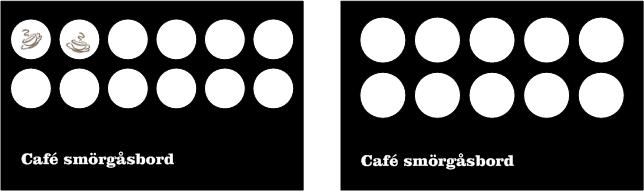
As Stephen points out, it’s all well and good talking about CityVille  and Innocent and seeing how fun brands can apply such approaches but what about when you’re dealing with a major financial services provider? It’s important to demonstrate that you don’t need to change the copy throughout your site or develop a game but rather just look at the little moments that make a difference in terms of perception and play to our existing biases. The classic Leventhal, Singer & Jones (1965) study at Yale led me in to showing two coffee loyalty cards for Cafe Gibbo. Both needed 10 stamps to achieve a free cup but one had the first two (of 12) stamped whilst the other was simply 10 blank circles. I asked the group to think about the behaviour that might result if the former card was stamped in front of you by a staff member who looked like they were doing you a favour whether that sense of reciprocity would be a sufficient nudge to you continuing to use that card. Perhaps it would. Pointing out that our decisions are not always economically perfect (both cards had the same economic effort to complete them) was important in establishing our irrationality.
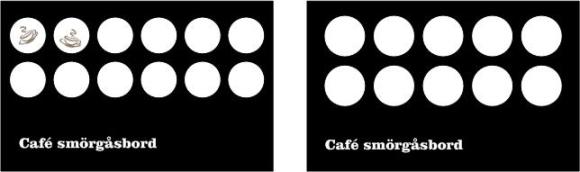
Two coffee loyalty cards showing one with two circles of 12 complete, the other with all ten blank

Which would you be more likely to complete?

Of course this kind of stuff is nothing new to people in the hospitality industry; salting (or seeding) the tip jar, applying choice architecture to restaurant menus, this kind of thing shows the history of the real world application of persuasive techniques. techniques we consumers readily accept as fair game. In restaurants it might even be as minor as putting a glass seeded with an empty monkey nut shell next to the dish of unopened kernels to suggest where to put one’s wasteOn the web we see the value of order bias in the fact that Google and SEO companies makes a living from people clicking the first thing they see on the search results page and that having something visually promoted has a powerful effect.

Here I showed our own bit of choice architecture where we reduced the overwhelming choice offered by Standard Life’s Investment ISA to present 5 ‘bundled’ simple choice offers on the application form. Option one is to take one of these pre-packaged solutions, Option two [the ‘experts’ choice] was to select from a supermarket of funds. Not only did we hierarchically structure the page to promote the path of least resistance, but we used strong visuals and human-centred introspective copy: “Comfortable choosing from a wider range?”.
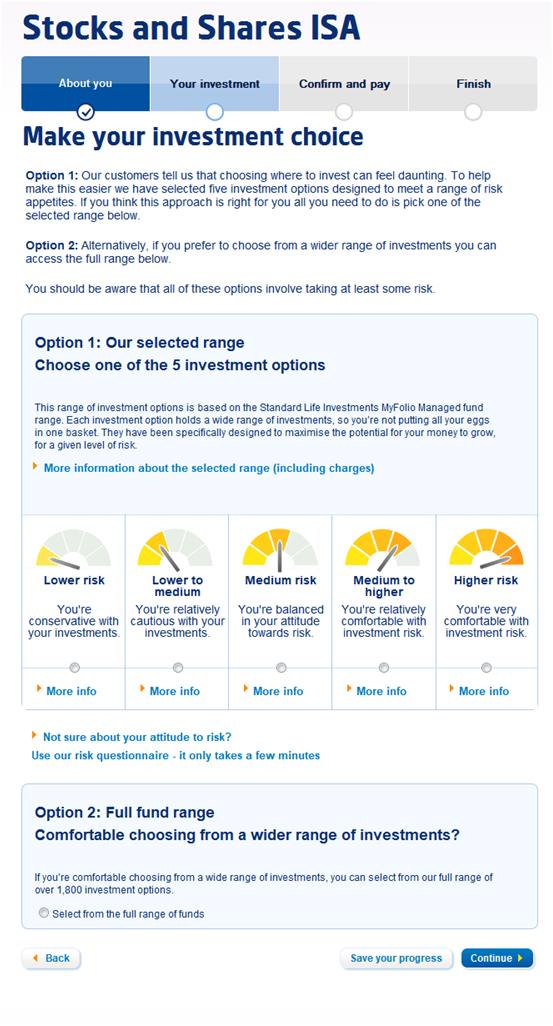
A screen grab of the application form for a Standard Life Stocks & Shares ISA

Making choices easier

Even something as simple as Facebook showing you the friends you will lose touch with when you deactivate your account is a clear example of using loss aversion (our tendency to disproportionally value things we have above those we do not)  reciprocity (your friends have shared their information with you..) and social proofs (everyone else is here) to – in their case – significantly reduce the number of deactivations per year. A few words about the power of emotionally intelligent signage and hopefully the point was made, this doesn’t need to be massive.

I couldn’t resist pointing out the classic HCI logic in the goal-architecture that means you get your card back at the ATM before your cash so that you don’t walk off with money and forget your card if the sequence was the other way around. A simple sequence decision.

Making a commitment
To close my 45 minutes I wanted  to touch on how making people do something different for a second, a few minutes even, can be incredibly powerful but that long-lasting behavioural change is incredibly difficult and complex. Perspective and influence over time from the herd and an array of variables means that designing such solutions is fraught with challenges. Though I didn’t mention it at the time I have talked before about my relationship with my energy supplier. Having used an energy monitor and post-usage data I was able to reduce the amount of gas and electricity I used at home, but after a while I realised I wasn’t getting any better. I’d reached a  plateau in savings, all my devices were low energy or used at their most efficient settings and so-on. I lost interest and stopped looking at the monitor or my reports. My usage crept back up. The classic YoYo seen in dieters and addictive behaviour like smoking.

It’s not enough to take these examples above and apply them to solutions as varied as increasing up-sell on insurance products, shifting metallic paint on new car configurations, moving people to a different mobile tariff, quitting smoking or eating more fruit and veg. Each instance requires a deep understanding of the specific problem, it’s motivators and triggers.

Which seemed a perfect time to call on Fogg. Running out of time now so if you want to know more about the application of behaviour change then do seek out these useful kits:

Finally,
In the coming months I hope to be able to share with you some of the excellent work my team (Aarti Dhodia and Tom Harle) have been  producing to bring behavioural influence to an exciting service to be launched by one of Dare’s clients. Until then, I hope you find inspiration and enjoyment in the examples here.


Tagged , , , , , , , , ,

Pretty & Different ≠ Intuitive

Image

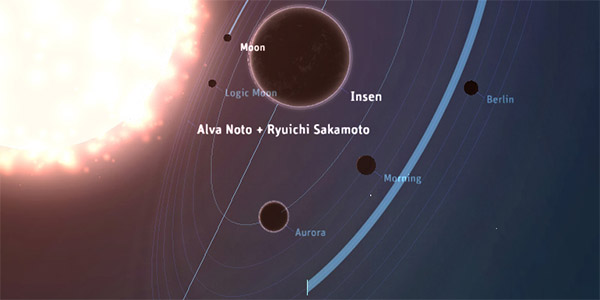
I like the idea of representing data sets in new ways. Particularly data sets where the relationships between entities are valuable. Because of this, and indeed the way it’s been rendered, I rather like Planetary by Bloom. However, in this rather fawning piece by John Pavlus on Fast Company, it’s astronomy-inspired interface is described variously as ‘intuitive’, ‘divinely ordered’ and with ‘human-friendly affordances’.

Forgive me, but didn’t it take humankind a rather long time to understand the causal relationships in the solar system to be understood? I wouldn’t necessarily say that we users would instinctively ‘get’ the metaphors used in Bloom’s work although we would appreciate them once shown. I think it takes some leap to suggest that there is more intuitive understanding of music data in seeing it in this new format than there would be in, say, a hierarchical list of artists, albums and tracks.

Tagged , , , , , ,

…the grey squirrel of user experience design is gnawing the legs off the red squirrel of information architecture. The focus is now squarely on the presentational and interaction elements of UX, and service design projects that start with beautiful, but largely imaginary page mockups. In a great metropolitan company right now, a senior executive is being seduced by a Photoshop comp that may or may not be buildable.

A smashing quote from Mike Atherton which I found in his notes on one of my favourite Slideshare presentations.

On presenting the unbuildable

Tagged , , ,

The Waitrose Redesign: Perspective Required

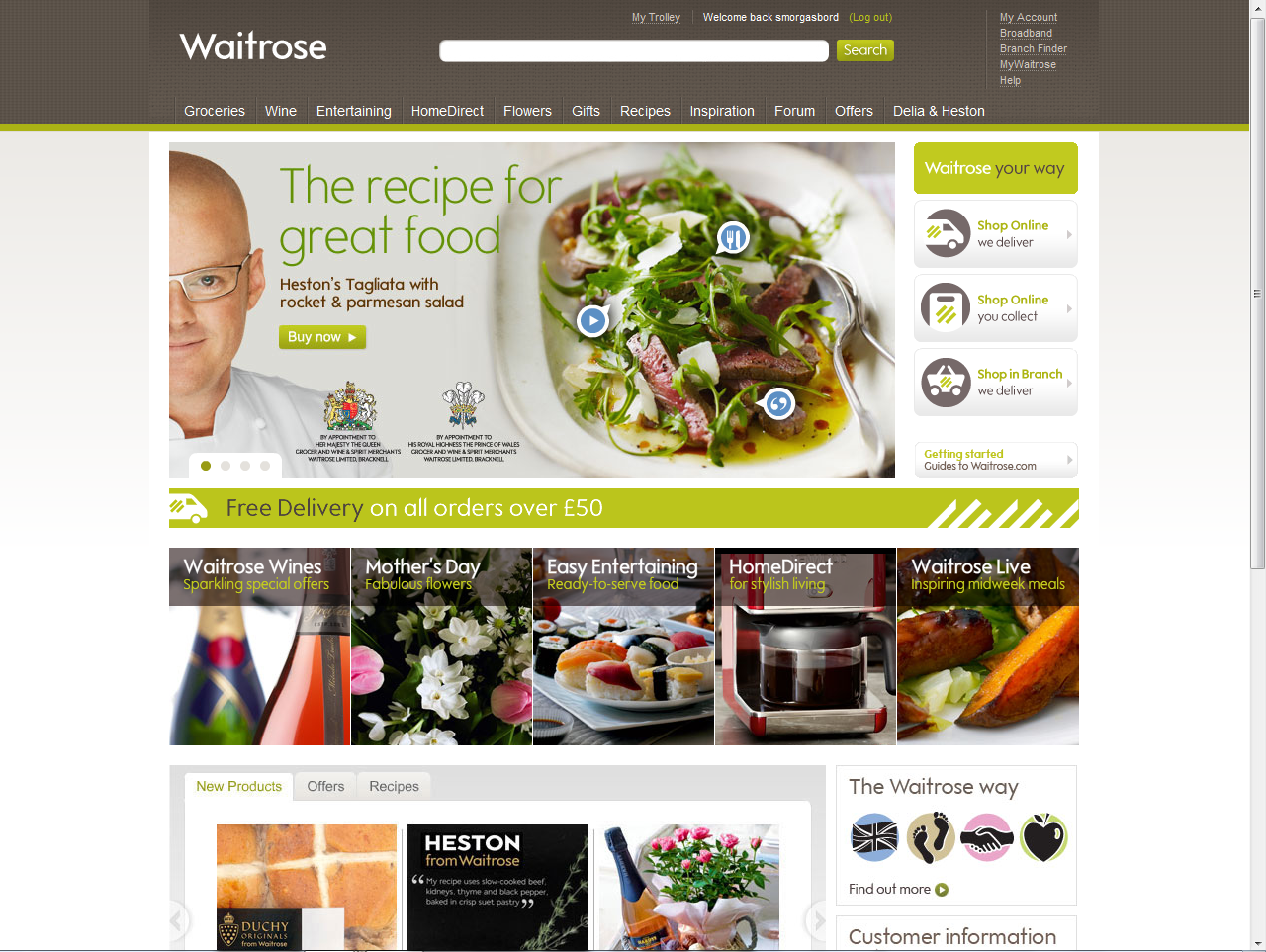
This week eConsultancy’s report on the apparent usability calamity of the new Waitrose site has been widely shared: “New Waitrose website panned by users“. People queued up to take pot shots at this aspirational brand, criticising a range of issues from taxonomy, speed and the apparent non-disclosure of prices.

Several cried-out “why wasn’t this tested?” “didn’t listen to users” and so-on and so forth. Compounding the issue was the revelation that the design ‘cost £10 million’.

An unmitigated disaster eh? Well no, not in my opinion. Firstly I think that the £10m issue is swaying a lot of bad publicity. The general public, and this is not to patronise, simply do not understand the price of design (c.f. Olympics 2012 logo). I don’t understand the price of building a new bridge, or anti-retroviral drugs and I don’t presume to tell the people in those industries that the cost of such things is too much. For some reason, the great British public assume that design work is just a 17 year old with photoshop tinkering about. It completely misses the point that work like this involves high levels of expertise in visual design, logistics, accountancy, information systems, security, project management and so-on. It’s massive, it’s expensive stuff. You might re-design a local dentist’s website for £1000 but really this isn’t even vaguely comparable.

Secondly, it does actually work. To claim it’s “not fit for purpose … beyond fixing” is bonkers. Show me the evidence that no-one is shopping on the site, that the usage is down that average basket sizes are down etc. etc. I suspect you would find the opposite [EDIT 25.March: Orders are in-fact up by 34% on the previous site, according to The Guardian]. Yes, there are problems. Some of the nomenclature and taxonomy is a little unconventional. Sally pointed out that browsing freezer products was done by brand and not by type, that seems peculiarly specific. Most users would at least like a choice to filter by meal, by category (fish, poultry, ready-meal, dessert) and so on. Other glaring errors include the (now fixed) inability to identify sizes or quantities of items like milk and meat.

And then there’s the speed. The speed it’s rendering is not great. I’m no developer so can only speculate that it could be either an interface layer issue or one related to pulling items out of the eCommerce catalogue (the back-end). To the consumer this distinction is irrelevant, it just takes time and time-precious consumers get understandably narky. Fixing the speed is critical to the perception of performance.

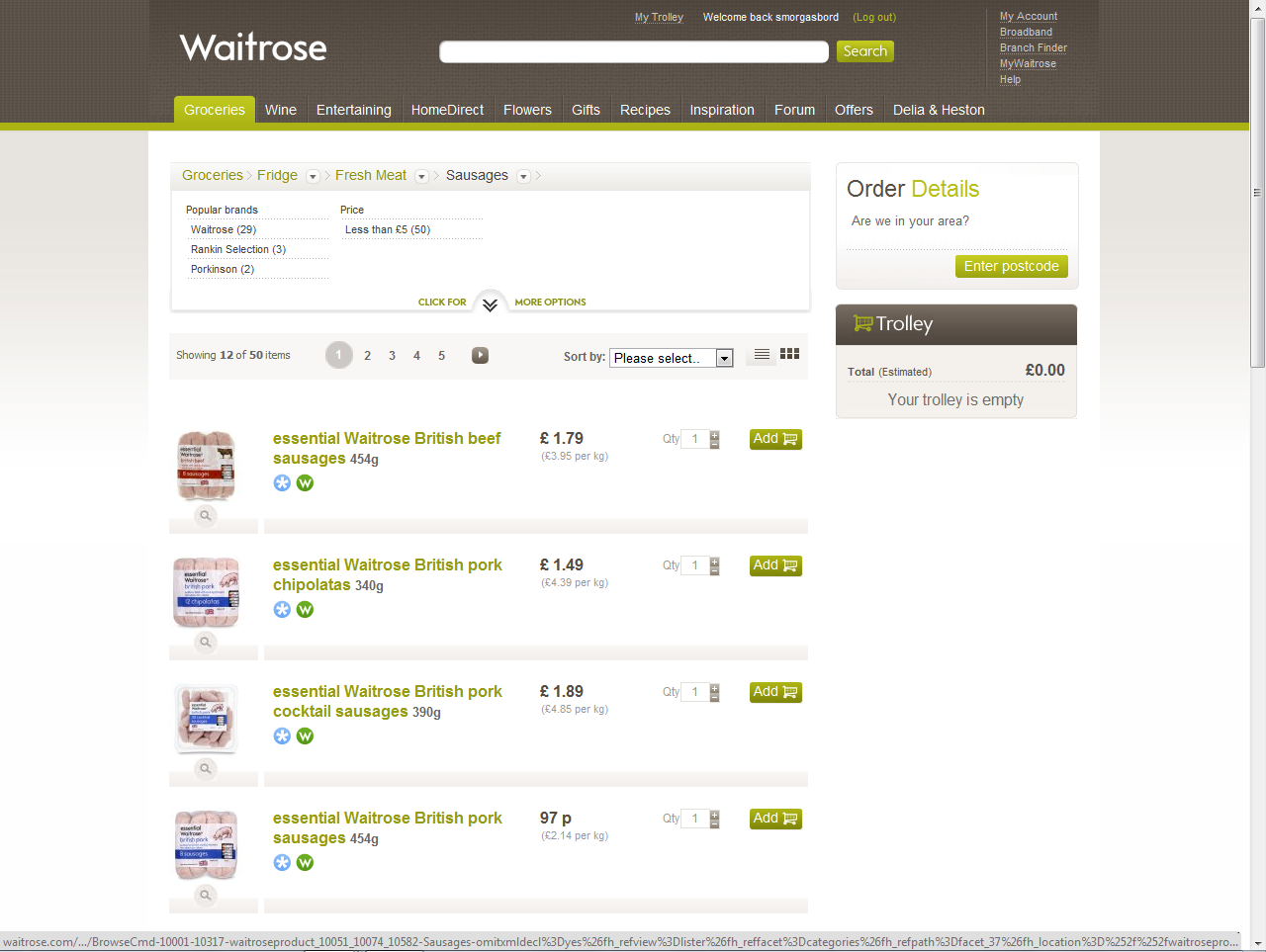
It infuriates me to suggest that this wasn’t thought about or tested. In our industry with so much money at stake it is inconceivable to think it wasn’t tested in some way at several points throughout the process. It was designed in part by some very talented user-centred people and the fact that certain elements have been included (drop-down category breadcrumbs) suggest a user-experience designer’s hand. The key is whether the user-testing was sufficiently rigorous, sufficiently real-world and sufficiently analysed to feed back into the design process.

Interactions which are causing the most concern include long-lists – the heavy duty users at home doing > £100 shops with many items. In these scenarios they are likely to be juggling multiple threads of activity: searching for goods, ticking them off a paper list, popping to and from the kitchen, considering recipes and so on. Keeping as much of the action (‘add to basket’) transparent at the same time as the browse activity is a tricky ask. Often user-testing is done in a lab with a user isolated from the context in which they normally perform their activity. It’s not a real shop, it’s a simulated list and the observations you will make will subsequently be quite false.

Work like this is so dependant on context that it needs to be stress-tested in real-world situations. It means sample shoppers using a staging-version of the site or a high-fidelity prototype to do their normal shopping routine. It might have happened here, I speculate that it probably didn’t.

I rememeber Catriona Campbell of Foviance telling me once of some ethnography work done for Tesco where they observed online shoppers ordering in bulk from their value range. Actually observing the users in their homes showed that these were consolidated orders for their community where one person acted as a distributor from a single paid-for delivery. Insight like this rarely comes from a two-way mirror, eyetracking and a moderator.

Returning to the Waitrose site, i’d urge you not to get caught in the hype but to actually use the site. The majority of  problems cited on the forum seem to be resolvable coding/performance issues, not fundamental interface design issues. By which I mean buttons not working as intended, technical errors and so-on.  The remaining issues surround a nostalgia for old site features like the jotter. I’ve seen this sort of thing before when a quirky feature barely anyone used gets removed the one or two people who did use it take to the web to complain.

I’m not saying it’s brilliant, it clearly needs work but I just personally feel the need to call for some calm and reflection in light of the fact that passionately user-centred people would have been involved in this and working with the very best of intentions albeit perhaps without the backup to see it through to final development or the support of adequate contextual user-tests.

Tagged , , , , ,

Experience Planning

I decided to have a bit of a break from Twitter (and Facebook) and to revert to the long-copy pleasures of full-fat blogs. To this end I have downloaded Reeder for my iPhone, fired-up my Instapaper archives and am eschewing the free papers on the commute home with the intention to read more about the things I used to read about.

A corollary to this will hopefully be a refreshed attention to my own blog and to the joy of writing again. Though I’ve read too many blogs in the past that have a post that reads: “Am blogging again, hope to blog more, watch this space!” … and that’s the last or penultimate dusty entry. So, no promises, none at all.

Before I dismiss the microblog for the aforementioned hiatus I did just want to highlight a link I found via Anne Czerniak’s stream: David Friedman’s Twitter Thesaurus. The function of David’s thesaurus is to provide alternative, succinct variants of the words you would write if you didn’t have a 140 character limit. It seems like just the sort of thing that verbose writers like myself would like to see added as a contextual add-in to desktop and mobile twitter clients, a bit like bit.ly does for url shortening.

Experience Planning (aka. Experience Design)
My ‘new’ job title is Experience Lead. This is in part due to Dare‘s merger with MCBD and the fact that not only do I now have sight of digital work, I have an occasional role to play in designing and consulting in offline experiences and service design. Whilst we have an adorable presentation deck that covers-off what Experience Planning is (in the context of Dare), much like my This is IA tumblr, I find it helpful to describe what we do with examples of what it is to design experiences (and not just websites).

Virgin Atlantic
Ever noticed that the lighting spectrum on airplanes leaves you looking rather palid, almost green and nauseous? The chaps at Virgin America have and consequentially installed a scheme with a varying light spectrum that reflects the prevailing destination timezone and external light conditions – even the mood of the passengers at key ‘touchpoints’ in the journey, viz :  “[the lighting is] in a ‘theatrical mood’ prior to departure. When you walk down the jet bridge, you see the purple glow of the mood lighting, and it hopefully excites you…” “…people have an emotional and physiological response to lighting. So we decided to shift the colour of our cabin lights during the course of flight. They’re associated with time of day outside or ambient light outside. If you’re flying by day and heading in to dusk, it will reflect the light level outside. It’s less jarring” – Adam Wells, Virgin America [Source: Budget TravelTravel Innovators“]

Disney
As experiences go, Disney have mastered many at their attractions around the world but queueing provides a constant target for designers with a remit to increase enjoyment at any cost. Innovations here are increasingly rare but often involve psychology (see David Maister’s article from many years ago). In this article from the New York Times late last year, Brooks Barnes details some of the cute operational armoury the experts at Disney can deploy:

  • A nerve centre with wait-time monitoring in real-time.
  • The ability to ramp up ride throughput by, for example, deploying more boats on the Pirates of the Caribbean ride.
  • The authority to re-deploy their character talent to the queues so that Goofy can take kids’ minds off the interminable wait.
  • Induce significant crowd shifts by initiating a pop-up parade: “Move it! Shake It! Shift It!” which nudges people to the less populated area.
  • Attention to operational detail to open more kiosks or cash registers, hand out menus and so-on.

Such interventions pervade in a culture of exceptional customer experience. Leaving room for staff to innovate and react in this way ensures that, collectively, the impression and memories users are left with are both positive and lasting. And memories are what all decent experience designers are after.

I got asked recently to write a piece on what might be considered a good opportunity for marketeers tired of the existing promotion calendar. I took an opportunity to assert that I think the marketing communications industry has for too long focussed on the acquisition part of the courtship of consumers. I think we have a great opportunity to work harder to continue to persuade throughout the life cycle – to promote retention with some ‘wow experiences. Working with tools like memory, serendipity, ephemera, transience and humanised language and interaction. All of which are just fancy words which are my attempts to intellectualise the stuff that Disney (v. supra) do so intuitively.

Perhaps I haven’t wrapped this post up quite the way I would normally like to, but these, dear reader, are my thoughts in flux about how I currently think about Experience Planning and the directions which interest me.

Footnote: This post was composed a few weeks ago during a spell when I wasn’t on Facebook or posting regularly on Twitter. I have returned to both sites since then but am significantly less active. I hope.


Tagged , , , , , ,

Apple Stores: Experience Design = Great. Reality = Aaagh!

Rory Cellan-Jones writes over at the BBC dot.Rory blog today about the emergence of the Microsoft facsimile of the Apple retail store experience. I contend that we shouldn’t fawn too much over the Cupertino firm’s success here.

I am an Apple fan, albeit one without the disposable cash to have actually bought one of their computers. I have bought several iPods and my iPhone at the Apple retail store. My local store is Kingston [photo: a typical Saturday] and I suspect this store is representative of their mall units in the UK. It’s wonderfully designed inside with clear experience design – the analysis of which is covered well here. The reality is that the store is incredibly popular and consequentially the experience takes a pounding. I’d love to spend time browsing the Apple TV interface and discovering if the paucity of content has improved to the point that I might buy one. But I can’t because on a Saturday I’m lucky if after 5 minutes of trying I have actually managed to get near it. There are lots of teenagers who have absolutely no intention of purchasing nor the money to do so but they’re in the store in their hundreds. They stand two-three deep around £1500 machines taking photos of their faces and warping them, updating their Facebook status’ “in the Apl str, LOL” and generally cooling my enthusiasm for the brand.

Of course I can see that these teenage browsers are prospects themselves in a few years’ time or – through their parents’ wallets – in the near future. I’m not really attempting to make an assessment of the financial success of the Apple store (for which a selection of financials need to be considered). What I am really trying to draw attention to is that we are often a little too quick to wax on about such experiences without actually thinking them through by actually experiencing it. This means ethnographic reporting following a field trip out to the store with a given sequence of tasks to perform/observe. A report under these conditions would surely reveal more about the service experience than the  blind hyperbole of jumping on that jolly popular bandwagon.

Tagged , , ,

smörgåsbord choice cuts (iv)

The usual selection of things I have seen and absorbed in the last few days around the internets.

Innovation
The laundrette that emails you when your clothes are done. Rather obvious idea that makes you wonder 1. why hasn’t someone done it before? 2. who still uses laundrettes?

Social Commentary
Daniel Pink questions what it means for (American) society now that the data shows for the first time that more people aged 25-34 have never been married than are married. He looks at Economics, Culture, Politics and new business opportunities.

Apple
According to Apple Insider (and probably two minutes earlier/later by Mac Rumors), the new Sharp phone has a display that matches the Retina display on the iPhone 4.

UX
One from the ‘No shit, Sherlock‘ school of UX insight. UX Movement alerts us to the news that right-aligned buttons on web forms work best. It suggests that you might use left-aligned buttons on single-page forms because: “it creates a clear and direct path to the button that users can’t miss” but doesn’t sufficiently explain why having it on the right in this instance wouldn’t be just as good. Because right-aligned buttons work best on multiple page/section forms, users have got used to them being on the right – such is the way conventions work. Why swap it around for the single page forms? This sort of article is potentially useful for a real newbie in UX design but it isn’t really telling me anything a lot of comparitive research and common sense wouldn’t. Not to mention the complete ignorance of languages that aren’t read left-to-right.

However, redeeming themselves, there is also a cute post from UX Movement about New York City reverting to Title Case on their signage to improve readability from the previous capitalised approach.

Moleskine
I am generally quite critical of hipster trends but I concede to loving my Moleskine and my Apple portables. This has made a bit of noise this week on the web, but in case (ahem) you missed it: Moleskine case covers for iPad and iPhone incorporating notepads.

Health & Fitness
As someone who has dabbled in dietary supplements (Chrondoitin, Gingko Biloba, Glucosamine, Omega 3) and who lives on a meat-light diet, I am struck by a conflict between believing marketing hype about supplements and knowing the evidence is light. David McCandless & Andy Perkins’ active infographic on Information Is BeautifulSnake Oil?” helps sort the supplements by evidence. Multiple bubbles exist for supplements depending on the number of health benefits associated. Very compelling visual and (amongst an awful lot of info-graphic noise recently) one with a genuine enlightening purpose. I don’t think the concept is new, it was a static graphic before no? but i believe the interactive element is.

Design
37 Signals admit on their blog that their site is much-imitated and that this may be a part of why they attempt a redesign every 6 months. The new look is a bit of a “back to basics” for them. There is a real emphasis on copywriting and on using colour sparingly for highlighting. It was interesting that their summary didn’t mention IA or structure as such – perhaps that is because it is a given in their processes.

A bit of a lightweight piece on Six Revisions about single-page websites. The accompanying text is a little frothy but it is notable for the showcase of attractive examples.

Finally,
As if to underline the point above about frothy analysis, 90 Percent of Everything had a great post earlier this week about why we should return to a little more academic rigour in our sharing of knowledge and testing of hypotheses. It suggests a few approaches including:

:: Returning to primary sources, not relying on second-hand re-telling of material
:: Ensure enough detail is included to allow the test or experience to be reproduced and re-evaluated. This includes sharing all the data.
:: Be honest about shortcomings. There aren’t enough examples of failure shared in the Information Architecture and User Experience community.

The author acknowledges the difficulty in achieving this in commercial and sensitive situations (client confidentiality for example) but it is a welcome piece of advice for us to avoid issuing sanitised soundbites for instant sharing. Very much worth a read and I wholeheartedly concur (even if I am guilty of just this fast food ux snacking on this very blog).

Tagged , , , ,

TomTom directing drivers to shorter travel times

Nota: This post was originally published on our client-facing blog at Dare in edited form. I love the editors deeply but I wanted to share with you, dear reader, the full vestal version.


It doesn’t seem that long ago that the sight of a GPS in a car had the same reaction of someone using an iPad on the train does today. A sort of curious mix of jealousy and cynicism about their efficacy.

And then the prices fell and the world and his wife were getting them for Christmas. From the executive saloon to the student runabout, almost every car sports some sort of touch-screen map these days. It is this progress to ubiquity that has led TomTom to assume a critical mass is being reached such that their latest initiative has a chance of succeeding.

Boldy termed a Traffic Manifesto, the Dutch navigation giant has published its objective of making “better use of [the] existing road capacity” in Europe to “reduce journey times for everyone by up to 5%”. Quite some lofty objective given that this is predicated on the take-up of its HD Traffic service reaching 10% of the driving community in Europe. Soak that up. 10% penetration in Europe. Add to this aspiration the cold hard fact that just 2.2% of TomTom’s 45million drivers connect to such a service and one wonders quite what they’re putting in the tea over in Amsterdam.

Leaving that aside, the technology and the ethics behind it are quite pleasing. In TomTom’s own words, this is how it works:

“TomTom HD Traffic uses a revolutionary new source of traffic information: the traffic flow of up to 80 million anonymous mobile phone users on the road. From this anonymous data, TomTom knows exactly where, in which direction and at what speed all these mobile phone users are traveling throughout the road network. This real-time data is combined with other existing quality traffic information sources, resulting in the most complete and reliable traffic information.” [Source: TomTom website]

The campaign activity to support this includes offering this data up to local broadcast networks across the continent for free. The cynic in me assumes this is to offset the simple truth that an in-car device capable of real-time traffic data and re-routing rather makes the hyper-local radio bulletin (ergo much of  the stations’ raison d’être) redundant.

We seem rather obsessed at the moment with geographic social networking. Whether it is initiatives such as this or more frivolous pursuits such as Places,FoursquareNike+History Pin and even the BBC’s Dimensions project, it seems a rather curious paradox that the more our lives are being tracked and traced in the digital world, the more we seek relevance from the physical environment around us: to seek out new routes, new places and new people in the vicinity. So, while the TomTom traffic data is helpful in the now, imagine  aggregating this data  over a longitudinal study to identify new places to commute from? Well, social graphs such as Harry Kao’s commuter map and Mapumental are doing just that sort of thing.

After all, isn’t it nice to find examples where crowd-sourced information is genuinely useful, even if CEO’s like TomTom’s Harold Goddijn can’t resist making somewhat grandiose claims.

Tagged , ,

More choice cuts on the smörgåsbord

I don’t propose that one or even now two swallows can make a summer or that this frisson of activity on the blog will not fade incredibly quickly and my writings will dry up as quickly as they appeared. Like a chalk stream, perhaps.

So, to continue from yesterday, a few more things I have seen, and ting:

1. Flowing Data drew my attention today to a few pertinent images posted on the excellent Historypin site. Historypin simply takes archive photographs and overlays them (sadly without the option to place with the opacity) on Google Street View images from today to place history in context. The selection identified in today’s post draws attention to The Blitz.

2. Something I shared with a client of our who recently rejected the idea of using accordion interaction on forms, Luke Wroblewski’s work with Etre to test the pattern and make some observations. Conclusion, not significant +ve effect on conversion, but equally no significant –ve effect for an identifiable +ve change in the perception of simplicity. Well, that’s how I interpreted it.

3. I read about this visual technique a while ago in the national press but it has been picked up by the curators of the Nudge blog. Norfolk City Council are using funnel planting patterns for trees to create the illusion that drivers are approaching junctions at speed. This technique has been used for years with line-painting on roads but to use the built/grown environment is new. This is a great example of what Dan Lockton calls Design With Intent.

4. In related news, Konigi had a short piece on ‘Dark Patterns’ which is perhaps on the Machiavellian side of behavioural design. These are interaction patterns which intentionally coerce/seduce users into performing actions they would not ‘normally’ have performed. This is work by the enigmatic Harry Brignull which was presented at UX Brighton (2010) and you can follow the entire 30 minute slideshare by visiting his excellent blog.

5. This is worth of a full post at some point, based on some thoughts shared with me by a member of my team, Richard Blair. In the meantime, take a look at PSFKs piece about the effect of the Times paywall on their RSS content. This tears me up. As a Times reader in the offline world I quite like the new online exclusivity a paywall has created and the ad-free experience but I desperately lament the loss of the ability to pour my favourite columnists into my Tabbloid by subscribing to their RSS. I now am forced to the site.

That’s it for today, similar but newer things tomorrow. And possibly a proper ‘comment’ piece later today.

Tagged , , , ,