Tag Archives: user experience

Christmas Shopping Observations, Part Two

What happens when the system finally learns to listen.

Last week in Part One, I described why Christmas shopping feels hostile, why even the most basic purchase turns into a strange performance of archaeology, jargon and filters masquerading as understanding. The real problem wasn’t the products but the machinery. The fiction that a PLP grid is somehow an acceptable translation layer between human intent and retail stock.

This week is the other half of the story: the thing that replaces it.

Because the truth is, we’ve spent twenty years designing for systems that never deserved that level of obedience. We pretended the homepage was the grand entrance, the digital lobby with its scented candles and seasonal banners. We treated it like the flagship store: polished, high-stakes, endlessly debated at internal stakeholder meetings. Meanwhile, almost no one arrived through it, or if they did, they were there for a split second. Most people dropped in sideways, via Google, a WhatsApp link, an email, or a moment of panic at 11 p.m. The homepage was the UX and UI theatre we performed for ourselves and our clients.

Agentic systems make that fiction impossible to sustain. They don’t care about your reception desk and your neatly prioritised way finding. They don’t even see it. They take what you mean, “something thoughtful, about forty quid, she hates clutter, nothing scented” and drop you straight into the one, tiny corner of the site where the decision will live or die. A place that, inconveniently, most retailers still treat as a functional afterthought: the product-detail page.

A minimalist Scandinavian study at dusk, softly lit by a small desk lamp. Snow falls outside the window. On the wooden desk sits an open laptop showing a clean product page with only a few curated gift suggestions. A small, neatly wrapped present rests beside it, suggesting a calm, intentional shopping experience rather than the usual frantic grid of options.
A glimpse of the future: no endless grids, no filters, no festive panic, just a system that actually starts where you are.

The PDP becomes the real front door because in an agentic journey the start isn’t a place, it’s a sentence.

This is where that old inventory-obsessed model buckles. Catalogue commerce was built on the premise that customers begin at the top and drill down. Agentic commerce begins at intent and works sideways. The sitemap is your fiction, not theirs. The system no longer needs your categories. It needs your clarity.

Be under no illusion though, this ain’t easy. This only works if the agent can explain itself. When a system gives you two options instead of two hundred, you need to know why. Not academically, emotionally. Why this jacket and not the other one? Why this feels like her. Why this fits your mental model of who she is. The explanation is the reassurance loop. Without it, the whole thing becomes another opaque machine; efficient, yes, but untrustworthy in all the ways that matter.

And then there’s the serendipity problem. Efficiency is addictive, but clinical. If we strip out every detour, we drain the pleasure along with the friction. The answer isn’t a return to the grid; it’s controlled looseness. A suggestion or two just off-axis. Something adjacent. Not twelve rows of “you may also like” tat, just enough to keep the experience human. Discovery without the search-and-filter trauma.

None of this is a theoretical exercise for me. I genuinely spent years trying to push natural-language intent into car retail at JLR, long before the technology was mature enough to meet the ambition. I saw how people really shopped: not by wheelbase or trim code, but by anxiety, context, and use-case. “Capable in the mud.” “Seven-seater that doesn’t look ridiculous.” “Can get all the family crap in it for Cornwall, without a roof box.” All perfectly rational human requests – treated as nonsense by the old machinery. The ideas weren’t wrong. They were simply early.

Now the technology has finally caught up. And with it, the entire structure of how we design retail subtly shifts. From catalogue to conversation. From homepage theatre to product truth. From filters to language. From the warehouse to the person.

None of this saves Christmas, of course. But it does save us from the annual pantomime of pretending that people enjoy buying gifts and products more generally through a system that refuses to understand how they think or consume any of the deeper context that matters. The future isn’t more choice. It isn’t more filters. It isn’t even more intelligence.

It’s fit.

Fit between intent and suggestion.
Fit between the context you’re in and the thing you’re shown.
Fit between the human messiness of December and the machinery that finally stops treating you like a clumsy clinical user story.

Christmas shopping isn’t a test of skill. It’s a test of whether the system knows how to listen. And for the first time in a long time, it might.

AI: This piece was assisted with Ai. I used it for the tags, the post excerpt, image generation and some sub-editing. Ideas, references, and anecdotes are all mine.

Tagged , , , , , , , , , , , , , , , , , , , ,

Christmas Shopping Observations, Part One.

Why Christmas shopping feels hostile, and why ‘catalogue commerce’ makes it worse.

December always brings the same rituals. Sitting in front of a website with a sense of mild dread. The kind one reserves for using a train station toilet, or getting into the coffee queue after parkrun. The intended tasks isn’t difficult or unpleasant in theory, just buy something thoughtful for someone you care about, but Christmas shopping always manages to feel like cognitive trench warfare. Retailers would have it as “the season of gifting”, the rest of us call it, problem solving with a shot glass of Baileys.

So, for some context, let’s go back to a couple of of weeks ago when I was trying to get myself a replacement down jacket. A bit like when I was trying to get Jo some new Asics, this wasn’t an extravagant task. It wasn’t even particularly interesting. Just a bit of a like-for-like replacement for a much-abused Rab. All I needed was a sub expedition-grade jacket. Black, simple. I know my sizes, I know I needed about 850+ fill power and I was ambivalent about much else. I had a shortlist of brands I like. But dozens of models, filters that are inconsistent across brands, categories that mean nothing to people outside of the industry and a product hierarchy that is the baffling output of a Content Management System (CMS) that’s been operated by a chimp1.

I wasn’t searching as much as performing archaeology. Sifting through layers and brushing off the irrelevant collateral.

A narrow, snow-dusted street in Stockholm’s Gamla Stan on a muted December afternoon. Warm ochre buildings rise on either side as bundled-up shoppers walk away from the camera. Soft shop-window lights and minimalist Christmas displays glow against the cold, creating a calm, human-scale contrast to typical frantic holiday retail.
The Christmas shopping we think we’re doing, before the dropdown menus, filters, and “Gifts for Her” pages slap us back into reality.


In design terms this is what we might call the Gulf of Execution, or as my colleagues and I at Dare liked to call the Experience Gap: the distance between what a human means and what the system is willing to accept. My intent was simple – “warm, minimalist natural down for standing around on platforms, by sports pitches and walking to the pub” – but the interface insisted I drop that down into a dialect of drop-down, checkboxes and jargonist euphemisms. A human request translated into machine-and-catalogue syntax. Little wonder the whole thing feels like a joyless chore.

And Christmas retail only amplifies this.

Every major high street site trots out its annual performance of “Gifts for Her”, a festival of generic filler: candles, scarves, bath sets, socks. The occasional novelty gift set embossed with typography that looks like it was designed at 4pm on a Friday whilst sucking on a fetid vape. It’s all indexed by price bands: “Under £10”, “Under £50”, “Over £250” – as if women are primarily sorted by budget code rather than, say, personality or taste.

No mother wants another hand cream selection.
No thirty-something woman wants coordinated gloves.
No partner wants to receive something that clearly began life as a procurement exercise.

The whole structure is built around the warehouse, not the person. It’s inventory logic masquerading as emotional intelligence. And the moment you notice it, you can’t unsee it: most “gift guides” reveal almost nothing about the recipient and everything about that the retailer wants to shift.

This is the failure baked-into catalogue commerce. It doesn’t matter which brand you pick; the underlying assumption is the same: that human desire can be expressed through filters, and that personality cab be captured in a category label. It’s tidy, rational and optimised. It’s also completely blind as to what makes shopping human in the first place.

Because real gift-buying begins long before the visit to the website. It begins in the cluttered contradictory emotional territory that sits just outside the browser window: What does she already have? What does she love? What has she told me about? What will she pretend to love? What feels thoughtless? What feels too much? What feels like you didn’t think at all (Hint: anything at Boots that comes in a gift box)? Retail ignores all of this and forces you straight into the grid (what we call the Product Listings Page (PLP) ), as if the process were orderly. Spoiler alert, it never is.

This is why Christmas shopping feels hostile. It’s not that the options are universal bad, just that the interface tries to convince you it understands and reflects your mental model when it plainly does not. Handing you a hundred variants of the same filler and expecting conversion gratitude. Somewhere between the filters, the categories and the bath sets you sense the truth: this isn’t built for you. It’s built to organise the warehouse.

Don’t worry though, there’s a better story coming, and the technology to enable it is finally here. But this isn’t the piece for solutions, it’s about naming the problem plainly as it is and without the retail gloss.

Next time I’ll get on to the other half of the picture: the system-level shift that’s going to quietly rewrite the entire experience from how we search to where the journey really begins.

For now its enough to acknowledge the obvious: Christmas shopping isn’t about solving and indecisiveness problem for dumb consumers. It’s a broken model designed around systems that are not built to reflect how people think, feel or choose, especially in December.

Part Two: How agentic solves this, and more.

AI: This piece was assisted with Ai. I used it for the tags, excerpt, the image generation and some very light sub-editing. The ideas, references, and anecdotes were all mine.

  1. Plot twist. I ended up with the Shackleton Ronne. I browsed online for weeks. I did huge amounts of research and comparison and then I went to the wonderful store on Piccadilly and spoke to a great sales assistant there who worked with me to ensure it was absolutely the right fit and will see me out for prob 5-10 years of use. ↩︎

Tagged , , , , , , , , , , , , , , , , , , , ,

Time Returned, Time Resold

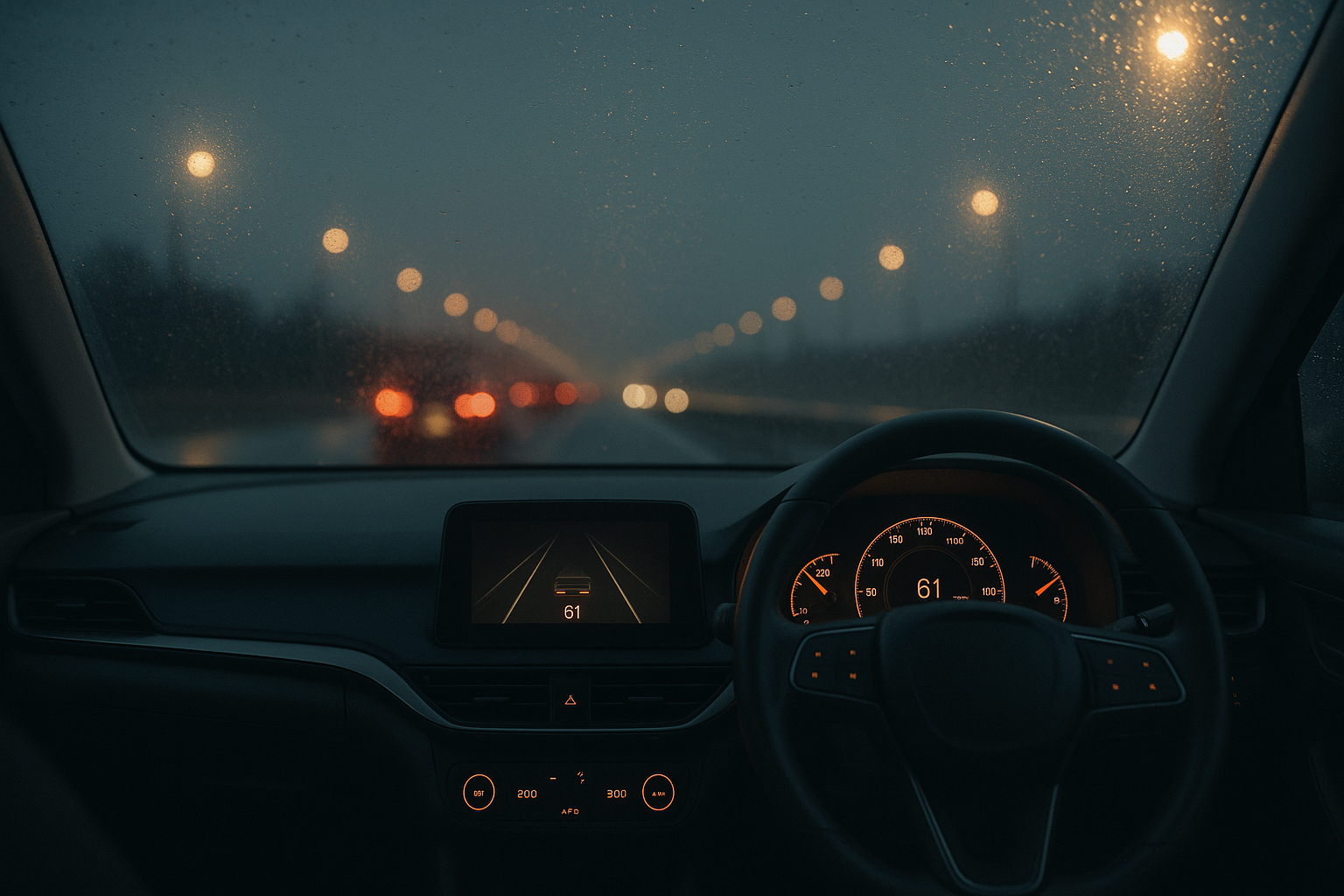
Rain-blurred motorway at dusk viewed through a windscreen; dashboard lights glow amber in an empty driver’s seat — a quiet image of autonomy and time unclaimed.
Autonomy promised freedom. Instead, it gave us metrics.

Every few years a new invention turns up promising to give us time back. The dishwasher did it, then the calendar app, now the self-driving car. Efficiency, they say, is liberation. But the minutes never come home. They’re quietly re-employed: answering messages that weren’t urgent until we saw them, scrolling through news we already half-read. We don’t get more time. It just comes back wearing a different outfit.

Design now speaks the intoxicating language of generosity. We’ll save you clicks. We’ll make it seamless. Lovely words, but they come with a tempo you didn’t choose. The system nudges, reminds, congratulates you on your streak. Even the oven chirps when it’s done pre-heating. Helpful, yes – in the way a personal trainer is helpful when all you wanted was a walk.

Efficiency was meant to hush the world, not make it chatter. Parcels update you mid-journey, cars suggest faster routes, TV apps interrupt the credits to make sure you don’t go off to bed just yet. You start to feel managed by your own apps and appliances. Is it me, or do they all sound slightly pleased with themselves?

Still, there is a deeper promise in all this autonomy. Because the best thing about a self-driving car isn’t speed, it’s permission. The choice to drive when you want to: for rhythm, for presence, for drivers like me who relish the satisfaction of line and camber, and to switch off when you don’t. The long crawl north to the Lakes. The dawn blast to the airport. The late-night, rain-spray-soaked slog home when you’d gladly hand over the wheel and let the motorway unspool while you exhale, watch the window-light flicker, maybe half-doze through an episode of something forgettable. Control should be optional, not constant.

That’s what the technology could be about: selective surrender or a quieter freedom. But for some unfathomable reason, the marketing and product design departments have decided autonomy is best packaged as constant optimisation. That means another dashboard app full of metrics and prompts and juanty reminders. We built cars clever enough to drive themselves, then gave them personalities that never stop talking.

Real luxury now isn’t speed but discretion: the right to decide how long something should take. To drive when you feel like driving. To look out of the window when you don’t. Technology can make both possible.

Convenience promised to return our hours, but mostly it’s taught us to account for them. Every minute feels spoken for. Perhaps the odd thing is how willingly we’ve agreed to it and the peculiar pleasure we take in shaving seconds off tasks we didn’t enjoy anyway.

Maybe the best thing a self-driving car could do is forget the ETA and let us forget, too.

AI: This piece was refined with AI, for the image prompt, tags, excerpt, and a little sub-editing. The ideas, references, and rhythm are mine.

Tagged , , , , , , , , , , , , , ,

Luxury UX beyond veneer: structure as brand equity

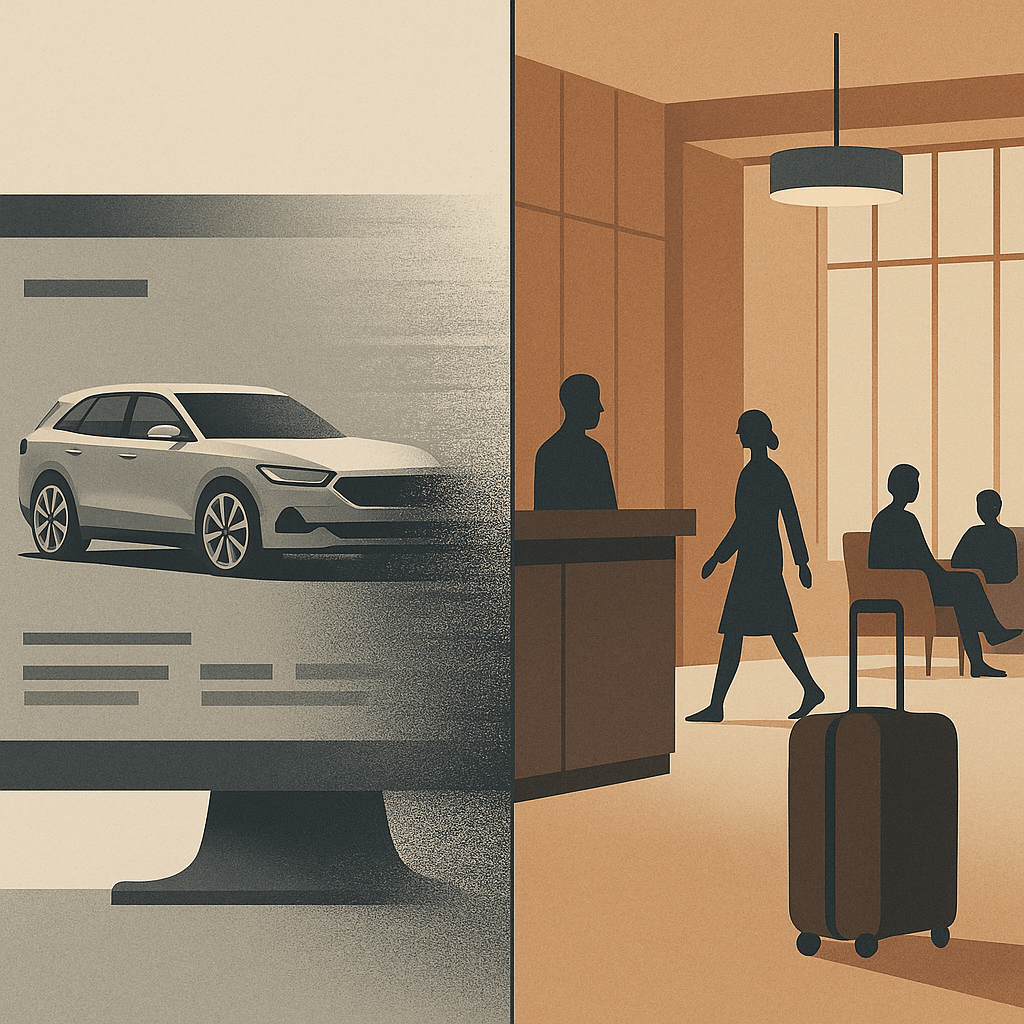
Split illustration in muted tones: on the left, a sleek SUV fades into static on a computer configurator screen; on the right, a calm hotel lobby with warm wood panelling, guests moving easily, and luggage arriving without fuss. The contrast shows polish versus structure, with luxury defined by order and rhythm rather than surface gloss.
Luxury isn’t in the chrome or the marble, it’s in whether the flow holds together without a fuss.

Luxury brands spend fortunes on surface. The right serif typeface. The right depth of cream on a website background. The right stock gsm on the brochure. Product renders with depth of field and lighting artefacts. But luxury UX cannot stop at veneer. If the underlying structure is clumsy, if journeys collapse into confusion or friction, then no amount of polish will hold that illusion.

The truth is that structure itself carries brand equity. The way a digital product is architected, how steps are ordered, how rules are introduced, how decisions are simplified, does more to signal competence and care than a thousand pixels of perfected pack shots. At Jaguar Land Rover we learned that millions of pounds of glossy configurator rendering and photoshoots is wasted if the journey collapses under its own contradictions.

When veneer is not enough

Consider that car configurator (I know I’ve been there before). The surface details may be flawless: chrome toggles, cinematic photography and transitions, elegant typography. Yet if the underlying structure forces a prospective customer through contradictory options, backtracking, or endless reloads, the brand is weakened. The luxury dissolves. Instead of modernity, the prospect experiences muddle. Instead of trust, they feel doubt.

Luxury is clarity disguised as ease. It is the sense that someone has already edited the path, made the trade-offs, and left you with decisions that feel not just coherent but inevitable. That coherence is structural. It is information architecture, not simple brand varnish.

Structure as invisible luxury

In regulated sectors, be it finance, healthcare, mobility, the stakes are higher still. Here, the user must feel that the product knows where it is going. A well-structured flow reassures not only through compliance but through a designed rhythm: disclosure followed by choice, choice followed by confirmation. In finance, disclosure sequencing is as much brand equity as trust marks in the footer. At Aviva, I saw how form ordering and timing mattered more than any banner, ad or brand flourish: get it wrong and trust collapses, get it right and the entire flow feels humane.

    This isn’t just true for luxury. At parkrun, where we were engaged to think about participant and volunteer profiles, the brand moment wasn’t surface polish but whether participants could find a barcode or book a roster slot without friction. There are quieter sectors away from money and luxe, but the principle holds: structure carries the brand.

    Hospitality and the British lens

    Top-end hospitality has always understood that structure outlasts surface. A hotel lobby isn’t luxury because of materials and furnishings alone; it’s luxury because check-in is peaceful, calming, effortless, because luggage appears without fuss, because the guest never feels unwillingly abandoned. The choreography, the sequencing of service, is the brand. Digital is no different. Done well, it is hospitality by other means.

    And here, for me, Britishness adds something. Where continental, EMEA or American luxury can lean toward performance, grand gestures, overt pampering, British luxury often communicates through understatement. Polished restraint. A dry nod over a champagne cascade and a platter of Dubai chocolate. That sensibility, translated into UX, means editing with discipline: fewer options, quieter confirmations, a flow that carries the user forward without ever drawing attention to itself. Not austere, not joyless. Just less show, more order.

    Brand equity in restraint

    A luxury brand earns equity not just through what it offers, but through what it withholds. The best experiences show judgement in what not to display, what not to demand, where to pause. Luxury isn’t ensured by the liberal application of gloss. Sheen can be appropriated, copied, imitated overnight. What endures is structure: the edits, the sequencing, the courage to strip things back until only what matters remains.

    When the experience lands with this quiet integrity, the user may never notice the scaffolding beneath. But they will feel the brand in the unbroken rhythm of moving forward without friction. That is luxury UX beyond veneer, luxury as restraint, stewardship, clarity. A quiet moral order and the calm assurance that polish and structure belong together if the experience is to endure.

    AI: This piece was written by me. I used ChatGPT as a sub-editor to keep tone aligned with my voice. The experiences, perspectives and final edits are mine. AI also produced the tag list, excerpt and image that accompanies it.

    Tagged , , , , , , , , , , , , ,

    Why UK Kids Can’t Have Bank Accounts Before Six – And Why That’s Silly

    A close-up, hyper-realistic photo shows a wooden piggy bank with a coin slot on its back and a coin partially inserted. The piggy bank is positioned next to a smartphone displaying a children's banking app with icons for savings goals and coin graphics. To the right of the phone is a neatly folded stack of pastel-colored baby clothes, including a small pair of knitted booties, with a Vinted parcel label and barcode clearly visible. The scene is illuminated by soft, natural light, creating a muted, editorial feel.

    Here’s a sentence that shouldn’t exist: our two-year-old has a savings pot inside her eleven-year-old brother’s bank account.

    Not because we’re trying to confuse HMRC or because we’ve discovered some fintech hack that’s too good to share. Simply because no UK bank will give her an account until she turns six, and when she does, it will still be hamstrung by limits that assume every child’s money arrives in neat, predictable chunks from a parent’s allowance.

    The set-up is simple. We sell her old clothes and toys on Vinted. It’s honest, traceable money, every transaction recorded by a platform that has its own anti–money laundering checks baked in. The items avoid landfill. The proceeds go to her future self. It’s the kind of wholesome circular economy PR departments love to posture about. And yet the only way to park that money somewhere with her name on it (sort of) is to create a ‘pot’ inside her brother’s Rooster account.

    This is not a problem the Financial Conduct Authority asked the banks to solve. There is no specific regulation that says under-sixes cannot have a bank account. This is a product design decision, dressed up in safeguarding logic. NatWest’s own Rooster service told me:

    We’ve had to introduce limits, with these limits created and set at what we believe is a generous amount for a child’s pocket money app… We recommend that you make fewer larger top-ups in the month, and then boost the money over as often as you like.Katie, 15.AUG.25

    The logic, if you squint, is that transaction caps stop laundering. But laundering what, exactly? In our case: a baby’s outgrown sleepsuits. The “10 loads a month” cap on Rooster is not cumulative-value–driven (the actual pound-limit is much higher). It’s a blunt instrument, applied as though fewer transactions automatically means less risk.

    In reality, this isn’t about AML at all. It’s about the convenience of enforcing one simple rule across the board rather than designing for the messy reality of modern family finances:

    • Parents with irregular incomes.
    • Blended households with multiple contributors.
    • Ad-hoc earnings from resale platforms.
    • Grandparents who send £5 here and there for birthdays or because they saw a cute jumper in M&S.

    Under the current design, the system doesn’t distinguish between proceeds from a second-hand pushchair and proceeds from illicit activity. The compliance blanket is thrown equally over both.

    The result: we’ve built a workaround. Her ‘earnings’ from Vinted go into his account, into her pot, under our management. One day, in about four years, we’ll withdraw the lot and hand it to her. Which is absurd, not least because we’ll have to move it in fewer than ten transactions to avoid tripping the same rules all over again.

    If we were serious about aligning banking with real life, we’d have:

    1. A from-birth, save-only account – visible in the parent’s banking app, locked against spending, able to receive small, traceable contributions from approved sources.
    2. Transaction rules shaped by value and source, not arbitrary counts.
    3. A seamless graduation path at age six to a junior current account with a card and spending controls.

    The point is not to hand toddlers contactless cards. It’s to start building the habits, and the visibility, early. Money in, money saved, money safe. The actual ‘banking’ part should be the least absurd bit of that equation.

    This piece was written and fact checked by me and then sub-edited with the assistance of AI. The image was rendered by Gemini and excerpt, ALT tag were AI generated.

    Tagged , , , , , , , , , , , , , , ,

    You’ve Booked the Flight. Now Feed the Cat.

    Or, What a Ryanair journey map taught me about real UX.

    There’s a type of interface that shows up on Dribbble every few months: flight check-ins, boarding passes, baggage-tracking dashboards. Always slick. Always serene. The UI equivalent of cucumber water.

    Most of them start at Choose your seat and end at Enjoy your flight. Which is tidy. But also nonsense.

    A few years ago, I worked on a project for Ryanair. I drew out a journey map (with pens, natch), not the polished, stakeholder-pleasing kind, but something closer to the real emotional terrain of travel. One that began well before the confirmation screen. One that started, in fact, with the cat.

    Because booking a flight isn’t a clean beginning. By the time anyone taps “Book now,” they’ve already trawled five sites, tried to align half-term dates with the one cousin who replies to group chats, checked weather reports, and googled “Do I need a visa for Croatia?” even though they’re flying to Naples.

    Life admin, not travel ambition, is what usually kicks things off. That’s where the journey begins.

    The diagram traced everything from that fraught pre-booking stretch through to the post-trip hangover, highlighting the emotional and logistical clutter that most airline UX avoids. Not because it isn’t there, but because it’s messy. And mess doesn’t fit neatly into a product roadmap.

    There’s the bit after you book, when nothing much happens, except everything might. The vague unease when no one’s confirmed your seats. The passive-aggressive alert that “something has changed” in your itinerary, but you’re left to figure out what. The nervous rechecking of emails. The slow panic over cabin bag dimensions.

    Then comes the day itself. A spike in interaction. The printer runs out of ink. You’re stood at Departures at 6:30am trying to download Peppa Pig episodes with 4% battery and no signal. Your toddler’s hungry. Your partner’s tense. And you’re still wondering if you packed the Calpol.

    And yet… this is the brand moment. Not the glossy UI, not the neat API integration. Just this: the knot in your stomach, the uncharged phone, the boarding pass you can’t pull up without a connection.

    The map tried to capture that. Not to romanticise it, but to acknowledge it.

    Even on the return leg, the friction isn’t over. Passport queues. Lost luggage. The existential despair of a train replacement service. You get home, open a week’s worth of mail, find a parking fine, trip over a stray shoe from the hasty departure packing, and realise you didn’t leave anything for the cat-sitter.

    Most journey maps stop at wheels-up. Ours didn’t. Because experience doesn’t follow a clean arc. It loops, it stutters, it sags in the middle. Thoughtful UX understands that.

    A tired parent, dressed in a dark winter coat with a fur-lined hood, stands in a dimly lit Swedish airport baggage claim area late at night. They are looking down at their phone, which shows a 4% battery icon. To their left, a child sleeps soundly in a dark grey stroller. A large, dark suitcase tilts precariously next to the parent, appearing as though it might fall. In the background, an empty luggage carousel stretches out, with a few other suitcases scattered on it. Further back, blurred figures of other travelers are visible, and the warm glow of a vending machine can be seen on the far left. The overall atmosphere is one of exhaustion and quiet resignation.

    Of course, Ryanair won’t build an app that books your pet-sitter or packs plug adapters. But this kind of messy map reveals where the brand can quietly show up—not with a feature, but with timing, tone, and the rare dignity of being understood.

    Maybe that’s a 6-sheet in the departure lounge that says “Still cheaper than therapy.” Maybe it’s an email that clears, not clouds. Maybe it’s an in-seat comm that drops the marketing voice for once and just says: “Made it. Welcome back.”

    Even for Ryanair, in fact especially for Ryanair, those moments can build memory, trust, and repeat business. Because no one remembers the boarding pass. They remember how they felt when the wheels touched down, the keys were missing, and the cat looked at them with contempt.

    You’re not designing for delight. You’re designing for 4% battery, no signal, and a queue that won’t move. That’s where memory lives. And maybe loyalty too.

    AI disclosure: This piece was written with the assistance of AI, used strictly as an editorial and thinking partner. All ideas, edits, and final phrasing are mine. ALT text and tagging were also generated with AI support.

    Tagged , , , , , , , , , , , , , , , , , , ,

    The quiet panic of parenting in a digital world

    A moody, hyperrealistic photograph shows a teenage boy and an older man, presumably his father, sitting across from each other at a wooden kitchen table in muted, late afternoon light. Both are absorbed in their smartphones, their heads bowed. A single slice of toast on a white plate sits in front of the father, while two closed books are stacked near the boy. The light filters softly through sheer curtains behind them, illuminating a quiet, timeless kitchen. The scene evokes a sense of mutual disconnection and the quiet ache of modern life.

    When I was around 15, I’d get into trouble for calling a girl I was ‘seeing’ after 9pm on the house phone. I remember the jeopardy when her dad answered. It wasn’t just awkward, it felt catastrophic in that very teenage sense. There was no texting, no soft-launching your feelings via Reels. If you wanted to reach someone, you reached their entire household. Privacy was negotiated in real time, and a cordless phone allowing you to slink off to a private corner was borderline futuristic.

    I mention this not to romanticise a pre-digital age but to mark a boundary: I don’t truly understand what it’s like to grow up now. Not really.

    We’ve been told, often with good reason, that today’s teenagers are in trouble. Jonathan Haidt calls them the “anxious generation”, a cohort rewired by phones and social media. Since around 2012, adolescent mental health (especially among girls) has deteriorated alarmingly. Haidt blames the smartphone: a device that didn’t just enter childhood but, frankly, annexed it. The evidence is worrying, declines in sleep, attention, face-to-face connection. An uptick in self-harm, anxiety, emotional exhaustion. The argument isn’t hysterical. It lands.

    But Dean Burnett suggests we’ve misdiagnosed the patient. The panic, he argues, isn’t just in the teens, it’s in us. The parents, the teachers, the adults nervously refreshing headlines while peeking at their own screen time stats. According to Burnett, much of this alarm stems from a mix of generational disorientation (a kind of collective unease that what we grew up with is no longer relevant), recurring moral panic, and good old-fashioned ignorance. We didn’t grow up with these tools, so we assume they’re harmful. We project. We catastrophise. We fear what we don’t fluently use.

    The result is a pervasive sense of being at a loss. Some parents clamp down, banning apps, enforcing rigid rules on screen-time that feel increasingly arbitrary. Others detach, paralysed by the sheer bloody complexity of it all. But the most common response that I pick up from parents around me is probably the most human: low-level dread wrapped in middle-class guilt. We don’t really understand what our kids are doing, but we feel complicit anyway.

    And then, just as we start to piece together a measured response, “Right! phone-free supper time!”, delayed access, schools running digital literacy workshops, the next threat pops up. Welcome to Whack-a-Mole Parenting. Just as the cultural tide begins to turn on one device, another rises, this time more subtle, more embedded, more seductive.

    A recent Substack essay by Cal Newport took this from another angle. Reflecting on Ezra Klein’s critique of The Anxious Generation debate, he argued that we’ve become so beholden to statistical validation that we’ve lost touch with our own moral instinct. That rings uncomfortably true. We don’t just hesitate to act, we hesitate to know. When it comes to phones and parenting, our sense of what’s right is so often deferred, diluted, or apologised for.

    Take me, for example. I ask ChatGPT more (personal) questions, now than I ever asked Google. Some are practical: how to structure an email, what to cook with these leftovers, when should I plant out these seeds. But others are… not. I’ve caught myself consulting it about health worries, internal dilemmas, parenting doubts, things I wouldn’t bring up at dinner, or even necessarily with my family, my friends. Because it remembers. Because it adapts. Because it flatters you by bending to your will.

    And this is me: a reasonably grounded adult with (I hope) a steady compass and a mild allergy to digital hysteria. Yet even I find it maddeningly addictive. Not the technology itself, but the relation. The illusion of being known, helped, mirrored. I can only imagine how powerful this is for a 14-year-old who isn’t just seeking answers but identity.

    So the question isn’t whether smartphones are making kids anxious. They are, in some ways. But the deeper story is that we’re all overwhelmed by the sheer pace of paradigm shifts. We can’t metabolise one tech wave before the next hits us in the face.

    What Would Good Design Do?

    This is where design comes in. Not as damage limitation, but hopefully as orientation. The best design doesn’t just solve problems. It asks better questions. Like: what rhythms support attention? What thresholds help people feel held, not hijacked? How can digital relationships exist without replacing the real ones?

    The design problem is not abstract. It’s visible everywhere. Think of Snapstreaks – a design mechanism that rewards compulsive interaction with digital trophies. Or TikTok’s For You page – a personalised feed of videos that TikTok’s algorithm thinks you’ll be interested in, which notoriously appears to learn vulnerability faster than it learns taste. These aren’t neutral tools. They’re attention economies wired for compulsion, not care. If you’re a parent watching this unfold, it’s not just confusing, it’s existential.

    Anna Dahlström, a UX designer and storyteller I trust deeply, put it like this: We need to design this—not as a roadmap, but as the future we want our kids and their kids to live in.”

    A brief aside here: Earlier this year, OpenAI’s Sam Altman and LoveFrom’s Jony Ive announced a collaboration to create a physical device for the “AI age.” They talked about daily rhythms, calm interfaces, emotional connection. And while their vision sounds noble, it also confirms the underlying anxiety: that our tools are no longer just functional, they’re emotional infrastructure. If anything, their announcement makes this conversation more urgent. Because the question isn’t whether the tech will be beautifully built. It’s whether it will reflect what matters.

    That means not just critiquing the addictiveness of AI companions, but imagining something better. Less extractive. More human. Here’s what that might look like (after an hour of making notes this morning):

    • Design for pause, not push. Platforms should default to stillness, not stimulation. Kill the endless scroll. e.g. “You’ve seen it all, for now” or opening to a prompt rather than a firehose of dopamine content, or making ‘like’ less of a tap and more of a hold, restricted to just a few per day. Default to a quiet mode after 20 mins. Ask a user “why are you sharing this?”
    • Design for self-awareness. Don’t just track engagement. Track how users feel when they leave. Make reflection part of the loop. e.g. “How did that make you feel?”, reporting this along with screen time weekly reports. An in-app emotion metric that algorithmically analyses your interaction cadence, scroll patterns, message tone.
    • Design for companionship, not substitution. If AI is going to listen, let it redirect. Let it nudge us toward real conversations, not just simulated ones. e.g. “This sounds important. Have you considered talk to [name]?” or helping the user plan social activities, remember dates or conversation starters.

    The tools aren’t going away. But the way we design them can still reflect care, pace, and conscience. That’s not a nostalgic idea, it’s a classic UX problem and one worth solving.

    Coda

    When I was a teenager, the phone was something you had to ask permission to use. Now, it’s something we all struggle to put down. Maybe the answer isn’t more rules or fewer apps. Maybe it’s knowing what to do with ourselves in the quiet space that’s left when the screen goes dark.

    That’s where design still has a role to play, instead of locking us out, it guides us home.

    AI disclaimer: This piece was written by me, but I used ChatGPT to sub-edit, surface research, help shape the structure, and keep the tone aligned with my voice. The experiences, perspectives, and final edits are mine. AI also produced the tag list, excerpts and image that accompanies it.

    Tagged , , , , , , , , , , , , , , , , ,

    Why the Future of Driving Needs to Feel More Human

    A deep metallic green Porsche 911 Targa with gold wheels drives through a sunlit, winding country road in late spring. The right-hand-drive car features a Swedish number plate. A grey-haired British man in his late 40s, wearing a dark jacket, is behind the wheel. A tall, blonde woman sits beside him. The road is dry with light dust rising from the tyres, and long shadows stretch across the tarmac. Mature hedgerows and soft green fields frame the scene in warm golden light.
    Some couples go to B&Q. Others recalibrate their marriage on a B-road in June.

    I recently got back from a couple of days away in Norfolk with a close friend who also loves his driving. We set out on a fantastic loop from Aylsham through Fakenham, Wells, and Cley – brilliant roads, good sightlines, measured effort, and our own playlists accompanying the sweat on the wheel and the red-hot calipers. It’s been seven years since we did something similar in Scotland on the North Coast 500, and while I’ve found a few roads round me in Surrey where I’ve had flashes of the same joy, doing it in perfect weather with a good friend is different. It’s memorable, visceral, and deeply satisfying.

    Aside: The Horkey Kitchen at Bawdeswell is a worth stopping off point.

    That trip reminded me what modern driving risks forgetting: rhythm, concentration, the way a great road stretches you just enough to feel vividly, physically present. A truth utterly ignored by the automotive press, which seems fixated on a frictionless future. Autonomy. Electrification. Over-the-air updates. The car, once a machine, is now a platform. A node on a smart grid. Another screen to poke and personalise. And if the future is to be believed, it’ll be a contactless glide from A to B – your vehicle knowing where you’re going, what mood you’re in, and curating the ambient playlist accordingly. Comforting, perhaps. But is that the future we really want?

    Because here’s what happens when you flatten a journey into data points and strip the human out. You lose the sweat, the skill, the subtle joy of being in tune. What the current automotive vision tends to forget is this: flow beats frictionless. Every time.

    Driving at its best is not about arrival. It’s about engagement. If you’ve ever taken the long way home just because the road was dry, the light was low and the playlist was perfect, you’ll know exactly what I mean.

    Let’s be fair: 95% of driving is perfunctory. School runs. Trips to the tip. Visiting family. Airport drop-offs. Just get me there, and do it efficiently. That’s what satnavs are for, and they’re brilliant at it.

    But just as we crave a real meal after a week of cobbled-together dinners, we also need room for the drives that feel like something. That remind us we’re not just being carried – we’re in it. That’s what this is about: reserving space for the exceptional.

    Because flow isn’t just a productivity state. It’s the embodied feeling of rightness. An experience that draws on physical skill, real-time interpretation, being attuned to your environment. Strip that away, and something vanishes.

    You can bolt as many sensors to the bumper as you like – flow isn’t something a car detects. It’s something a driver feels. But here’s the thing: technology doesn’t have to kill flow. It can co-create it.

    The current HMI (Human-Machine Interface) paradigm presents a false binary. Either the driver is in control, or the system is. But there’s a third, more human path: co-piloting. Not Microsoft Clippy with a steering wheel, but a system attuned to how you want to feel on this drive. A route with rhythm. Camber. Flow. Roads that reward precision and tempo. Effort that meets intent.

    When ease becomes the only design goal, something essential gets lost. And we’ve already seen what that looks like: In one eerily prescient experiment, researchers gave households a free chauffeur for 60 hours a week1 – as if driverless tech had already arrived. Public transport use plummeted. Total miles driven rose by 60%. Among retirees, it more than doubled. Why? Because friction disappeared. People sent cars to pick up friends, ran errands just because they could, and stopped weighing up whether a trip was worth it.

    When mobility becomes passive, we don’t do less. We just do less meaningfully. Journeys blur. Movement becomes background noise. The vehicle ceases to be a site of agency or expression – it’s just another box we sit in while life happens elsewhere.

    And that’s before we reckon with de-skilling. Driving draws on real-time judgement and physical awareness most of us rarely use elsewhere. Spatial reasoning. Risk calibration. Micro-adjustment. Automate that, and we don’t just lose control. We lose fluency.

    Despite this, the appetite for engaged driving hasn’t gone – it’s just become more selective. The very existence of niche markets for classic cars, track days, and driving experiences proves it. That’s why designing for joy matters even more.

    But this sits awkwardly alongside a cultural drift towards a one-size-fits-all mobility model – where driving is seen as a problem to solve, not a pleasure to preserve. It’s become unfashionable in some circles to even admit you enjoy it. As if to love driving is to reveal something suspect. But not all movement is equal. The same road can be a chore or a joy. It depends who’s driving, and why.

    This shift in perception also affects how we measure success. The metrics used to justify infrastructure (usually based on time saved) miss the point. The real value lies in access gained, experiences unlocked, the long way round.

    As behavioural economists have shown, effort often creates meaning. In a world of ‘frictionless’ experiences, friction can signal intention, depth, care.

    Technology and craft, when designed with that richer journey in mind, can support and amplify, rather than replace. Like a great chef or a sound designer, it should highlight what matters and let the rest recede.

    Imagine:

    • Edge AI that reads your rhythm.
    • Haptics that sharpen attention without nagging.
    • Context-aware routes that change with the light, and the sky.

    This emphasis on the physical and the intentional becomes even more crucial because the more we strip away, the more we’ll crave moments that remind us we still exist – bodily, skilfully, viscerally.

    Especially in a world where younger generations increasingly see driving as a chore, or opt out altogether, the ones who do drive will be those who want to. That makes the case for joy-built design even stronger.

    Because let’s be honest: the real enemy of joy on the road isn’t speed limits or EV ranges or even other drivers. It’s waste. Wasted road. Wasted time. Wasted potential for a moment of synchronicity between human, machine, and landscape.

    If the future of automotive is to feel like anything at all – if it’s to be more than a Netflix-enabled transportation pod – we need to stop designing for the eradication of friction, and start designing for the restoration of rhythm.

    Not just arrival. But aliveness.

    AI Disclosure: This piece was written with the assistance of AI, used as an editorial and thinking partner. All ideas, edits, and final phrasing are mine. Image creation was by AI, natch – ALT text included. Excerpt and tag lists were also optimised for best practice

    1. The study has its limitations of course. It took place in the US where driving is end-to-end whereas Europeans focus is on automation for the last-mile and the public transport is sufficiently better to expect more inertia in behaviour ↩︎

    Tagged , , , , , , , , , , , , , , , , , , ,

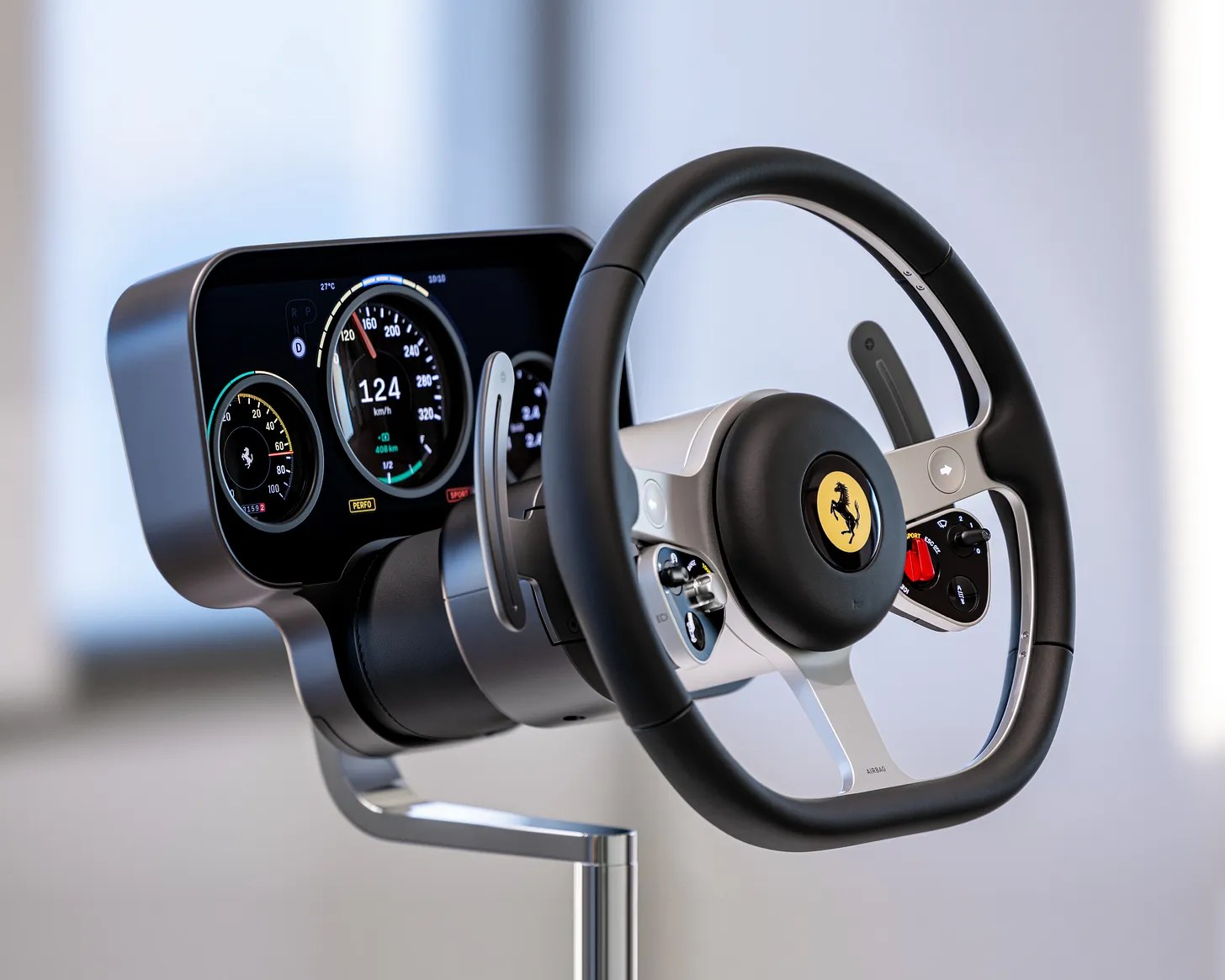
    The Great Touchscreen Con Job

    Some mistakes happen in a moment. A quick lapse of judgment, an ill-advised decision at 3 a.m., an email sent to Reply All. Others take years, unfolding in slow motion as warning signs are ignored, reasonable objections are silenced, and people in boardrooms nod sagely at their own catastrophic short-sightedness. The mass adoption of touchscreen-only controls in cars falls into the latter category.

    Volkswagen has now admitted the error of its ways, vowing that physical buttons are back for good. “We will never, ever make this mistake again,” said their Chief of Design, as if they’d been tricked into it by some mysterious force, rather than actively championing the change.

    It raises a bigger question. How did it happen in the first place? How did entire teams of HMI experts, human factors specialists, and UX researchers – people whose literal job is to stop this kind of nonsense – allow it to happen? Were they asleep at the wheel, or were they simply drowned out by design teams infatuated with minimalism and finance teams rubbing their hands at the thought of fewer moving parts?

    The answer, of course, is all of the above.

    The cult of minimalism, confusing more screens with innovation

    At some point in the last decade, car designers decided that buttons were offensive. They cluttered up dashboards. They broke the sainted, uninterrupted lines of modern interior design. Worse, they weren’t futuristic. The ideal was a sleek, unbroken surface, like an iPhone, only larger and more expensive to replace if it b0rked.

    This obsession with minimalism went unchecked because it looked fantastic in concept renders. Screens glowing with digital promise, smooth and uninterrupted by the ugliness of function. Never mind that the only reason buttons existed in the first place was that they worked. Never mind that people could reach for a dial without taking their eyes off the road, adjusting the temperature by feel alone, a level of usability that no amount of software updates could replicate.

    Rob Tannen, a human-centred design specialist, summed it up recently on LinkedIn: “Fundamentally, the problem with touch-based interfaces is that they aren’t touch-based at all, because they need us to look when using them.” In a moving vehicle, that isn’t just bad design, it’s dangerous.

    The significant point here though is that this was not a revelation. UX researchers have known it for years. The car industry had, in fact, already worked this out in the 1980s, which is why it spent decades refining tactile, mechanical controls that allowed drivers to focus on the road and remain at arm’s length. But in their rush to be seen as technologically advanced, OEMs decided to throw that institutional knowledge in the bin.

    The accountant’s dream, confusing cost-cutting with innovation

    Touchscreens are cheap. They replace dozens of mechanical components with a single panel of glass, a bit of wiring, and some off-the-shelf software. For car manufacturers looking to shave costs wherever possible, it was an irresistible proposition. Instead of painstakingly engineered switches, they could throw everything onto a digital interface and call it an upgrade.

    Charles Mauro, a veteran in human factors (HF), called this for what it was: “We only have touch screens in vehicles because such interfaces provide a marketing and sales boost to new cars by lending the impression of ‘high-tech’ and modern feature sets. From HF’s perspective, they remain highly impoverished interfaces.”

    In other words, it wasn’t about what was best for the driver. It was about what looked best in a press release.

    But removing physical controls isn’t just an inconvenience, it’s actively worse. Simple tasks that once took a split-second, a quick flick of a switch, a half-turn of a dial, became a (painstaking) exercise in menu navigation. Climate control settings buried in submenus. Hazard lights requiring two taps and a prayer. Windscreen wipers accessed through a system designed by someone who apparently lives in the desert (i.e. Tesla).

    The real irony? Some of the most expensive, high-end cars, the ones that supposedly define luxury, ended up with the worst interfaces. A £120,000 SUV with a laggy touchscreen that freezes in winter. A luxury saloon where temperature adjustments require you to gesture-swipe on visuals of air vents. The tech-driven future, they said.

    The Silicon Valley delusion

    Blame Tesla. When the upstart EV brand introduced its monolithic, screen-heavy interior, traditional carmakers panicked. If Tesla was doing it, surely that was the future?

    OEMs, desperate not to look outdated, decided they had to copy the software-defined model. Everything should be digital, infinitely updatable, infinitely customisable. Who needs buttons when you can have a dynamically shifting interface?

    This was a critical misunderstanding of why Tesla got away with it. Tesla’s approach worked (to an extent) because the entire car was designed around it. But for traditional manufacturers, retrofitting touchscreen interfaces onto vehicles that had been developed with physical controls made for a UX disaster.

    The dream was that everything would be intuitive. The reality was that even basic tasks became a chore. Ford, in an attempt to embrace this brave new world, introduced ever larger screens into its cars. The result, as The Verge put it, was predictable: “Surveys have shown growing customer dissatisfaction with in-car tech, especially touchscreen software. People are overwhelmed, and Ford’s response seems to be to add more screens, which is not a guarantee for success.”

    The data problem

    There’s a particularly dangerous kind of UX research that looks at how often people use controls and decides that if something isn’t used frequently, it should be buried.

    This is how Tesla ended up hiding the wiper controls inside a screen menu. Their reasoning? “People don’t use them often.” A brilliant insight in California, somewhat less so if you live somewhere with rain.

    This logic led to cars where drivers had to dig through menus for basic functions. The entire point of a car interface is that when you do need something, it should be immediately accessible and context really, really matters. Nobody wants to enter a submenu for demisters when their windscreen is fogging up at 70mph. Auto Express’s report is well worth a read here

    The Return of Sanity

    Volkswagen’s public climbdown marks a turning point. Hyundai has followed suit. The backlash has been strong enough that manufacturers are now scrambling to put buttons back in their cars, pretending that they always intended to.

    But it wasn’t customer complaints that forced the change. It wasn’t common sense prevailing. It was regulators.

    Euro NCAP has mandated that, from 2026, cars will need physical buttons for key functions to qualify for a five-star safety rating. The industry had spent a decade ignoring drivers, but when the threat of lower safety scores loomed, suddenly they rediscovered their enthusiasm for good UX.

    Where Do We Go From Here?

    The great touchscreen experiment is over. Car interiors are moving back towards hybrid interfaces, a balance of digital and physical that prioritises usability over showroom aesthetics. Manufacturers are rethinking software-defined controls, realising that while over-the-air updates are useful, core functions need permanent, intuitive access.

    Most importantly, UX research in automotive needs to be taken seriously again and their voices heard right up the product development and engineering chain. Not just as a box-ticking exercise, but as a genuine guide for what works.

    For now, though, it’s a relief to know that the button is making a comeback. It turns out that some of the most futuristic technology in modern cars was there all along.

    AI disclosure: Some article research was supported by AI, themes consolidated, article excerpt was AI generated. Article copy entirely author’s own.

    Tagged , , , , , , , ,

    Amazon’s UX: Why Customers Ignore the Chaos

    Amazon’s interface is a mess. Everyone knows it, doesn’t matter if you’re in the industry or you just use it to buy lightbulbs, the odd book and some fancy Tupperware. It’s the digital equivalent of a hoarder’s house, clutter everywhere. A friend of mine once memorably described looking for something as like “rummaging through a warehouse with a torch”, but [she does it because] “I know the bloody thing I want is in there somewhere”. On any given part of the site there’s inexplicable stacks of unrelated items, and a sense that at any moment, something might fall on you. My particular hate are sponsored listings, intruding like pushy sales reps with their irrelevant nonsense while you’re on the way to buy the actual thing you searched for (although sometimes the actual thing turns out to be a not-quite-there copy from some random far-east factory). Genuine customer reviews also get buried under an avalanche of SEO-stuffed nonsense, and yet, dear reader… here I am, ordering 90% of what I buy from Amazon. And you do too.

    However frustrating the experience, it isn’t bad enough to drive people away. Fast delivery, sheer product choice, and a checkout process so frictionless it should be flagged with Gamble Aware. All of this outweighs the UX sins.

    So, Does UX Even Matter?

    It is a question worth asking. If a platform’s core proposition is so compelling, with cheap prices, instant gratification and no meaningful alternative, does the user experience really determine success? Or does it just need to be functional enough?

    The Amazon Conundrum

    Armchair critics love to dissect Amazon’s UX. In the dark corners of the UGC web, Reddit threads are full of users raging against the chaotic interface. Tech journos lament the aggressive Prime pushing, the pay-to-win search results. On paper, it’s a usability horror show. But let’s be clear, Amazon isn’t neglecting UX. It employs entire teams of UX designers, researchers, and engineers who are constantly refining the experience. Not to make it more elegant, but to make it better at selling things. If adding another sponsored listing increases revenue, they’ll do it. In 2022 alone, Amazon made over $31 billion from its advertising business, largely driven by these placements, making it a core part of their revenue model (Vox). If customers still find something to buy despite the friction, then as far as Amazon is concerned, the system is working just fine. The difficulty we have as UXers is understanding and reconciling this. Because we see ‘Sponsored’ listings trump the actual best-result search listing we say “This is wrong, users hate this!” but somewhere deep in Amazon HQ is the data to say, “You know what, they actually don’t, and here’s some more $” (EcommerceFuel and others provide further context on how Amazon’s sponsored listings work and why they persist). The same logic applies to other blunt instruments like relentless pop-ups (deeply irritating but demonstrably effective at nudging hesitant users into making a decision) and those blinking, anxiety-inducing countdown timers all over that Instagram brand’s shop aren’t there by accident either.

    When UX Takes a Back Seat

    Of course, Amazon is hardly alone. Plenty of other sites with objectively terrible UX remain dominant because their value proposition is simply stronger than the frustration they cause:

    • Booking.com drowns you in pop-ups and ‘Only 1 left at this price!’ warnings. Yet its vast selection and competitive pricing make it impossible to ignore.
    • British Airways’ website looks and feels like it’s been trapped in 2009, but people still book flights because, they will always believe the brand stands for something British and the pilots are the best trained and most decent in the skies.
    • Vinted The latest upstart eCommerce brand is having a runaway success in the UK but this is absolutely down to the simplified sell-send logistics and payment process, and definitely not to the bloody awful filtering and product exploration UX (seven different ways to filter on Ralph Lauren sweaters anyone?).
    • GP surgery websites, National Rail, car park booking systems, there’s a vast ecosystem of poorly designed necessities that survive because users effectively have no choice or poorly rationalise their value/essentialism.

    This phenomenon isn’t anecdotal or lost on UX thinkers. As David C. Wyld argues in The Endless Battle Against Bad UX, poor usability is pervasive in major companies, and fixing it isn’t always a top priority. Similarly, The World is Running on Bad UI (Michal Malewicz) notes how many essential services and platforms operate on clunky, outdated interfaces yet remain functionally irreplaceable. Their insights reinforce the central argument here: bad UX doesn’t necessarily mean bad business.

    The Captive Audience Factor

    The obvious point here is that there is a difference between platforms like Amazon, where the UX is frustrating but functional, and services where users are stuck with whatever’s available. The difference with Government portals, legacy corporate systems, anything remotely tied to infrastructure is that these things aren’t just designed badly; they are fundamentally unmotivated to improve.

    It’s not even a matter of UX being ignored (again, plenty of these organisations are populated by skilled and well-meaning design folks), it’s often a mix of limited budgets, outdated tech stacks, bureaucracy (many hands), and the sheer pain and complexity of rebuilding something that’s been patched together over decades.

    The same logic applies to countless internal systems in large organisations, where usability takes a backseat to bureaucratic inertia and legacy technology. Everyone grumbles about it, but change is slow, and innovation rarely prioritises the dull but essential parts of work life. Just as no one is investing to replace the office microwave that’s been there since the turn of the millennium, so we continue to suffer through whatever shitey interface we’re given.

    The Reluctance to Overhaul

    Could Amazon wholesale overhaul its UX if it wanted to? Technically, yes. But would it be worth it? Probably not. The site is a sprawling ecosystem of millions of products, channels and third-party sellers, advertising deals, and logistics chains. Trying to impose a sleek, minimalist interface would mean unpicking the very mechanics that drive sales at an enormous cost.

    The same goes for other massive platforms. The bigger and more layered a system becomes, the harder (read more expensive) it is to rebuild from the ground up. This is exactly the scenario I described in The Local Maximum Problem, where businesses become trapped in cycles of micro-optimisation rather than taking bold steps toward meaningful UX improvements. Businesses, especially ones as enormous and entrenched as Amazon, often optimise for small, short-term gains instead of taking the risk of a complete overhaul. They’ve reached a peak where micro-adjustments keep the machine running, even if they don’t solve fundamental UX flaws. Redesigning from scratch is a leap into the unknown, and when the current setup is still printing money, who would take that risk? Maybe they update a search filter. Maybe they tweak the layout slightly. But the underlying experience remains a Frankenstein’s monster of competing priorities.

    So, Does UX Matter?

    Yes, but not in the way purists would like to believe. Good UX reduces friction, increases trust, and improves efficiency, but it doesn’t always dictate whether people use a platform. When the value proposition is strong enough, users will tolerate a lot.

    The idealistic view is that platforms should improve out of respect for their users. But what do you think? Have you ever abandoned a platform because of its terrible UX, or do you find yourself sticking with frustrating experiences because the value proposition is just too strong? Perhaps if people keep clicking, why fix what isn’t broken?

    Tagged , , , , , , , , , , , , ,