Category Archives: work

We can do more than one thing. Creativity can help with both parts of the COVID19 brief, and each is valid.

For this post, I wanted to address a train of thought which has been prevalent in the creative and marketing spheres as the world tackles the pandemic. This is a sector that loves to critique itself, everyone has an opinion and, of course, that means I have one too.

I tend to believe that most people are good. Consequently, when I see our industry’s immediate response I err on the side of assuming altruistic, positive intention. The immediate response was, in many cases to produce ‘social distancing’ riffs of brand assets: McDonald’s’ separated golden arches, the Olympic and Audi rings underwent similar treatment and so on. This was easy, repeatable. Evan Nicole Brown in Fast Company witheringly referred to this as equivalent to the vacuous well-intentioned ‘thoughts and prayers‘, others likened it to the virtue-signalling trope of changing a social media avatar, some might say simple opportunism.

But this misses the point. Changing your avatar when a terrorist event happens is an ex post facto acknowledgement of sympathy, changing it to a rainbow signals a commitment and solidarity with LGBQT+ rights. We can debate the worth of those actions at another time, others already have done. The fact that brands have done this in the past (Mercedes Movember 3-point star anyone?) meant there was precedent, it was easy to sign-off and reproduce. But it wasn’t worthless. In the COVID19 instance the logo split is instructional, perhaps derivatively so, but it’s an acknowledgement of the steps we all need to take to stay apart; it might not be original, but communicatively speaking it’s actually doing a job. It’s also only part of the story.

Because, while social distancing is dealing with the preventative part of the pandemic (flattening the curve), the other element is the tangible action that brands and organisations are undertaking to improve our ability to respond to the healthcare crisis. In this instance we have seen equally derivative responses: huge amounts of 3D printing hacks to produce protective equipment or make it easier to use. Repetition here is inherently valuable! More is indeed more. Bring on the bucket loads of brewers and distillers making hand-sanitiser, the optimised venturi valves or retrofit respiration aids to Decathlon scuba masks. We’ve seen creativity in digital environments that support frontline health workers with food delivery, symptom tracking, transport and mental wellbeing. I was delighted to see Welsh denim manufacturer Hiut start making scrubs.

There’s no reason that all of these approaches cannot co-exist, and when pontificating columnists and the quick-fingered Twitterati hammer out their (equally derivative) shut-downs of the latest ‘lazy’ work: “It’s a pandemic, not a brief” sighed Anselmo Ramos (1k likes)  that’s when we snuff out the little flames of applied creativity that might just have made a difference. Of course, one logo separation looks the same as another but added together when everyone’s saying the same thing is the message diluted and ignored or is it normalised, does it make us all accept that spending time distanced and apart is the right and normal way to behave right now? I’d say it does, and that’s a good thing. There are other ways to communicate the same point: Volvo for example, if it still sounds like it came from your brand, so much the better.

Finally, there’s an important element in this approach that concerns accountability. Responding with even a low-level logo change does assert that the brand understands and cares. Anything which the organisation then fails to do or runs counter to that is damaging and perhaps this is the point others have tried to make. If you separate your logo and do literally nothing else or make your employees or customers suffer by your actions and policies then more fool you. Equally, brands don’t absolve themselves of the need to edit and interrogate the value of their work, many should have asked themselves whether emailing their customers to tell them that their employees were ‘washing their hands and had sufficient space between them in the factory and might you like 10% off stock’, was likely to be a welcome reassurance or simply an opportunity to unsubscribe (as they’d forgotten to when the GDPR emails went around).
CHART

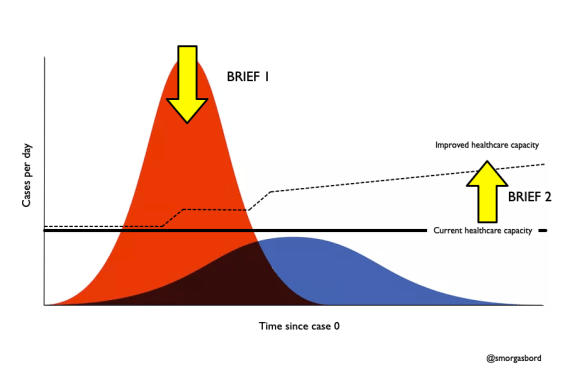
There are two briefs to respond to. Why is only brief 2 considered worthwhile?


I’d return to Mr. Ramos and others and say there is a brief. A brief with two objectives:

  •  Flatten the curve (the ‘easy’ one) that we behavioural scientists have picked,
  • Increase the healthcare capacity (the harder one) that’s demanding we do all we can to add improve the efficiency of medical interventions and protect the healthcare frontline workers.

On the second part, Ryan Wallman and Tom Goodwin seemed to suggest that ‘marketing people, ad people’ lacked the intellectual heft or credibility to tackle these problems (“our understanding is always facile“), particularly if they were approaching this from the naivety of youth (<27) .

I profoundly disagree.

One really does not need to be an epidemiologist to produce work that responds to either the problems so clearly defined in those two distinct parts above, and I really don’t think I’ve seen a single brand or marketeer try and solve the problem at a virological level.

There is also room to have fun and interventions and creativity might not seem so obvious as solutions to the brief but can be strongly connected. I’ll return to this perhaps in my next blog as we address the implications of lockdowns and restrictions that last a prolonged period of time and we find ourselves struggling to sustain the momentum and need other ways to maintain that downward pressure on the curve.

Aside from the irascible and cynical commentary on the first salvos of marketing’s response to COVID19 there has nevertheless been some helpful and measured guidance. Renata Mittnacht and Carly Gibson of Ogilvy NY produced a simple checklist and accompanying social media guide which certainly helped us at Spark44 edit responses to the pandemic for our client, Jaguar Land Rover. This guide reminds us to think carefully about tone, opportunism, the contribution to panic or anxiety, the assumptions we might be making and the impact of behaviours we might be encouraging. Of course, it also encourages us to ensure the brands we work with are contributing in a meaningful way through their wider Corporate Social Responsibility remit. It’s this sort of constructive filter we need to apply.

Please, even if you’re allergic to unoriginality, dial down the crit and allow some of the wildly-sown creative seeds to take root (help thin them out by all means) but we really need to be tackling this en masse because I’ve already illustrated above, we’re seeing some truly inspirational piece of design, coding, science, engineering and psychology being unleashed on the vicious virus.

When Matt Kandela concluded  that as creatives our final response shouldn’t be “well, perhaps we change our logo?” I found myself answering that of course, it shouldn’t be, but if that’s where you choose to start your part of the response, that’s ok too.
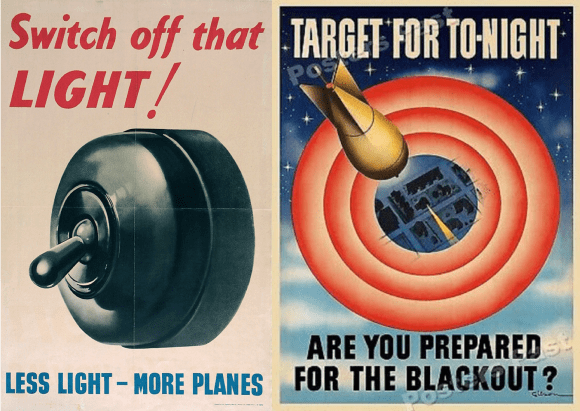
Put that light out. Get out of the park. Lessons from the behavioural science of 1939-45.

light-out

British wartime posters warned of the consequence of disobedience

Depending on your level of cynicism or perhaps your workload, we’re either in the middle of a boom in behavioural science or we’re over-playing our hand. My personal opinion is that it is no more or less than it has ever been; perspective will emerge over time but, evidentially, it has been behavioural interventions that have had the most significant impact in these opening battles with COVID19, not least because currently there is neither a vaccine nor a cure.

Historical perspective is something I thought I’d share today to perhaps point out some interesting parallels with how society is both encouraged and legislatively required to behave under threat.

In 1939 the journalist Mea Allan described London’s descent into darkness thus:

“I stood on the footway of Hungerford bridge across the Thames watching the lights of London go out. The whole great town was lit up like a fairyland, in a dazzle that reached into the sky, and then one by one, as a switch was pulled, each area went dark, the dazzle becoming a patchwork of lights being snuffed out here and there until a last one remained, and it too went out. What was left us was more than just wartime blackout, it was a fearful portent of what war was to be. We had not thought that we would have to fight in darkness, or that light would be our enemy.”

On the 1st September, two days before war was declared, the nation was expected to extinguish lights after dark, to prevent the Luftwaffe from identifying areas of human population or movement which would allow them to target their ordnance. The nation lived under these regulations for 5 years, 7 months and 22 days. Although it had been tested briefly during zeppelin raids in 1915, the blackout this time was not simply a dimming of light, it was comprehensive, vital.

The blackout was also not simply a request, it was an instruction, asserted in law and policed by air raid precautions (ARP) wardens. Guidance was provided and the public was readied for this change with rehearsals during 1938. By the autumn of 1939 streetlights were extinguished, curtains were lined and thickened (and were not to be washed, less they thinned), cardboard and paint applied to windows. Even cars and pushbike lights were shuttered downwards.

Living in near-total darkness outside wasn’t easy. Overnight houses, factories and pubs would become suffocatingly stale and stuffy, raising and removing coverings were tedious. Traffic accidents soared, crime experienced an uptick. Again, the resourceful public responded by daubing kerbs, street furniture, railings and even cattle with white paint and the government played their part by lowering speed limits and beginning the marking of roads with white paint. Interventions even extended to advising pedestrians to walk with a newspaper, white handkerchief or leave their shirttails exposed.

For the most part, the public adhered to these conditions – it was quite apparent that disobedience could result in the clear and present danger of a bomb being dispatched over your house. If the fear of a bomb was insufficient or apparently remote, fines and court appearances gave it more immediate salience.


During the 2020 pandemic, society is facing a similarly disorientating and debilitating curtailment of primal need. This time it’s not light, it’s movement, social contact and space that is under restriction. Restrictions that are not from sunset to sunrise but all day long. It’s important to state here that I draw this comparison not to assert one being worse than the other, simply to contextualise the manner in which a society’s behavioural norms are first changed instantly and then must be sustained over a considerable period.

In the opening period of the pandemic response from the British government, there were a series of interventions aimed at slowing the transmission of this highly contagious virus. The public was urged to ‘self-isolate’ if showing symptoms, to ‘social distance’ and to wash their hands frequently and thoroughly. On the latter at least guidance was provided. In these interventions it could be argued that the guidance was particularly individualised, focussing on what we as one person could and should do. A direction, perhaps, that simplicity in messaging is important. However, a subtle tweak then occurred as observers noted that ‘self-isolate’ and ‘social distance’ although helpful in the epidemiological context, was tinged with negativity and thus harder to sustain longer-term (which would be required as the modelling had indicated) as they ran counter to our primal wiring to be sociable beings. This tonal change resulted in ‘stay at home’, essentially being the same advice but reframed in the more pastoral and parochial sense of being amongst familiar surroundings and implying that staying with the family group was ok. The advice to ‘self-isolate’ remained but was now specified to individuals displaying the symptoms of COVID19 not as a general preventative measure. With ‘social distancing’ the next iteration attempted to reframe this challenging behavioural change.

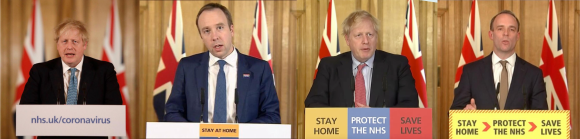
The advice to ‘stay at home’ was augmented with two additional parts. ‘Protect the NHS’ and ‘Save Lives’ Rhetorically this is clearly from the same communications school as ‘Get Brexit Done’, ‘See it. Say it. Sort it’ and adheres to many of the rules of good writing we know from the advertising and creative industries. Clearly, the rule of three is deployed once more, but to borrow also from Ogilvy:

  • Write the way you talk…. ‘Stay at home
  • Use short words … yep.
  • No jargon … ‘self isolate
  • Make it crystal clear
  • If you want action, don’t [just] write, tell … and this is being told, a lot

So, linguistically, it’s on the money. It’s apparent too that it’s a behavioural tweak: behaviours that were self-protecting (‘don’t let the Germans bomb my house … but maybe they’ll miss?) become societal protection. Although you might not feel personally at threat by COVID19, your individual actions are for the greater good.

In ‘Protect the NHS’ the government has identified and leveraged the quasi-religious devotion to the NHS, almost universal amongst the British public. For ‘NHS’ read ‘country’ and here, although the nation is not under unique attack, global as this pandemic is by definition, the NHS becomes both a literal organisation to protect – if we protect our health service from being overwhelmed it will function effectively – and metaphorical representation of Britishness. The coda to ‘save lives’ becomes almost incidental but its plurality is important. We, collectively are saving multiple lives with our behaviour, this is not simply self-preservation, it’s a collective responsibility to save the lives of other people even if you personally do not feel vulnerable.

Aside: The Government has iterated the messaging graphics used to decorate the lectern, optimising the televisual clarity and neutralising the implied party-political colouring.

lectern

Iterations of the Coronavirus briefing lectern graphics.

To add to this central message, further advice highlighted the protective responsibility: as over 70s and the immunocompromised were at higher risk, they were required to stay indoors and have no physical contact for shopping or other reasons. The most obvious negative interpretation of this is the profound isolation and anxiety this would cause. Consequently, this was framed as ‘shielding’. A more intimate, protective tone that shifted the obligation away from those being shielded, unburdening them with the responsibility the rest of us should bear to keep them safe.


So, the message was out and we were, in the most part, adhering. Availability and negativity biases went to work amongst the press as the disobedience was highlighted: It’s far easier to show a handful of people sunbathing in parks or gathering for illicit parties than it is to photograph the millions upon millions of people doing exactly as they were advised. It’s human nature to point the finger at the black sheep amongst us and I am under no doubt whatsoever that if social media had been present during WW2 that the great British public would have been passionate in shaming their neighbours. Indeed, of course, they did such that “careless talk, [and behaviours], costs lives”.

Shaming was seen in authority too and to return to 1939-45, eventually the ARP’s admonishing ‘put that light out’ began to symbolise a certain jobsworth pedantry, most obviously through ‘Dad’s Army‘, and the truth is that it was an instruction that was rarely needed, so effective was the societal pressure. Warden Hodges found his modern-day companions in Derbyshire Police, so memorably excoriated by Lord Sumption for their drone surveillance of socially-distanced dog-walkers.

It may be that I have over-egged this particular historical comparison and inferred too much with too little knowledge. Hindsight will, as is so painfully true in all the interventions we are witnessing to today, be the judge.

Perhaps the easiest way to summarise this is to say that it’s the individual threat which kicks us into action, whether that by an invisible virus or an airborne bomb, but it is the collective responsibility and societal pressure that will ensure we sustain it.

Online queues, is there a better way?

traffic-about-to-crash

Source: Queue-it, technology currently shuttering Ocado and others in the UK.

The seed for this thought came from Robert Hall (of Foolproof) and I must caveat that I have limited knowledge of the development of load balancing and traffic management in this scenario so am prepared to be roundly schooled by those that do (paging Ross Peat). With that understood, my approach for FMCG delivery services is as follows:

Allow customers into your online store. The pinch point is the allocation of delivery slots, customers understand that this is a problem which needs to be sorted through a fair algorithm that balances the logistical complexity with needs-management for the vulnerable. So we can manage that expectation and support them with at least part of their intent. Unlike a physical store, there is no obvious reason to curtail the capacity for browsing and making product selection choices. Currently, the retailers are holding people at the door, keeping the virtual shutters down and telling them their checkout queues are too busy. They can’t even come in the door to see what products are on the shelves.

So, to correct this, allow customers into the store where they can be permitted to browse the inventory, select the items and quantities they desire (with predictions of availability based on the stock levels and completed purchase patterns) and then join the queue for a delivery slot. In this instance, some endowment effect is at work and the abandonment of their delivery is disincentivised.

This is where it gets complicated, my first thought was that the slot-wait should be a ‘ring back’ style queue where you’re contacted by email or text when slots are opened up and so the wait happens in the background without you having to attend to it in an open window. However, this would create a batch demand where traffic would flood in as tranches of slots are released. Then I thought perhaps customers could select a series of preferences for slots (a set of five preferred dates and times) and the system accounts for this demand and attempts to predict and balance the slot allocation, providing a trackable progress indicator to the customer.

Or perhaps something even more complex: an approach where essential items are batched for earlier delivery (fresh bread, milk, eggs, paracetamol, hygiene products) where items you’re prepared to wait for (laundry products, low-volume ambient lines) are held back at a lower priority. Consistent with this could be the creation of ‘essentials bundles’ which groups common essential items into a repeatable and pre-packaged SKU that could be delivered more efficiently than 0000s of unique baskets.

The data obtained from customers creating these (ahem) ‘hanging baskets’ can be used to help the retailers plan their sophisticated supply chains and delivery logistics. From a user experience perspective, I’m particularly keen that we find a way to open the shutters and not insist everyone waits outside the store only to be frustrated and disappointed at all steps of the journey once they’re in.

Over to you in the comments.

[this post originally appeared on LinkedIn 30 March 2020]

Tagged , , ,

This was UX, part I.

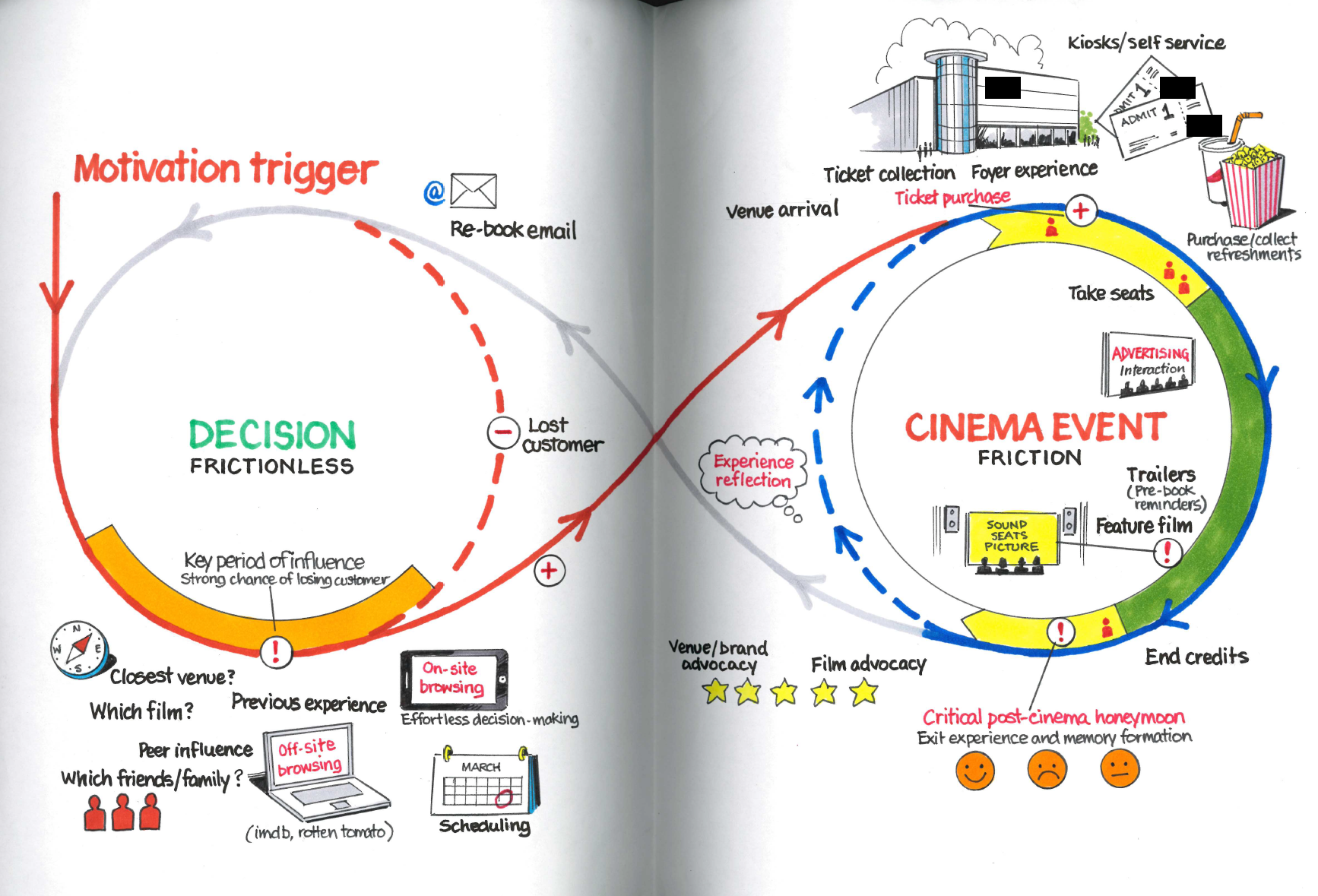
An infinity loop showing the customer journey of someone buying a cinema ticket and watching a film.

Cinema Experience Loop.

This is the first of an occasional series of explorations into my previous work. I’ll stay light on the reasons only to say that I’ve been clearing out some paperwork and rather than hang on to old documents I thought I’d scan them, creating a digital record (portfolio?) and have the opportunity to explore them in public.

First up is this hand-illustrated experience loop that looks at the ways in which we come to think about buying a cinema ticket and watching a film. Full disclosure this is a commissioned illustration based on my original sketches. I’d love to be that neat but, for a pitch, it needed a draughtsman’s hand.

So, we start on the left side with a motivation trigger. What makes a prospective cinema-goer interested? We imply that a decision to watch something has already been made and this circle investigates the processes being made to identify why the customer chooses this particular cinema (brand). The early phase of influence is all about holding on to a customer that could easily flip to a different venue or decide not to go at all if there is friction in the process of determining a match between film, scheduling and the booking experience. This period, from a creative perspective, opened up lots of discussion around what the on-site and off-site experiences are and how they increase motivation or add friction. How does, for example, the role of review sites like Rotten Tomatoes or, frankly, Google, impact on the linear nature of this flow. How might the (ahem) cadence of this part of the process change depending on whether you’re looking for the next few hours or in the next week?

We looked at the impact of losing a prospect at this point. How might we encourage them back into the decision and consideration phase? We might think about creative ways to re-target and the requirement to have a technical solution in place that identifies those people that are dropping out of the process.

By contrast, the process of attending the cinema is explored on the right-hand side. This is where we looked to add a little friction, slow it down and engage the customer to embed a brand experience that is memorable. Creatively we wanted to introduce ideas around the venue arrival, recognition of the customer at point-of-sale and the personalisation of the foyer experience. How might we influence that crucial ‘take your seats’ phase, where your sense of anticipation is at its peak and where you’re most receptive to the little moments of delight that make the brand stand out?

The film itself is the green section, not much we can do here. This was largely out of our brand’s control. They could deliver exceptional sound and visuals – technology and seating design that was a cut above, but this was out of the purview of our pitch. At the end of the film, the opportunity to embed a great memory is significant. Kahneman talks of the effect of a crashing cymbal at the end of an orchestral score and this is the analogous moment, in more candid terms: don’t fuck it up. To this end we had the opportunity to discuss the rating or review of the experience on exit and the supporting of advocacy, finding creative ways to build on that classic behaviour of walking out of the cinema excitedly chattering about what you’ve just seen – how could this, for example, be broadcast more immediately so that it might influence people in the decision phase?

Finally, there’s a period of reflection. A little later than that foyer exit, perhaps in the day or so after the event where the brand has an opportunity to deepen the memory and connection of the experience with reward, follow-up and loyalty options that potentially build on the momentum and retain the cinema goer within the brand’s orbit such that any future decision to view is even more likely to result in a return to our client’s site and location.

As an exercise, this was a classic customer journey analysis and was the result of deep, intensive thinking and research during a pitch. It’s the tip of a strategic iceberg and was visually the framework which we used to introduce and anchor the creative ideas we presented. It was a demonstration to our client that we thought about the role of loyalty, of the critical touchpoints and potential leaks. We could highlight the interventions we had designed: exceptionally easy booking and film discovery, a personalised welcome and pre-booked refreshments, an effortless review-and-share interaction.

I’m sure it can be critiqued and holes identified. It’s pitch material and therefore hardly the most intensively researched and finessed work – not like you might do with a multi-year client, but I’m proud of what it allowed us to present and the manner in which it demonstrates that UX can borrow from service design principles to add essential context to the flows, screens and interactions we design and present.

Get in the comments on the blog/LinkedIn and let me know what you think. More of this sort of thing soon come.


Tagged , , , , , , ,

User Experience Lessons from the collapse of Wonga

Applied behavioural psychology in the world of User Experience (UX) occasionally strays into conversations about ethics. As persuasionists, is it right that we design interactions that part people with their money ever-more effectively? Most of us can robustly defend this work as part of a layered approach to the natural consumer behaviour of mature economies. There are, naturally, products and services many of us feel uncomfortable supporting with our work. Personally, two of my red lines are gambling and payday loans.

It will not surprise you then to know I did not mourn the news that Wonga is in significant financial difficulty. The previously-feted company saw itself as a technology provider first and financial service provided second – much has been made of their skill in the former that led to success in the latter.

Wonga is a powerful example of the deployment of many pieces of behavioural design, working together. Firstly, marketing to vulnerable segments, then underplaying the interest rates, using infantile creative that trivialised moderation, and their addictive user interface was just one part of that. That interface meant reduced friction, making it unbelievably easy for the distressed consumer to request instant cash.

Consider how their approach mapped to the EAST framework for behaviour change:

  • Their homepage sliders simply asked “how much cash do you want?” and “how long do you want it for” appealing to our avarice instinct. (easy, attractive)
  • They highlighted that you could have the cash in minutes. (timely)
  • They used design emphasis to steer you away from the true cost and toward the application buttons (attractive)
  • They used examples of people like you benefitting from their service. (social)

They let you see what you could get and then applied insufficient background checks, which meant that, in most cases, you got what you asked for. This played to two very damaging real-world situations: the ability to re-float a betting habit, and payday panic (running out of cash before salaries or benefits are paid). In neither of those examples would anyone suggest that issuing 5,000% APR loans would help and that the situation would not sufficiently improve by the next cycle that said obscenely high-interest loan would not actually deepen the problem. Thus Wonga’s irresponsible lending criteria (discussed at length in a brilliantly detailed tear-down by Dominic Lindley) was married to the very worst example of addictive interface design.

Mourning the inevitable demise of Wonga is not something Martin Lewis is keen on either, and in his comments on the subject he also raises the observation that a national financial illiteracy had a role in providing the fertile conditions for irresponsible lending to take hold. It’s a very worthwhile point and important also to remember that this applies as much to the ignorance of saving and investing as it does to the lure of easy credit.

In that regard whilst I take no pleasure in the possibility that good people will be made redundant from the UX and design teams at Wonga, I would suggest that they promote themselves to the investment industry. Much has been achieved in making microsaving and investing more effortless through technology, product design and marketing, but there is always more that can be done. It might be a far-fetched scenario but if the suggestible young professional can be duly coerced into upping their pension contributions after a heavy night on the tiles whilst watching late night TV then perhaps those skills won’t be wasted.

When making sense isn’t enough: Electric Vehicles and behaviour change

Several years ago the government wanted everyone to replace their loft insulation with more efficient stuff. They subsidised it so heavily it made absolute economic sense. But, proportionally, few people did it. Why?

The reason was that clearing your loft was a colossal arse-ache. The problem was not one of economics, it was one of domestic logistics.

Anyone doing the math(s) can see that running an electric vehicle makes sense. Heavily subsidised and low running costs (by almost every measure) but take up will be hampered because of logistics. Consider this quote from a recent Top Gear article based on the UK infrastructure: “To charge an EV on the road, you need to be a member of several different schemes, with opaque pricing. Some allow you to turn up and go, some want to send you an RFID key in the post, some will allow you to use an app. Some demand an up-front membership fee.

In [the author’s own] borough of Islington, you have to prove you own the car and prove you live there before you can use the on-street posts. So I can’t because I don’t own the Jag.

Oh and by the way, if you want rapid charging then it’s CCS for you. CHAdeMO and Tesla outlets are as much use as a petrol pump.”

So right now the EV market is tough because the government won’t help people clear their lofts.

Protected: Wardrobe Minimalism, Changes for 2018

This content is password-protected. To view it, please enter the password below.

Tagged , ,

Pound Cost Averaging: August 2017 update

Time for an update to my little experiment in Pound Cost Averaging (PCA) and a modified version of this investment strategy which, as you will recall, invests more aggressively in a falling market and more cautiously in a rising market. My last update was 6 months ago.

When I started this experiment the FTSE was at 6903 points, on 1st August it was 7424. A rise of 7.54%. Using my modified PCA my ROI is 9.1% which is marginally outperforming a basic PCA and both are out performing the FTSE. The (rounded to the pound) figures show a pretty close match.

  • The £1991 total invested for the modified PCA has grown to £2173 (+£182 or 9.14%)
  • The £2000 total invested for the standard PCA has grown to £2180 (+£180 or 9%)

I’m surprised that the modified PCA hasn’t really pushed up the growth but in truth the market has been +ve in 11 months and –ve in 9 months so it’s really not seen the kind of prolonged rises and falls that might change this more. I’ve also had some thoughts that if generally the market rises then a strategy which ultimately backs-off on the inclines to the same degree it goes hard on the declines is always going to struggle to beat the average! So, at the end of the year I’m going to tinker with the modifier and go harder on the downhills.

In any event, if you’d put the same investment in a cash ISA over this period, well you’d have about £30.


This was Dare


tumblr_o8idh3tpay1vvlokao1_1280

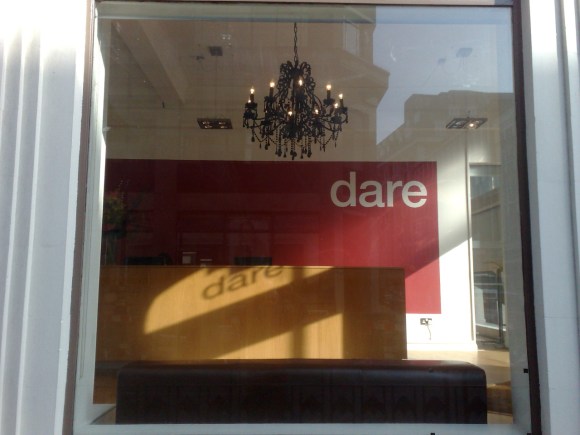
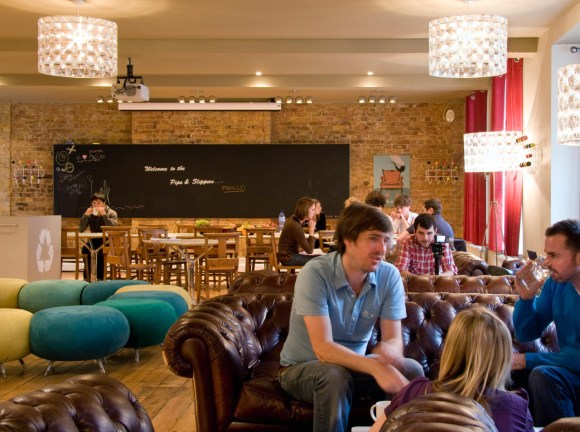
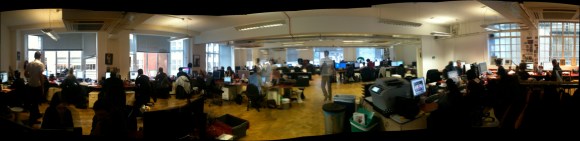
How Dare looked in 2008, 13-14 Margaret Street, when I joined.

Of the many anecdotes I use to colour my conversations at Dare, one I have repeated a good few times is that I didn’t know what planning was when I interviewed to join the planning team. My interviews with Mark Bell and the venerable John Owen confirmed to me that planning seemed an interesting home for my then-discipline of Information Architecture. 9 years down the line I leave Dare this week having helped develop a new discipline in Experience Planning and to define a skill set and methodology that is admired by our peers and directly responsible for some remarkable behaviour change stories and commercial returns.

Knowing so little back then about agency life and the heritage of Dare and its DNA embarrasses me in hindsight, but it’s not unique. Reading Jeremy’s last post at BBH Labs it’s apparent that going in green isn’t such a bad thing. Dare’s recruitment policy was once summed up as being about finding people who were Good and Nice. It didn’t always work out that way, of course, but the overwhelming majority of people that walked through the doors at Great Titchfield Street, New Cavendish Street and recently at Tabernacle and Rosebery Avenue, have been the kind of talent you enjoy working with and learn quickly from. I hope, in some way, I’ve paid it back along the way.

Dare’s new direction, a direction I co-authored in December 2016 is absolutely right for its continued success. As Digital Design Engineers I am convinced that clients, press, partners, and employees will be talking about some exceptional work coming out of the 4th floor in the months to come. Work which, I’m proud to say, will have started its life in the research, analysis and creative applied-psychology of the Experience Planning team I leave behind; a team now solely in the immensely capable charge of Roz Thomas and, once again, Mark.


tumblr_o81i113lqy1vvlokao1_1280.png

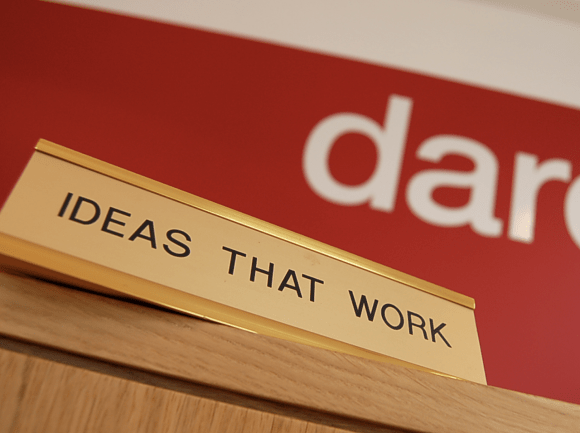
Ideas That Worked


In the first years of my time at Dare we made banners and microsites, ideas that worked. We told the story of BMW’s efficient dynamics, Jonny Watson and Dan Harrison showed the world the capability of Bravia TV through the missions of James Bond, deployed a roving LiveGuy for Vodafone when 3G was barely a thing we. Gavin Bell and a swelling social planning team pumped up space hoppers with tweets for Sony Ericsson. Mark Hastings and I changed the way people bought investments with Standard Life, Rob & Dip created the world’s most successful branded app – for a while most Americans thought Barclaycard made waterslide games. Times changed and we grew hard and fast, site builds got bigger: Premier Inn, Sony Ericsson. These weren’t £20k campaigns they were major Ux and design jobs. We went after ATL work, we developed apps for London 2012, Race for Life, Stephen Fry and Jeremy Clarkson. TV ads started coming out for PHE, powered by smart behaviour thinking from the likes of Nick Hirst or Go Compare with Andy Nairn’s noble but controversial attempt to kill off Gio.

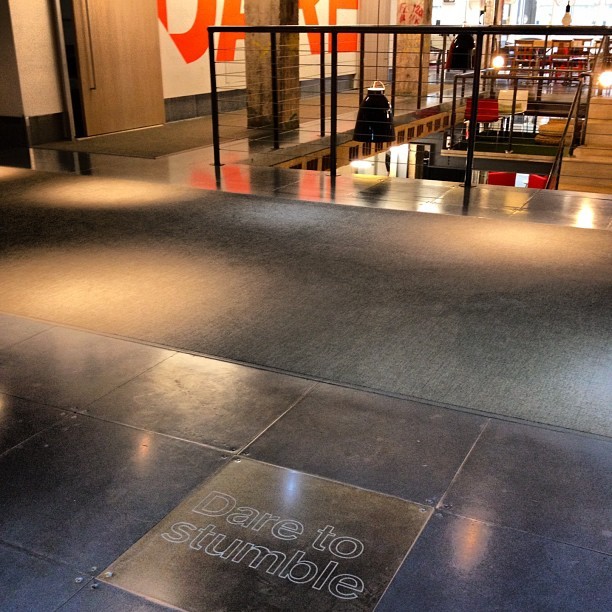
More changes in ownership and leadership, the dawning realisation that the mergers weren’t bearing fruit and some sterling work still came out of the shop. Suddenly we’re knee deep in site re-architecture and builds for Post Office, EE, Investec, Aviva. Digital transformation and Experience Planning defined the agency in the pre-Oliver era and the pitches rolled in week after week all seeking the same transformative digital thinking. In the Oliver era, Dare continues to deliver for Hakkasan, parkrun, Barclays, Nike, EE, Vision Express. Along the way sure we misfired with countless strategic visions and too many misguided pitches, we etched our values into OSB wall panels  and floor tiles  but couldn’t always get our investors, staff or the press to believe it.

In truth, what made Dare the kind of place I stayed at for 9 years was not written on the floor or presented at the end of year reviews. It was everything we did together in work, in the pub, on email lists, and in the parks, cafes, restaurants, trains, taxis and planes to client offices. Almost every moment was great, or if it wasn’t fun it was purposeful, intelligent, creative and we held each other to the same exacting standards. It was, it is, 3PF, Dare Run, The Gavins, Dare Folk, The Nook at Dare, The Lukin, the Ship, Knowing Me Knowing You, Dare FC, First Thursday, The Pipe and Slippers, The Crow’s Nest.


tumblr_o83h1sfurk1vvlokao1_1280

The Pipe & Slippers


I stayed late many many nights. I watched designers work and rework their designs to be as sharp as a pin. I wrote and rewrote deck after deck until it felt perfect. I tested, tweaked and fettled with developers and our experience team to make interfaces that felt effortless, exciting and memorable. In my last weeks at Dare I worked with as talented and energetic a team as any I have done, a team in the new era that’s even leaner, better equipped and faster. A team of perfectionists with a work ethic that saw us deliver a suite of user experience documentation, functional specifications and remarkable designs that prove that, right now, there are few places capable of the kind of quality and thinking that Dare produces at its best.

Still over 2 years away from relinquishing their ‘Digital Agency of the Decade‘ title, I wouldn’t be in the least bit embarrassed at continuing to trade on that heritage whilst having considerable confidence that there is, under Michael Olaye’s watch, plenty more great work to come.


tumblr_o8idt3gduh1vvlokao1_500h

Where (some of) the magic happened


I’m going to struggle to name all the amazing people who made all this happen but here goes an attempt to name check a lot of you:

Mark Collier, John Bartle and Board and management team variously including Lee Wright, Leigh Thomas, John Owen, Toby Horry, Claire Hynes, Gal Bell, Nadya Powell, Stephen Morgan, Richard Neish, Fergus Adam, Jamal Cassim, Perninder Dhadwar, Mark Cramphorn.

A creative, copywriting and design heritage exemplified by Flo Heiss, Laura J-B, Suki Rai, Ben Lloyd, Steve Whittington, James Warfield, Dan Viveros, Dennis Christensen, Ron Siemerink, Michelle Charlton, Dan Bray, Kerry Roper, Charlie Phipps, Matt Firth, Kit Hoang, Jonny Goodall, Luke Stenzhorn, Matt Henry, Mark Gardner, Matt Bolton, Stuart Peddie, Vass Alexiou, Ian Fooks, Eduardo, Kit Suman, Pat McCaren, Jon Long, Emma Lawson, Carina Martin, Nicky P, Rammo, J-P, Matt, Jake & Ig, Woods and H’Bone, Watson & Harrison, Rob & Dip, Fergus Jackson, Spike & Steve.

A technical and production capability in Jake Morris, Ilya, Alex Matthews, Perry Nightingale, Charlie Perrins, Larry Naman, Massi Vallascas, Davide, Nick Marais, Al Prater, Jimmy, Marko, Martin Bakewell, Ian Clement, Will Lear, Jade Bisram, Barney Voss, Joe Holland, Lisa Mestig, Claire Badhams, Amy Chalkley, George Ryan, John Brombley, Anna Leapman, Phil Wright, Nina Lewis, Freya Page, Jasper Squier

HR and support from Kim Woolner, Lou Jackson, Natalie Chomin, Gemma Popejoy, Harry P, Keith, Emily Macfarlane, Stuart Martin, Rebecca Owen, Marni, Kate Campbell, Jonathan Williams, Belinda.

Client management tekkers from Leigh and Nadya, Liza Durge, Al Bowers, Matt Law, Rebecca Saunders, Jamal Cassim, Josh Harris, Mizzy Lees, Emma Bennett, Asa Skogstrom, Mark Hastings, Muscles, Lucy Doubleday, Rox, Gav Bell, Mark Evans, Melis Ongun, Alex Smith, Lexi Cherniavsky, Ruth Feltham, Katherine Lathwell, Vanessa Juby, Nathan McKean, Hannah Hilbery, Elizabeth Butterworth, Tamara Bennett, CJT, Mel Parris, Alanna Southgate, Mark Beesley, Liza Wostman, Lee McGuffie, Rohan Nayee.

Strategists like Andy Nairn, Toby Horry, Nick Emmel, Nick Hirst, Ben Gallagher, Jonathan Cheek, Christa Patrylak, Elaine Miller, Naomi Dunne, Rachel Hatton, Rachel Pearson, Stefano, James Filmer, Alistair Owen, Hugh de Winton, John Haywood, Sarah Isaacs, Laura Visick, Oscar, Matt Robinson, John Spinks, Will Lion, Damola, Amy Whittaker, Lydia Jones, Hayley Sivner, Laura Scoffin, Helen Lawrence, Jasmin Griffiths, Katy Woodrow-Hill


_f0a9570

Proud of the team we build together, Dare’s Experience Planners are in safe hands


And finally, my faultless Experience Planners. Roz Thomas, Anna Dahlstrom, Tom Harle, Paul Mason, Julia Dean, Tom Belt, Sam Belt, Jack Payne, Fred Gulliford, Natalie King, Sabrina Laxmanalal, Martina Costello, Richard Blair, Aarti Dodhia, Conor Fallon, Hannah Mearns, Kate Redfern, Isabel Perry, Rachel Jones, Naomi Desalegene, Alex Musson, Phil Verheul, Tom Saldanha, Rachel Farrar, Vanita Tanna, Payal Mithani Every single one of which I would happily work with again.

As Jurassic Park rolls into Toto’s Africa and I pack away my Uncle Joe’s mint balls and china bull I’ll stop reading this chapter, because until I do, I’ll not start my next.

Some of these visuals by Flo.


Apologies to anyone I’ve missed. In 9 years I have worked with several hundred of you, forgive me if my recall game is not strong!

Espresso Ideas: Why we should celebrate the art of the small in behaviour change.

pexels-photo-30724I’m fortunate in my role to have worked alongside some very smart ad and communications folk. I’ve worked in an agency that, at times, created incredible award-winning TV ads, behaviour change programmes and entire digital transformations. I’ve never been dismissive of the pursuit of a Big Idea in creative agencies. A researched and planned bit of single minded creative communications that might appear to have developed in a spontaneous eruption from the creative crucible following client and agency briefings. It’s identifiable, expansive and almost certainly expensive. It’s piercing, distinct, emotionally resonant and hopefully award winning. Big Ideas are the consequence of a remarkably intransigent perception that big problems require big budgets and big messaging, it is – to an extent – why a President who sees a problem of the scale of immigration assumes the solution is a $15bn wall.

My interest in the psychology of behaviour and persuasive experience design however has found me happiest working with the small-but powerful idea, hereafter the Espresso Idea. In a recent piece in The Drum my colleague, Mark Bell (following his guest editorship of the APG) lamented the lack of progress in getting traction with Behavioural Economics and I’d add that this is, in part at least, down to the fact that much of what we do appears anecdotal, parochial – trivial. The fact is that many of these interventions are incredibly minor in execution but the change they create can be profound. Ergo, not trivial at all.  What we’re really not good at is celebrating the effects.

A few weeks ago I met with Jez Groom from Cowry Consulting, another collection of smart choice architects and persuasive design experts, and we talked about a number of under-the-radar pieces of work we’ve each been involved in that each resulted in genuine measurable change. These pieces of work might involve weeks of careful strategic research, testing and refinement, economic analysis and so on. They rarely involve a big film shoot, a vast media schedule and acres of billboard space and so they’re not the first thing you hear about in the pages of the advertising and communications press. In Mark’s recent piece he hinted at work Dare did for Standard Life, work which:

  • Increased the default amount people contributed to their pension each month
  • Reduced the age at which people started saving for their pension
  • Increased the number of people who automatically increased their contributions in line with inflation

All of which significantly increased the compounded value of pension pots. It was a consequence of small of changes to the online application form (and the pre-form pages) but the returns – and let’s be clear – consumer benefit were considerable. In response to my post on Pound Cost Averaging last week, another former colleague Darren (now with Share Centre) mentioned the measurable benefits that can be achieved in allowing customers to change the name of investment funds:

“Investors that use platforms where they can personalise the account name are significantly less likely to panic sell. So rather than ‘pension’ or ‘ISA’ they rename ‘My Financial Freedom Account’ or ‘Dream Holiday’. Better still, parents saving for children in a Junior ISA if they can have their child’s photo on the account they will invest more and for longer.”

Now that’s the kind of neat, concentrated and efficient idea I like and – as you can see – one that benefits the customer.

There are loads of these kinds of stories and partly we’re at fault in the industry for relying on such anecdotes, particularly as they often seem so anchored in the specific context. Take Rory’s example from Nudgestock in 2015, he mentioned that a Fire Safety team (somewhere in the US) were trying to get more people to install the three free smoke detectors they were being offered. A Big Idea would have involved some sort of comms push: leaflets, fire engine adverts, posters, local TV, radio broadcasts. No-one could understand why people were only ever taking up one of three free detectors when the Fire Service came to call. The Espresso Idea was to turn up instead with six. Residents felt ok at refusing six but were more happy to have three installed. A tiny change in reframing the offer resulted in hundreds if not thousands of extra detectors being fitted. It’s a great story, its a great idea but it’s easy to dismiss as applicable only in that context. For a while I would present talks on behaviour change with a series of slides titled “Have you heard the one about…” which would include a quick-fire playback of everything from tax return envelope testing, undergraduate vaccination programmes, stale popcorn, loft insulation, organ donation, sat nags with children voices near schools and flies in urinals. The smallest of these nudges are regularly and neatly captured these days on twitter under the useful #nudgesinthewild. What this serves to do is show that there are many many contexts for creativity based on behavioural principles.

To achieve this, some have become lazy, relying on heuristics and posterised lists of cognitive biases. It’s an irony that whilst I advocate a celebration of the parsimonious in execution, I am troubled by the over simplification of the psychology that underpins their success. These are biases that have been discovered (or at least better understood) through decades of detailed research. By all means use the codexes as your starting point but if you’re to use them in substantiation, you’d better be prepared to read the evidence and research and test your solution. So whilst I urge the development of more creativity and ingenuity in smart small ideas, I’d do so with the strong desire to see this informed and led by practitioners prepared to research, test and defend their work with empirical rigour.

Fortunately, in digital at least, we have a fantastic opportunity to explore the Espresso Idea at great speed and at considerable scale. We are, perhaps uniquely placed to deploy changes in processes, wordings, layout and visual cues. The reordering of a transactional flow, a multivariate test of a comparison table or the addition of some persuasive or helpful microcopy can effect the kinds of changes that previously might have taken months to achieve. Of course one must earn the right to this kind of intervention and convincing the keyholders of content and customer journeys of your hypothesis can surely be more successfully achieved if done with the kind of research and substantiation mentioned above.

Ultimately, as experience design professionals, our calling card benefits from the celebration of successful design interventions. At Cannes there is an unashamed veneration of the craft of advertising; at the EFEs it is the consequences of advertising that are awarded, again at scale. I’d like to see both these events take more notice of this fascinating intersection where creative ideas and effective behaviour design overlap and produce the kinds of concentrated, caffeinated results that typify small effort, Espresso Ideas.