The other day, I was reading a children’s book with our daughter when I saw it: a corded telephone. Black, wall-mounted, with a dangling spiral wire. The sort of phone that last rang in anger sometime around the Blair years.
The Telephone rang. Little Miss Neat picked it up.
A few mornings later, it happened again, Baby Club on the BBC, all primary colours and soft clapping, and there, on the play mat , was a car. Not one she’d ever recognise. A boxy saloon. Straight-edged. Round headlights. The kind of thing you’d find idling outside a golf club in 1987.
What’s odd isn’t that these images exist, they’re charming, even lovingly drawn. It’s that they still feel like the default. Most phones today are glass bricks. Most cars look like they’ve been inflated rather than put together in a factory.
But when we illustrate for children, we reach back, not to what they know, but to what we remember. This isn’t a developmental crisis. Children don’t need realism to read meaning.
Jean Mandler’s research (thank you ‘Ai research team’) showed they use schematic categories, “car,” “dog,” “phone”, not photoreal recall.
Furthermore, Ellen Winner proved they can grasp symbolism early on (i.e. hey don’t need realism to understand things). So, no one’s confused. That’s not the point. The point is that these images persist, long after their referents have disappeared. The floppy disk still means save. A film reel still means video. A telephone still curls like a question mark.
We say it’s just design shorthand, but it isn’t. It’s something stickier.
These are the ghosts of our interfaces, icons of touchpoints no child will ever touch.
Gunther Kress‘ observations describe how meaning doesn’t update on command. It drags history behind it and changing the meaning of symbols requires overcoming an awful lot of cultural inertia. And children’s media, shaped entirely by adults, ends up as a kind of curated hauntology: a world that looks nothing like theirs, but everything like ours did, right around the time we were their age.
They swipe past rotary phones, expect Santa to come down a chimney no longer connected to a fireplace, draw little square cars with four doors and no raised suspension. It’s sentimental and not remotely sinister but it does mean they grow up consuming artefacts of use they’ll never need.
And maybe that’s fine. Maybe it’s like castles in fairy tales. But it’s hard not to feel the ache of it, that their books are filled with our objects, our past, our cultural residue.
Perhaps more concerningly, they’re not learning to navigate the world as it is. They’re learning to decode the leftovers of how we once did.
So I find myself wondering now what a picture book drawn from today would look like. Would the car even be recognisable? Would anyone bother sketching a glass rectangle phone? Or would the page just show a toddler, alone, swiping at the air, waiting for something to respond.
AI: This piece used AI to help me research the psychology references and summarise their observations. I used it for the tags, excerpt, and a little sub-editing. The ideas, references, and anecdotes were all mine.
Every few weeks at this time of year, my thumb betrays me. It hovers over a post of a cabin somewhere on the edge of a loch or moor, all shō sugi ban cladding, light oak, mid-century desks and ‘vintage’ lightbulbs, and presses like. The algorithm now thinks I’m the sort of man who wears wool socks and writes preposterously neatly in propelling pencil beside a woodburner. It’s not entirely wrong.
There’s something magnetic about those images: the design-led minimalism that’s somehow still warm; the promise of solitude that doesn’t look lonely. I imagine a week in one of them — laptop off, phone on airplane, words finally unspooling in peace. I can practically smell the Danish oil.
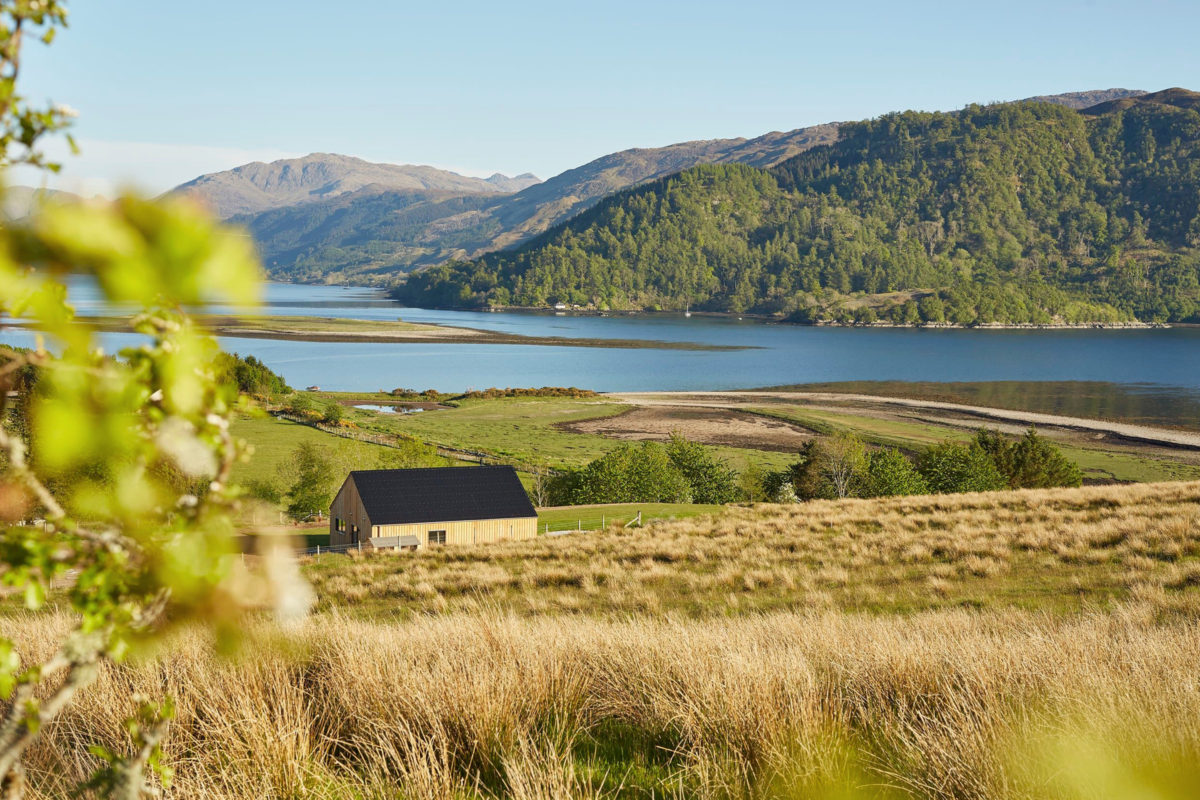
The luxury of slow living at 57 Nord: 57nord.co.uk .. a cabin I adore, can’t afford and will never book
This time of year encourages such delusions. There’s just enough light in the mornings to feel alive, but enough dusk to make retreat seem reasonable. You could slip away for a week and no one would really notice. The trees are almost bare, the pubs half-empty, and the countryside looks half-finished, as if waiting for someone to turn up with a notebook.
In my head, I’m dictating into my phone while trudging through leaf-sodden lanes or across a windswept upland. Evenings mean simple food, one-pot stews, bread, the sort of red wine you can chew, and perhaps the odd night at a pub, purely for proof of humanity. I’d come back leaner, calmer, possibly holding the first chapter of The Book*.
Except I never go. Yes, a little because of fear or money (and the logistics of family life) but mostly because the fantasy works too well.. The idea of the week away does its job before it begins: it restores a sense of possible order. Just imagining the solitude feels productive, which is as close to it as most of us ever get.
What makes us crave it? Age, maybe – the mid-life suspicion that our attention’s been pawned off to apps and admin. Or perhaps it’s just winter and that soft command to draw inwards, to tidy one’s psyche before spring. Either way, the idea of leaving it all behind has become one more thing to scroll through, admire … and postpone.
I like to think it’s not laziness but calibration by which I mean a quiet audit of what would actually change if I went. Would I write more? Probably not. Would I look less at my phone? For a day, perhaps two. Mostly, I’d just be somewhere else doing the same gentle dance of distraction, albeit with better lighting and a view.
Still, the fantasy has its use. It reminds me there’s another tempo available, one I could, in theory, choose. And maybe that’s enough for now. Some people meditate. I browse cabins I’ll never book. We each find our way back to silence, even if it’s only through the screen.
AI: This piece was refined with AI, for the image prompt, tags, excerpt, and a little sub-editing. The ideas, references, and rhythm are mine and were composed in Surrey, not Scotland.
* this is my first public announcement that I do have a (non fiction) book in mind. It may also be the only time I ever mention it.
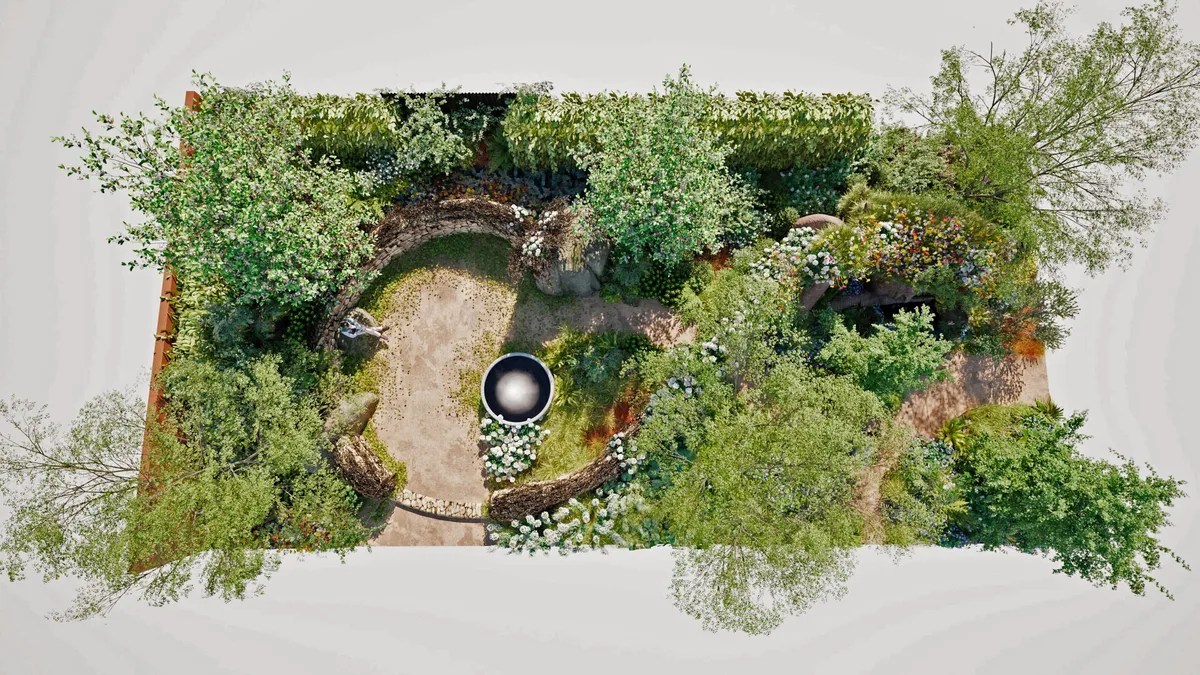
In The Times yesterday, as we descend into a storm-filled few days of autumn, there was a little glimpse of Spring ’26: the line-up for the RHS Chelsea Flower Show in May. Britain’s annual proof that we can still grow things even if we can’t quite govern them. Every year the press release reads a little more like a mindfulness pamphlet, hope, resilience, healing through nature. May’s line-up is depressingly familiar: Parkinson’s, asthma, gynaecological cancer – each of course exquisitely planted, each designed to make one feel faintly guilty for not being ill yourself (or worse, triggering the health anxiety you fight almost daily).
This is far from a dig (!) at the designers. They’re extraordinary – and the reason I return year after year. Some of the most inventive visual thinkers and horticultural artisans in the country. You could hand them a brief about midlife ennui and they’d produce something quietly transcendental. But notwithstanding this world-class craft, the culture that surrounds them (the commissioners, sponsors and curators, the gushing BBC scripts for reverent narrators describing the “healing”) rather wrings the joy out of horticulture. And, I might argue, severs the connection from our own plots where we aren’t putting in corten steels laser-etched with messages from sympathy cards sent to Grandma when Grandad died.
For the last decade, Chelsea has sounded less like a flower show and more like a group therapy retreat funded by Coutts and serving South African rosé. Every garden, sine qua non, must mean something. Every sponsor must emote through the plant list and recycled-paper design statement. The law firms are at it too, Corporate Britain has discovered mortality and it must keep workshopping it.
Particularly looking forward to Sarah Eberle’s return to Main Avenue — one of the few 2026 show gardens with a brief that feels refreshingly light of touch.
Of course, a sombre brief needn’t make a sombre garden. Most of these designers still find moments of light and sometimes even laughter amid the gravity, that’s their genius, natch. But the problem is saturation. When every garden carries a diagnosis, the cumulative effect is numbing at best and quietly oppressive at worst. You can admire the craft, the planting, the colour, and still feel the weight of mortality pressing against the rope fence. One or two gardens about illness are moving; a dozen and it starts to feel like palliative care with mottled sunlight. The tragedy therefore isn’t in the planting, it’s in the packaging. Even when a designer finds joy, the institution rushes in to label it therapy.
Ten years ago (and perhaps I misremember) you might have had one or two charity gardens, their presence was powerful precisely because of that juxtaposition. Now almost every plot is tied to a medical condition, social cause or climate anxiety. The messaging has become so homogeneous it borders on satire: “healing,” “hope,” “resilience,” the RHS bingo card of benevolence. The poignancy cancels itself out among a cacophony of good intentions, white noise amid the frothy borders and swept pavers.
Of course these causes matter; it’s simply that the monoculture of worthiness leaves little room for unfettered joy. The very people (RHS members and the paying public) say it outright in the comments: “God forbid we could just have lovely, liveable gardens.” Others confess they no longer bother going, the crowds, cost and piety becoming too much of a hurdle to clear just to enjoy the flora. It makes one wonder whether the charities have done a cost-benefit analysis on being yet another earnest voice in a field of them.
A while back I wrote about human-centred garden design, the idea that landscapes should serve the people who live in them, not the narratives imposed upon them. I still believe that. But the pendulum has swung from self-expression to self-help. Designers stopped building for themselves, only to start building for someone’s trauma instead. The irony is that true human-centred design, the kind practised by Zetterman, Pearson, Wilkinson or Nordfjell, already is healing, precisely because it doesn’t insist on it. Their shared language of calm geometry, natural materiality and measured restraint gives people space to feel, rather than instructing them what to feel, elegant evidence that joy and contemplation can coexist without a press release or a prime-time TV walkthrough to explain it. A well-made garden gives you peace without telling you you’re broken.
Every so often, something still slips through, a garden like 2025’s Monty’s Radio 2 Dog Garden plot, joyous, affectionate, full of warmth, and you remember how good Chelsea can be when it drops the self-consciousness and simply revels in life.
If I were a bank or a law firm with money to spend, I’d commission rebellion: a garden about the thrill of travel, the dynamism of the next generation, the sheer optimism of growth. Not a metaphor. Not a manifesto. Just a riot of clever planting that exists because it can.
Because all beautiful gardens are healing. They always have been. They don’t need to say they’re healing; they just are. And that’s the point the RHS seems to have forgotten – that beauty itself is the therapy. If the great British flower show can’t find joy in flowers any more, if every petal must carry a moral story, then perhaps it’s not resilience we need, but relief.
The word itself is plain enough. A dent is what you notice on your car after some clumsy berk has parked too closely and biffed their door into yours. It’s a mark, a bruise, a reminder that force was applied – and something yielded. In English it comes from the same (ahem) root as tooth*. A bite-mark on the surface of things.
Somewhere along the way though it was promoted. No longer just damage, it became ambition. “Make a dent in the universe,” said Steve Jobs, and since then entrepreneurs have repeated the phrase as if the only worthwhile mark is a cosmic one. The dent as disruption, scale, transformation. Anything less is failure.
But the smaller dents are the ones that stay with you. It might have been the teacher who insisted (as one of mine did) that you should all learn the famous Hamlet soliloquy. Or it’s the neighbour who always walked their dog and said hello at the same time every. single. day. The colleague who set out all the chairs just-so before an important client pitch. None of these altered the universe, yet all left their trace. They changed the shape of memory.
I wrote recently on Facebook about how I think of my own father. He was never one for speeches or grand lessons, but I recall often the steady choreography of ordinary competence and reliability: how he chained the door and set the house alarm each night, how he did the family sums on the dining table, how his handwriting looked like copperplate. To a child, these things mattered. They were evidence of his authority, of order. They left their mark, quietly but permanently.
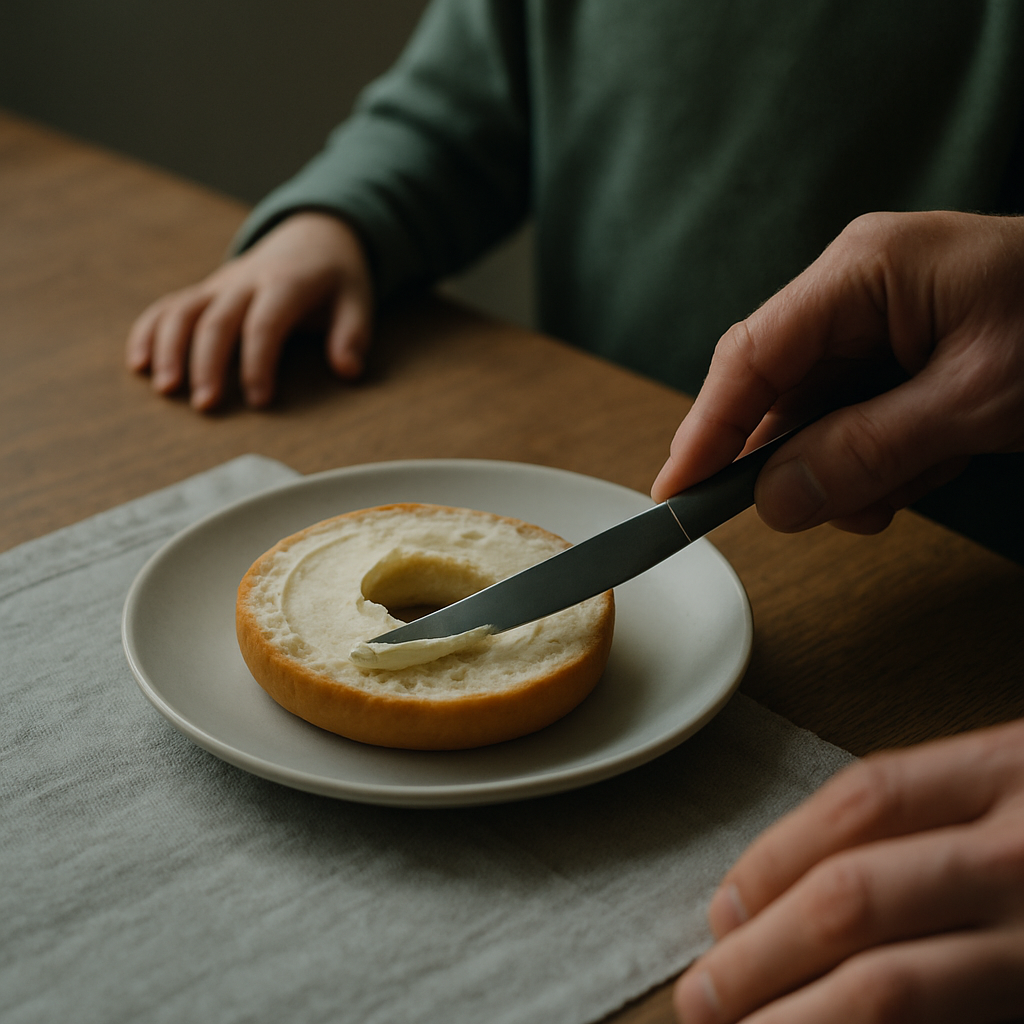
The smallest rituals are noticed. Even a bagel, even the buttering.
Years later, on a beach holiday, I read The Five People You Meet in Heaven. Its premise stuck: you pass through life leaving marks on people you barely notice, and they on you. The scale of influence is hidden, but no less profound for it.
My sister knows this now. She works in a primary school and (again, recently) received a thank-you so personal it landed hard, parents saying she was unforgettable in their child’s life. I shot back: “You’ve made a dent.” The phrase had lodged in my head decades earlier from a boss ** in the early 2000s (he must have picked it up from Jobs). Back then it sounded like a corporate battle cry. In her case it was entirely different: personal and resonant at a human scale.
The same pattern plays out in reverse: not just what we do to others, but how they take it in and echo it. You see younger eyes taking in far more than you intended, in my case, with my son. The joke repeated, the mannerism borrowed, the odd seriousness with which a child observes how a bagel is buttered. It is flattering and unnerving in equal measure. You realise you are denting the surface whether you mean to or not.
This is why the Jobsian version rings hollow. It’s not the universe waiting to be dented. People are. And the dents that matter are not the ones scaled up for shareholders or history books, but the grooves worn into habit and recollection. They accumulate into something like folklore.
A dent, after all, is both damage and record. It tells you that contact occurred, that someone was here, that effort was made. The question is not whether we leave dents, we all do, but whether they are the sort of impressions others are glad to carry.
Perhaps that is enough. To dent memory. To be felt after the fact, in the small rituals and rhythms that survive us. Jobs aimed for galaxies. Most of us work closer to home, and the marks we make are no less real for it.
* hat tip to Leigh Thomas who always loved to expand on the etymology of words in her speeches to our agency. That is her dent on me.
** hat tip too to Darren Cornish who influenced me heavily on what customer experience really should and could be.
AI: This piece was written by me, and this time I used ChatGPT lightly as a sub-editor to smooth out some repetition and find the odd ragged grammar. The experiences, perspectives and final edits are mine. AI also produced the tag list, excerpt and, obv. the image that accompanies it.
Life’s too short to be buttering existential crises out of a plastic tub.
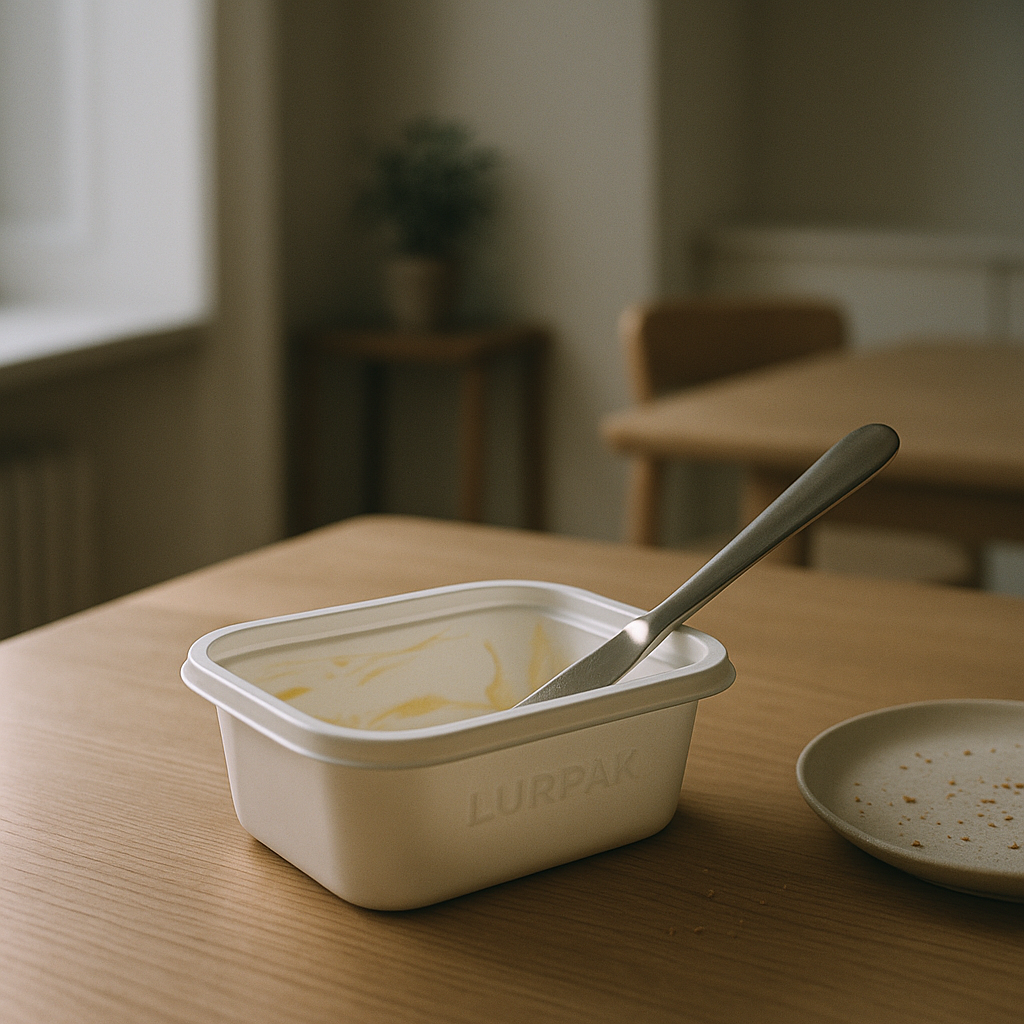
This morning I found myself scraping the bottom of a Lurpak tub.
A white, gently bowing receptacle with just enough residual butter to tease the knife, but not enough to make it worth the effort. And yet, there I was: wrist contorted, scraping sideways, skimming over craters of cold margarine laminate, determined to liberate one last smear.
For toast.
I paused, mid-scrape, and felt the creeping absurdity of it all. Why do we do this? This frugal choreography. This dignified desperation. Is it habit? Shame? Some Protestant hangover of moral rectitude that equates waste with weakness?
Or is it worse than that, is it training?
A kind of domesticated eco-asceticism, learned not out of genuine conviction but out of decades of thinly veiled moral instruction. Don’t waste. Save scraps. Rinse your yoghurt pots. Aspire to net zero in all things, including pleasure. Butter, it turns out, is not neutral.
I don’t want to be the kind of man who scrapes the last dregs of butter from the corners of a tub. It feels small. Slightly emasculating. A man reduced to margarine management. And yet, aren’t these the very values we claim to admire? Moderation. Responsibility. The quiet dignity of thrift.
There’s a strange modern tension here: the aesthetic of abundance, paired with the rituals of restraint. Middle-class frugality presented as virtue. A lifestyle of minimalism, yes, but premium minimalism. We don’t waste Lurpak because it costs £4.50 a tub. Because we bought the “Spreadable” version as a treat and now feel complicit in dairy decadence.
But scratch deeper and it’s not really about the butter at all.
It’s about effort. It’s about where we place it. We pour our energies into small, containable acts of domestic diligence because the larger systems feel untouchable. We cannot fix politics, housing, the climate, or the cultural entropy of our time, but by God, can we finish a tub of butter.
And maybe that’s OK. Maybe part of surviving modern life is choosing the scale at which we can still act meaningfully, however trivial it seems. Scraping the butter is absurd. But so is most of life, and at least this kind of absurdity ends with warm toast.
Still, I didn’t finish it. I threw the tub away, started a new one, and felt a small thrill of liberation.
No one applauds the man who knows when to stop scraping. But they should.
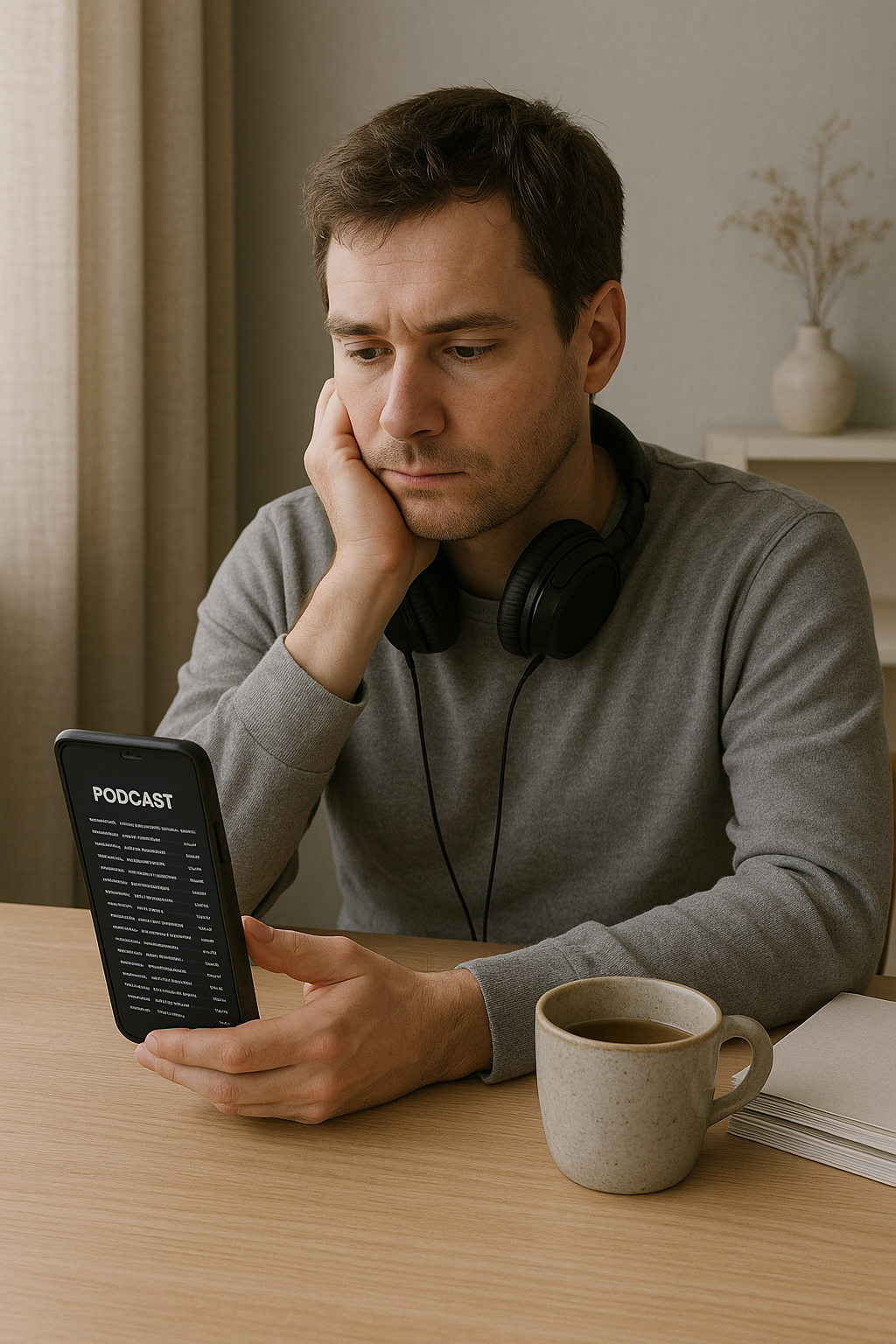
No, I don’t know why the phone is like that either mate. But you get the point. Too many podcasts.
Or, why skipping an episode feels like abandoning a friend.
There’s a particular guilt that comes from skipping ahead in a podcast series. Not the comedian-chats-to-comedian ones, or Desert Island Discs, those you can binge or bin at will. I’m talking about the recurring ones. The talky ones. The ones hosted by people you like, or worse, people you know. Miss a week and you don’t just lose the thread, you lose the right to laugh. The callbacks make no sense. The in-jokes have moved on. You’re no longer in on it.
I’m aware this sounds neurotic. But I’ve stopped listening to several podcasts not because they got worse, but because I missed two episodes and couldn’t face the trauma of catching up. I know I could jump in. I know no one cares. But somehow, I do. It’s the same part of me that keeps unread issues of The Spectator in a stack, muttering, “I’ll start again from the first issue.” That all came about when Jeremy Clarke got ill and I couldn’t bear reading his brilliant column out of sequence, inevitably posthumously.
The problem therefore, I think, is narrative continuity without narrative urgency. Podcasts, like newsletters or Jeremy’s Low Life column, have become serialised companionships. Their UX rewards loyalty, but punishes lapsed affection. It’s a structure built for the always-on, and it assumes you never really leave.
And the volume. The sheer, relentless sprawl of it. Everyone has a podcast now. Kind, intelligent friends. Former colleagues. Distant people I admire. I say this with genuine affection and no small dose of complicity, I write a blog read by literally tens, so I’m not throwing stones from the hilltop. But podcasting’s democratisation has created a landscape where the bar to entry is nil and the bar to quality is… unacknowledged.
This isn’t a snobby defence of old gatekeepers. The best podcasts out there are often the weirder, niche ones. The ones that would never make it past a commissioner’s desk. But that doesn’t mean the friction was all bad. A copywriter at my former agency once said, “Don’t waste the reader’s time.” With podcasts, the time-wasting is part of the premise.
There’s also the question of emotional design. If podcasts are a medium of intimacy, why are the interfaces and audio frequently so transactional? There’s no gentle onboarding for returners. No “here’s what you missed.” No warm “start here.” Just a reverse-chronological list and an assumption that you’ve kept up.
Imagine if books worked like that. Chapter 17 opens with “As we were saying…” and you’re left frantically flipping back (actually, come to think of it, that’s the exact reason why I really started to hate Thursday Murder Club). Or if Netflix removed season recaps because you should’ve been paying attention. It’s not hostile, exactly. Just… indifferent.
So what would better design look like? Perhaps:
A podcast player UI that lets hosts flag standalone episodes for returners.
A soft re-entry note at the top of an episode: “You don’t need the last three. This one’s its own thing.”
A brief recap audio snippet or even a written primer for regulars who’ve been away.
Small things. But they matter. Because as much as podcasts masquerade as friends chatting in your ears, they’re still products. And products that ignore re-entry, or punish time away, eventually lose people, not to rage, but to fatigue.
I don’t think we need fewer podcasts. That would be like saying we need fewer books. But we do need better affordances for how people actually consume them: messily, sporadically, guiltily.
We don’t stop listening because we’re bored. We stop because the emotional lift of rejoining feels heavier than just starting something new.
And if you’re wondering whether I’ll catch up on that podcast you recommended last month, the answer is no. I fell behind. And now I can’t remember when his dog died.
AI: This piece was written by me, I did use ChatGPT to sub-edit, help shape the structure, and keep the tone aligned with my voice. The experiences, perspectives, and final edits are mine. AI also produced the tag list, excerpts and image that accompanies it.
This morning I watched Richard E. Grant talk about his late wife Joan. Four years gone, he said, but what his mind serves up now isn’t the frailty of her last months, but her in good health.
“The wonderful trick of memory means that we now remember her in full health rather than the last 8 months of her Life.”
And he’s right, it is a trick, but not sleight-of-hand. Psychologists have know of this bias for decades. Negative emotions tied to autobiographical memories fade quicker than positive ones. It’s called the fading affect bias. Your mind isn’t erasing facts, it’s acting like a producer in the studio, quietly turning down the volume on the anguish while letting the warmth keep playing at full volume.
Other processes chime in. Every time we recall a memory it’s rewritten, not replayed. That’s reconsolidation, and it means memories get smudged and softened, sometimes in our favour. Trauma therapists use this to their advantage, nudging one’s recall toward less damaging associations. In grief, the brain seems to do it on its own, substituting the image of the person in decline for the person as they really were. Not denial. Not repression. A form of mercy.
I’ve had a rough few years myself, different terrain, not bereavement. But I’ve clung to the old adage that time heals. It turns out that isn’t just Pollyanna sentimentality: it’s neurology. The sting dulls, the good bits endure. The mind edits.
Yet (Grant aside) scroll through the socials or (even the trad press) and you’d think the brain is a broken appliance needing constant external servicing. Talking therapies, sound baths, mindfulness apps (with subscriptions, natch). So. Much. Talking. All while PTSD headlines insist almost the opposite, that memory is a cement block dragging lives under.
Of course, trauma can lock memory in its raw, searing form. That’s the clinical exception. But for the rest of us, maybe the task isn’t endless intervention? Maybe it’s a lighter hand. Trusting that our brains are, on balance, fairly decent editors. That focussing on the good, replaying and re-storifying it, gives it more weight in the archive. I’m taking a leap here but perhaps Richard E. Grant didn’t “work through” those final months. He simply outlived their dominance.
There’s something oddly hopeful in that. Not a quick fix, not an app notification or a breathlessly titled self-help paperback, but a reminder that forgetting is not failure, it’s function. Memory is a museum curator, and sometimes the exhibition changes.
AI disclaimer: This piece was written by me, but I used ChatGPT to sub-edit, check and surface study references, and keep the tone aligned with my voice. The experiences, perspectives, and final edits are mine. AI also produced the tag list, excerpts and image that accompanies it.
Freya India’s “A Time We Never Knew” is, on the face of it, a lament. But not for something tangible, not for a policy or platform or even a particular childhood. It’s a mourning for an idea of childhood. One shaped by distance, longing, and a deep sense that something quietly essential has been lost.
She writes from within the generation often described as digital natives, the ones we, as parents, designers, and the more pretentious cultural observers, keep diagnosing. But what she offers isn’t data. It’s affect. Grief. And reading it, you realise: this isn’t nostalgia. It’s anemoia (a term for the ache we feel for something we never really had). This is a pre-digital adolescence glimpsed only through fiction, photo albums, or the vague warmth of a life not filtered through lenses and likes.
Freya’s piece is moving because it’s not arguing a case. It’s inhabiting one. She shows you what it feels like to have grown up inside a version of it that always felt slightly off.
“We never knew friendship before it became keeping up a Snapstreak or using each other like props to look popular on Instagram.”
You can’t optimise your way out of that. No digital literacy workshop or screen-time-tracking feature will undo the sense of being used by your own image, or complicit in someone else’s performance of belonging. That’s not a UX flaw, it’s existential distortion.
I’ve argued (and still believe) that design can play its part and restore rhythm, attention, and emotional fidelity. But Freya’s piece sharpened that for me. It’s not enough to critique what’s broken as so many do with no alternative, we need to take seriously the kind of childhood that’s been lost, and ask: What now?
Not conceptually. Practically. What now?
Here are five places to start; if not to fix things, then to stop making them worse:
1. Start with the household, not the handset
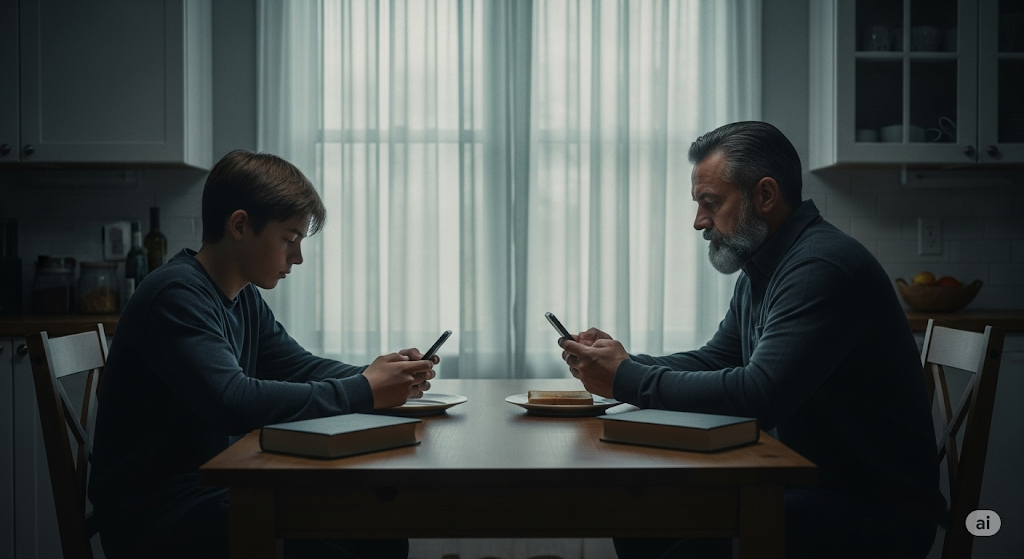
Stop asking what the app is doing to your kid. Ask what your own habits are modelling. Shared mealtimes won’t solve everything, but they set a tempo. Phone baskets, landlines, analogue clocks, not as statements, but as defaults. Ordinary, visible, repeatable.
2. Make physical things accessible, not aspirational
Stationery shops now look like gift boutiques. That’s a design failure. Kids shouldn’t need £38 Moleskines and Bullet journals to feel entitled to write something down. Re-normalise pen and paper without a need for it to looked designed and perfect. Put it on the table. Make it disposable. Used, not treasured.
3. Build spaces for lingering, not passing through
If you’re designing environments, cafes, libraries, waiting rooms, even apps, make them boredom-compatible. Low-stimulus, soft-lit, acoustically calm. Places you can sit without being prompted, pitched to, or processed. Most teens have never known that feeling. In apps this means zero notifications, tapered onboarding, low information density. No autoplay, restful animation.
4. Reclaim awkwardness
Digital fluency has obliterated the slow burn of uncertainty. But life happens in those gaps. If you’re a teacher, don’t fill every silence. If you’re a parent, let the car journey be wordless, let them be bored. Awkwardness isn’t failure it’s part of growing up.
I’ve had enough with breathwork apps and dopamine dashboards. If your platform wants to support mental health, stop inventing new notifications. Introduce blank states. Dead-ends. Hard stops. Have a very high bar for introducing infinite scroll. If the user’s done, say so. Let them leave with #NOFOMO.
In the piece I wrote last month, I framed our dilemma as a kind of middle-class dread, knowing something’s wrong but unsure how to respond without sounding puritanical or panicked. Haidt warns us of the cost of inaction. Burnett warns us not to lose our heads. Freya reminds us what it feels like. And somewhere between their caution, grief, and scepticism, we need to act, not with slogans or screen-time charts, but with work that answers in the way I have above, modelling better rhythms, removing false urgency.
We don’t all need to log-off, we just need to show up offline too, be awkward and occasionally uninteresting.
AI disclaimer: This piece was written by me, but I used ChatGPT to sub-edit, surface research, help shape the structure, and keep the tone aligned with my voice. The experiences, perspectives, and final edits are mine. AI also produced the tag list, excerpts and image that accompanies it.
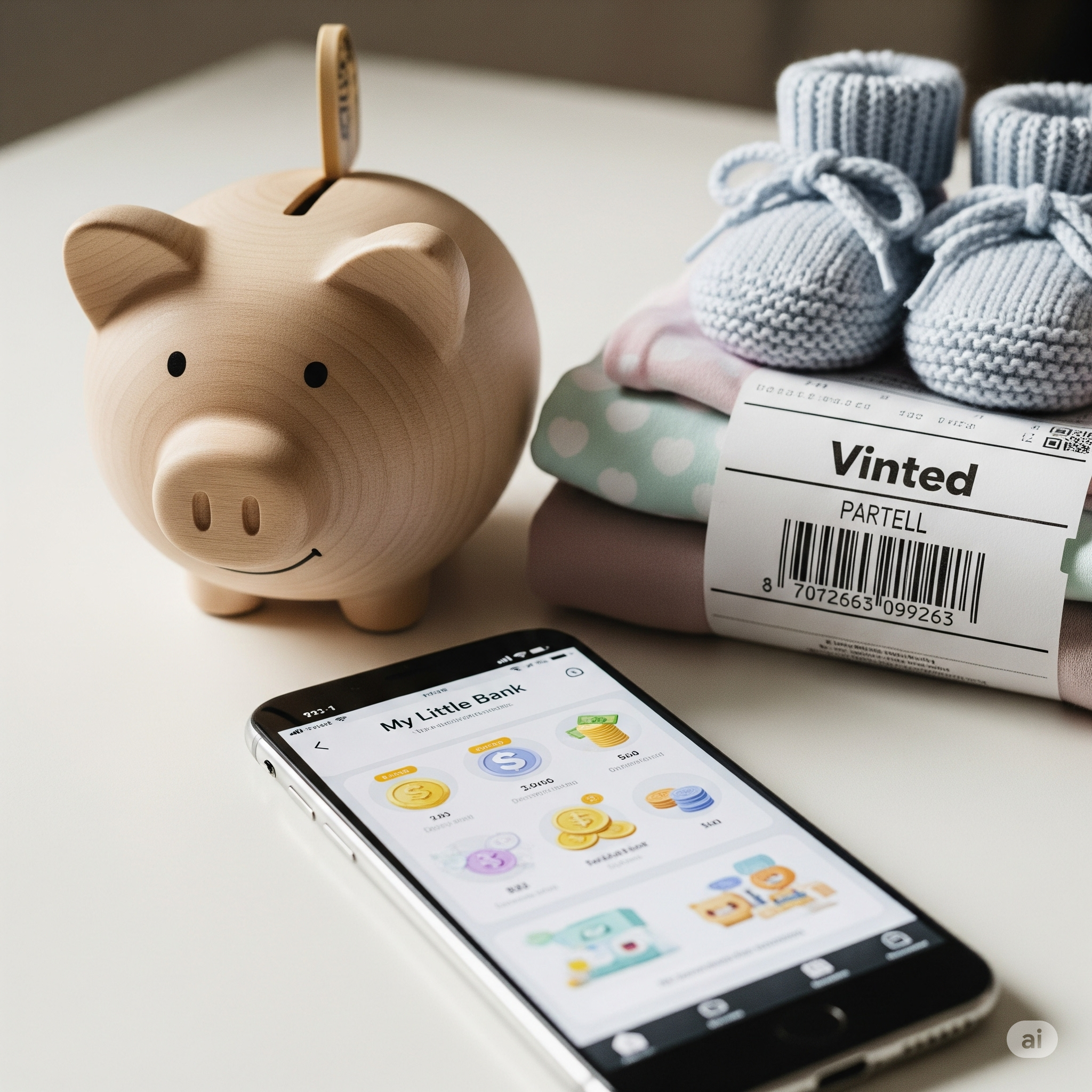
Here’s a sentence that shouldn’t exist: our two-year-old has a savings pot inside her eleven-year-old brother’s bank account.
Not because we’re trying to confuse HMRC or because we’ve discovered some fintech hack that’s too good to share. Simply because no UK bank will give her an account until she turns six, and when she does, it will still be hamstrung by limits that assume every child’s money arrives in neat, predictable chunks from a parent’s allowance.
The set-up is simple. We sell her old clothes and toys on Vinted. It’s honest, traceable money, every transaction recorded by a platform that has its own anti–money laundering checks baked in. The items avoid landfill. The proceeds go to her future self. It’s the kind of wholesome circular economy PR departments love to posture about. And yet the only way to park that money somewhere with her name on it (sort of) is to create a ‘pot’ inside her brother’s Rooster account.
This is not a problem the Financial Conduct Authority asked the banks to solve. There is no specific regulation that says under-sixes cannot have a bank account. This is a product design decision, dressed up in safeguarding logic. NatWest’s own Rooster service told me:
“We’ve had to introduce limits, with these limits created and set at what we believe is a generous amount for a child’s pocket money app… We recommend that you make fewer larger top-ups in the month, and then boost the money over as often as you like.” Katie, 15.AUG.25
The logic, if you squint, is that transaction caps stop laundering. But laundering what, exactly? In our case: a baby’s outgrown sleepsuits. The “10 loads a month” cap on Rooster is not cumulative-value–driven (the actual pound-limit is much higher). It’s a blunt instrument, applied as though fewer transactions automatically means less risk.
In reality, this isn’t about AML at all. It’s about the convenience of enforcing one simple rule across the board rather than designing for the messy reality of modern family finances:
Parents with irregular incomes.
Blended households with multiple contributors.
Ad-hoc earnings from resale platforms.
Grandparents who send £5 here and there for birthdays or because they saw a cute jumper in M&S.
Under the current design, the system doesn’t distinguish between proceeds from a second-hand pushchair and proceeds from illicit activity. The compliance blanket is thrown equally over both.
The result: we’ve built a workaround. Her ‘earnings’ from Vinted go into his account, into her pot, under our management. One day, in about four years, we’ll withdraw the lot and hand it to her. Which is absurd, not least because we’ll have to move it in fewer than ten transactions to avoid tripping the same rules all over again.
If we were serious about aligning banking with real life, we’d have:
A from-birth, save-only account – visible in the parent’s banking app, locked against spending, able to receive small, traceable contributions from approved sources.
Transaction rules shaped by value and source, not arbitrary counts.
A seamless graduation path at age six to a junior current account with a card and spending controls.
The point is not to hand toddlers contactless cards. It’s to start building the habits, and the visibility, early. Money in, money saved, money safe. The actual ‘banking’ part should be the least absurd bit of that equation.
This piece was written and fact checked by me and then sub-edited with the assistance of AI. The image was rendered by Gemini and excerpt, ALT tag were AI generated.
When I was around 15, I’d get into trouble for calling a girl I was ‘seeing’ after 9pm on the house phone. I remember the jeopardy when her dad answered. It wasn’t just awkward, it felt catastrophic in that very teenage sense. There was no texting, no soft-launching your feelings via Reels. If you wanted to reach someone, you reached their entire household. Privacy was negotiated in real time, and a cordless phone allowing you to slink off to a private corner was borderline futuristic.
I mention this not to romanticise a pre-digital age but to mark a boundary: I don’t truly understand what it’s like to grow up now. Not really.
We’ve been told, often with good reason, that today’s teenagers are in trouble. Jonathan Haidt calls them the “anxious generation”, a cohort rewired by phones and social media. Since around 2012, adolescent mental health (especially among girls) has deteriorated alarmingly. Haidt blames the smartphone: a device that didn’t just enter childhood but, frankly, annexed it. The evidence is worrying, declines in sleep, attention, face-to-face connection. An uptick in self-harm, anxiety, emotional exhaustion. The argument isn’t hysterical. It lands.
But Dean Burnett suggests we’ve misdiagnosed the patient. The panic, he argues, isn’t just in the teens, it’s in us. The parents, the teachers, the adults nervously refreshing headlines while peeking at their own screen time stats. According to Burnett, much of this alarm stems from a mix of generational disorientation (a kind of collective unease that what we grew up with is no longer relevant), recurring moral panic, and good old-fashioned ignorance. We didn’t grow up with these tools, so we assume they’re harmful. We project. We catastrophise. We fear what we don’t fluently use.
The result is a pervasive sense of being at a loss. Some parents clamp down, banning apps, enforcing rigid rules on screen-time that feel increasingly arbitrary. Others detach, paralysed by the sheer bloody complexity of it all. But the most common response that I pick up from parents around me is probably the most human: low-level dread wrapped in middle-class guilt. We don’t really understand what our kids are doing, but we feel complicit anyway.
And then, just as we start to piece together a measured response, “Right! phone-free supper time!”, delayed access, schools running digital literacy workshops, the next threat pops up. Welcome to Whack-a-Mole Parenting. Just as the cultural tide begins to turn on one device, another rises, this time more subtle, more embedded, more seductive.
Take me, for example. I ask ChatGPT more (personal) questions, now than I ever asked Google. Some are practical: how to structure an email, what to cook with these leftovers, when should I plant out these seeds. But others are… not. I’ve caught myself consulting it about health worries, internal dilemmas, parenting doubts, things I wouldn’t bring up at dinner, or even necessarily with my family, my friends. Because it remembers. Because it adapts. Because it flatters you by bending to your will.
And this is me: a reasonably grounded adult with (I hope) a steady compass and a mild allergy to digital hysteria. Yet even I find it maddeningly addictive. Not the technology itself, but the relation. The illusion of being known, helped, mirrored. I can only imagine how powerful this is for a 14-year-old who isn’t just seeking answers but identity.
So the question isn’t whether smartphones are making kids anxious. They are, in some ways. But the deeper story is that we’re all overwhelmed by the sheer pace of paradigm shifts. We can’t metabolise one tech wave before the next hits us in the face.
What Would Good Design Do?
This is where design comes in. Not as damage limitation, but hopefully as orientation. The best design doesn’t just solve problems. It asks better questions. Like: what rhythms support attention? What thresholds help people feel held, not hijacked? How can digital relationships exist without replacing the real ones?
The design problem is not abstract. It’s visible everywhere. Think of Snapstreaks – a design mechanism that rewards compulsive interaction with digital trophies. Or TikTok’s For You page – a personalised feed of videos that TikTok’s algorithm thinks you’ll be interested in, which notoriously appears to learn vulnerability faster than it learns taste. These aren’t neutral tools. They’re attention economies wired for compulsion, not care. If you’re a parent watching this unfold, it’s not just confusing, it’s existential.
A brief aside here: Earlier this year, OpenAI’s Sam Altman and LoveFrom’s Jony Ive announced a collaboration to create a physical device for the “AI age.” They talked about daily rhythms, calm interfaces, emotional connection. And while their vision sounds noble, it also confirms the underlying anxiety: that our tools are no longer just functional, they’re emotional infrastructure. If anything, their announcement makes this conversation more urgent. Because the question isn’t whether the tech will be beautifully built. It’s whether it will reflect what matters.
That means not just critiquing the addictiveness of AI companions, but imagining something better. Less extractive. More human. Here’s what that might look like (after an hour of making notes this morning):
Design for pause, not push. Platforms should default to stillness, not stimulation. Kill the endless scroll. e.g. “You’ve seen it all, for now” or opening to a prompt rather than a firehose of dopamine content, or making ‘like’ less of a tap and more of a hold, restricted to just a few per day. Default to a quiet mode after 20 mins. Ask a user “why are you sharing this?”
Design for self-awareness. Don’t just track engagement. Track how users feel when they leave. Make reflection part of the loop. e.g. “How did that make you feel?”, reporting this along with screen time weekly reports. An in-app emotion metric that algorithmically analyses your interaction cadence, scroll patterns, message tone.
Design for companionship, not substitution. If AI is going to listen, let it redirect. Let it nudge us toward real conversations, not just simulated ones. e.g. “This sounds important. Have you considered talk to [name]?” or helping the user plan social activities, remember dates or conversation starters.
The tools aren’t going away. But the way we design them can still reflect care, pace, and conscience. That’s not a nostalgic idea, it’s a classic UX problem and one worth solving.
Coda
When I was a teenager, the phone was something you had to ask permission to use. Now, it’s something we all struggle to put down. Maybe the answer isn’t more rules or fewer apps. Maybe it’s knowing what to do with ourselves in the quiet space that’s left when the screen goes dark.
That’s where design still has a role to play, instead of locking us out, it guides us home.
AI disclaimer: This piece was written by me, but I used ChatGPT to sub-edit, surface research, help shape the structure, and keep the tone aligned with my voice. The experiences, perspectives, and final edits are mine. AI also produced the tag list, excerpts and image that accompanies it.