Tag Archives: identity

The Right to Be Provisional

There was a time when childhood was understood as gloriously provisional: children were shy, loud, frightened, obsessive, contradictory little creatures who tried on selves as casually as pirate hats and princess dresses, and nobody mistook Tuesday’s fixation for metaphysical truth; now a particular strain of Western parenting, steeped in the therapeutic vocabulary of adults who have spent twenty years processing their own trauma, attachment styles, burnout, boundaries, neurodivergence and “authentic selves,” treats every childish wobble as evidence, every discomfort as diagnosis, every preference as revelation.

The intention advertises itself as compassion; the effect is often narcissistic projection. Anxious adults, terrified of getting parenting wrong, cannot tolerate the possibility that a feeling might simply be a feeling, that sadness may be sadness, awkwardness awkwardness, boredom the perfectly rational response to a sterile classroom, fractured attention the predictable consequence of a house full of glowing screens engineered to destroy it.

So the external world recedes and the label advances: the temporary becomes structural, the situational essential, the feeling the self. Nothing may remain small. The lonely afternoon becomes a discourse, the difficult term a framework, the passing phase an identity requiring affirmation, management and an expanding priesthood of consultants, influencers, therapists, trainers and administrators.

It is an oddly airless form of child-centredness in which the child is forever being interpreted by adults unable to stop interpreting themselves. Childhood was once permitted to be messy, wasteful, embarrassing and magnificently wrong; now we are in danger of mistaking the rehearsal for the performance, embalming every experiment in the language of permanent identity and calling it listening. Children are not tiny adults waiting to have their hidden essence decoded. They are unfinished people, and one of the great privileges of childhood is being allowed to become somebody else.
Tagged , , , , , , , , , , ,

The Cliff Edge of Middle Age

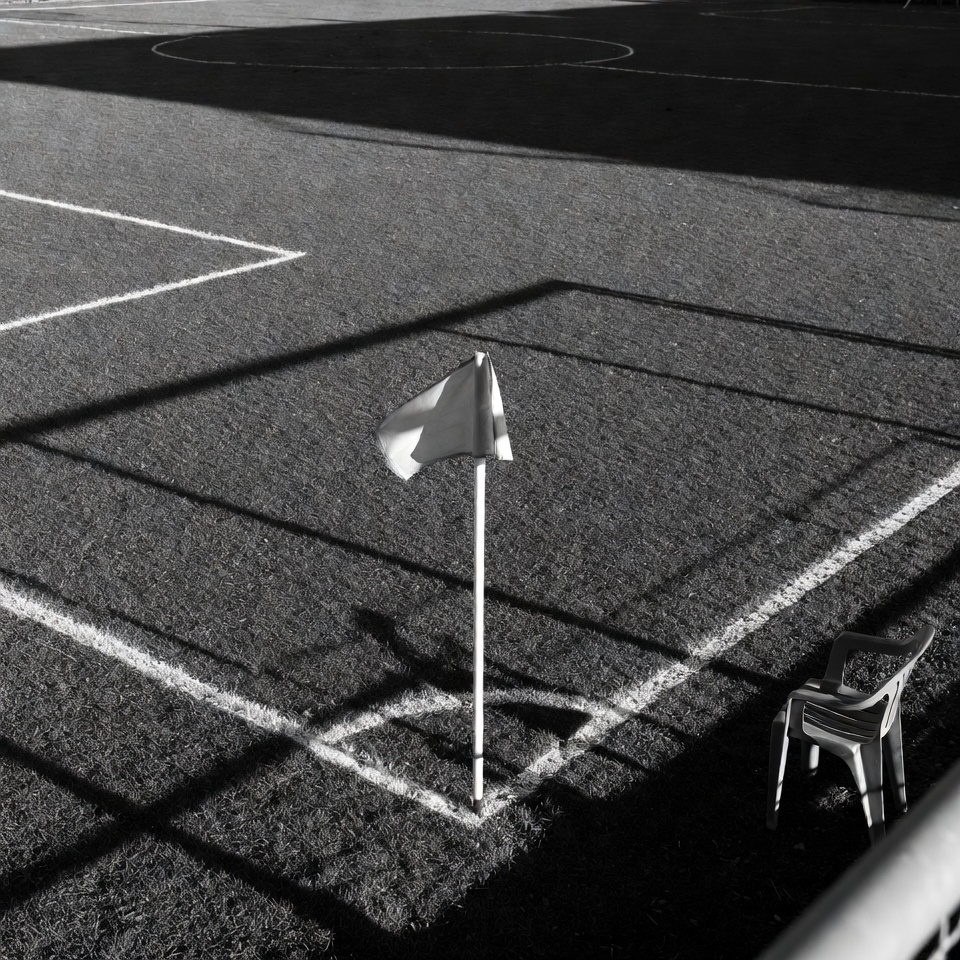
Black-and-white photograph of an empty, frost-dusted sports pitch at dawn, with long shadows, metal goalposts, and stacked plastic chairs, conveying the quiet absence of routine and community structure.
The things that keep men standing are usually the things no one notices until they’re empty.

We hear it almost every week on social media and in the press: if only men talked more. As if silence were the root cause of everything.

But men do talk. We’ve never had more campaigns, workshops, football-ground ads, celebrity confessions, podcasts, or workplace check-ins. Awareness is not the bottleneck. You can’t fling a flat white in Shoreditch without hitting someone making a documentary or orchestrating a campaign about “men opening up”.

And yet, the suicide rate for men peaks not in youth, but in midlife, forty-five to fifty-four. These are the supposedly settled years, when family and career should provide sufficient ballast. Instead, it’s the cliff edge.

The parallel with childhood in the smartphone era is hard to miss. Just as children have lost the structures of boredom, awkwardness, and unmediated friendship, adults are losing the structures of duty, craft, and continuity. Those same forces, phones, performative identity, secular drift – are hollowing both ends of life. Middle-aged despair and nostalgia for a lost childhood are two sides of the same cultural erosion.

Part of it is the work itself. Men who once called themselves carpenters, miners, or postmen now call themselves contractors on three apps. This loss isn’t simply one of continuity or economics, it’s ontological. When the trades and institutions that once anchored male identity dissolved, nothing replaced them. Progress rightly broadened women’s roles but left men’s scaffolding to rust.

What I think is missing isn’t another awareness week or a better hashtag, it’s structure. That reliable, unglamorous web of roles and obligations that demand consistent presence and usefulness. Structure, I truly believe, creates the conditions for grit, stoicism, resilience; the quality required to face life’s chaos without disintegrating.

Four Pillars

  • Stable roles: work or duties that confer identity beyond the next contract.
  • Shared obligations: being the one who brings the kit, runs the line, sets out the chairs.
  • Continuity: clubs of all kinds, parishes, allotments, institutions that outlast individual seasons.
  • Recognition in absence: places where you’re noticed if you don’t show up.

Now, these aren’t nostalgic tokens. They’re the mechanisms of accountability and friction. Friction builds strength. It stops people flapping when real adversity hits. Talking helps, but talk without structure is vapour: empathy without scaffolding.

Having purpose then is not an insight, it’s an act. A sequence of embodied, useful gestures that prove one’s value to others. It’s a personal responsibility, not something to be delegated to an app, a therapist, or a men’s shed. Those are just the supports, not substitutes. They matter most and are useful augmentations only when attached to the rhythm of an ordinary, useful life.

Because purpose lives in function, not in show. So, until we rebuild those structures of continuity and obligation, the well-meaning chorus of “men just need to talk more” will keep echoing across empty ground, like a gossamer-thin corporate wellness seminar where everyone nods sagely at the flipchart, fills out a feedback form, and goes straight back to crying in the gents.

AI and disclosures: This piece used AI to surface relevant psychology references to support my personal thesis. I also used it for the tags, excerpt, and a little sub-editing. The writing, and personal reflections were all mine and informed in part through close personal experience with these matters.

Tagged , , , , , , , , , , , , , , , , , , ,