Tag Archives: creative process

The outsider

The room is already settled by the time they speak. Those slides have been through two internal reviews. The language is clean, defensible, already halfway to sign-off. You can feel the work closing in on itself, decisions calcifying because they’ve been seen often enough to feel inevitable not necessarily because they’re right.

Then someone arrives who hasn’t been part of that loop. Sometimes it was the agency founder, drifting in late, coat still on, just finishing a call, carrying that slightly impatient calm of someone who’s seen the pattern before. Sometimes it was the strategy partner who’d been impossible to book, sitting down quietly, eyes half closed, the fug of coffee doing its work, before cutting through the thing in a sentence that made the rest of us wince. Occasionally it was the ECD, flicking through printouts, pausing just long enough to drop a few pages on the table. No speech. Just a clear, deliberate gravitational rejection of what we’d all convinced ourselves up to that point was good.

But perhaps just as often, it wasn’t experience doing the work. It was the person who shouldn’t really have been there. The graduate. The outsider. The one invited for texture and politeness rather than judgement. The one who hadn’t learned the language yet, and so couldn’t follow the careful logic the rest of the room had built. They’d ask something slightly misplaced. Pull in an example that didn’t quite belong. Miss the point, on paper. And in doing so, expose it.

These effects are rarely dramatic, there’s no grand pivot. No theatrical breakthrough. Just a tilt. A detail that no longer seems to hold water. A narrative that suddenly feels a bit too clever. Enough to loosen the grip the idea had on the people in the room.

Good teams make space for that kind of disruption. Without being theatrical or insisting on “fresh perspective”, but rather as a way of testing whether the work can survive contact with someone who hasn’t been trained to agree with it.

Most ideas don’t fail in the room. They fail later, when they meet someone, often client-side, who doesn’t share the context, the patience to go through all the supporting slides, or the goodwill.

The value of the outsider isn’t that they’re right. It’s that they haven’t yet learned how to be politely wrong in the same way as everyone else.

In the past six months, I’ve found myself brought into rooms both virtual and physical for exactly that reason. Not to lead the work, or to own it, but to sit slightly outside it. Close enough to understand the logic. Far enough away not to be bound by it. Sometimes that has meant drawing on experience. Sometimes it’s just been asking the question that feels a bit off, or pointing at the thing everyone has quietly stepped around.

The aim isn’t to derail the work. Just to tip it, slightly. Long enough to see what holds its balance, and what doesn’t.
Tagged , , , , , , , , , , , ,

The Week Away That Never Quite Happens

Every few weeks at this time of year, my thumb betrays me. It hovers over a post of a cabin somewhere on the edge of a loch or moor, all shō sugi ban cladding, light oak, mid-century desks and ‘vintage’ lightbulbs, and presses like. The algorithm now thinks I’m the sort of man who wears wool socks and writes preposterously neatly in propelling pencil beside a woodburner. It’s not entirely wrong.

There’s something magnetic about those images: the design-led minimalism that’s somehow still warm; the promise of solitude that doesn’t look lonely. I imagine a week in one of them — laptop off, phone on airplane, words finally unspooling in peace. I can practically smell the Danish oil.

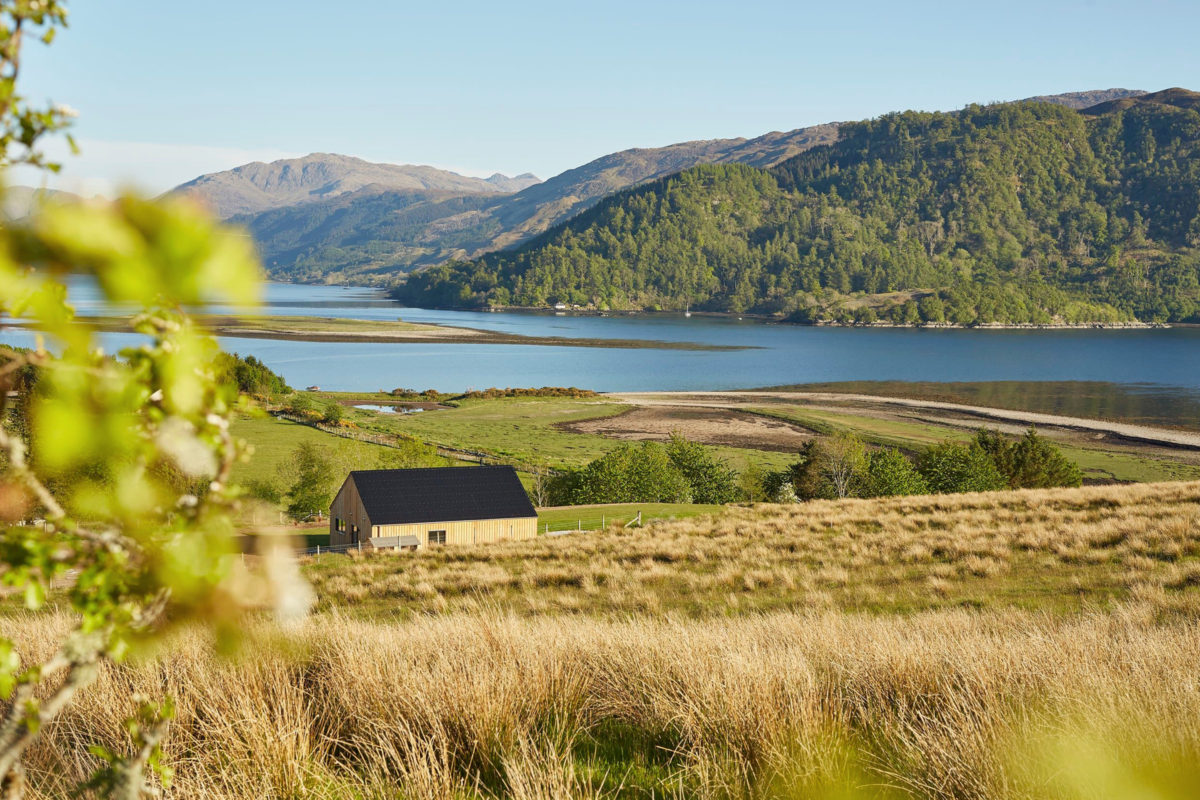
A lone Scandinavian-looking cabin from 57 Nord contemplates its life choices above a Scottish loch, surrounded by smugly photogenic hills pretending it’s always this sunny.
The luxury of slow living at 57 Nord: 57nord.co.uk .. a cabin I adore, can’t afford and will never book

This time of year encourages such delusions. There’s just enough light in the mornings to feel alive, but enough dusk to make retreat seem reasonable. You could slip away for a week and no one would really notice. The trees are almost bare, the pubs half-empty, and the countryside looks half-finished, as if waiting for someone to turn up with a notebook.

In my head, I’m dictating into my phone while trudging through leaf-sodden lanes or across a windswept upland. Evenings mean simple food, one-pot stews, bread, the sort of red wine you can chew, and perhaps the odd night at a pub, purely for proof of humanity. I’d come back leaner, calmer, possibly holding the first chapter of The Book*.

Except I never go. Yes, a little because of fear or money (and the logistics of family life) but mostly because the fantasy works too well.. The idea of the week away does its job before it begins: it restores a sense of possible order. Just imagining the solitude feels productive, which is as close to it as most of us ever get.

What makes us crave it? Age, maybe – the mid-life suspicion that our attention’s been pawned off to apps and admin. Or perhaps it’s just winter and that soft command to draw inwards, to tidy one’s psyche before spring. Either way, the idea of leaving it all behind has become one more thing to scroll through, admire … and postpone.

I like to think it’s not laziness but calibration by which I mean a quiet audit of what would actually change if I went. Would I write more? Probably not. Would I look less at my phone? For a day, perhaps two. Mostly, I’d just be somewhere else doing the same gentle dance of distraction, albeit with better lighting and a view.

Still, the fantasy has its use. It reminds me there’s another tempo available, one I could, in theory, choose. And maybe that’s enough for now. Some people meditate. I browse cabins I’ll never book. We each find our way back to silence, even if it’s only through the screen.

AI: This piece was refined with AI, for the image prompt, tags, excerpt, and a little sub-editing. The ideas, references, and rhythm are mine and were composed in Surrey, not Scotland.

* this is my first public announcement that I do have a (non fiction) book in mind. It may also be the only time I ever mention it.

Tagged , , , , , , , , , , , , , , , , , ,

The Pram in the Hallway: Why Distraction Isn’t the Enemy of UX Design

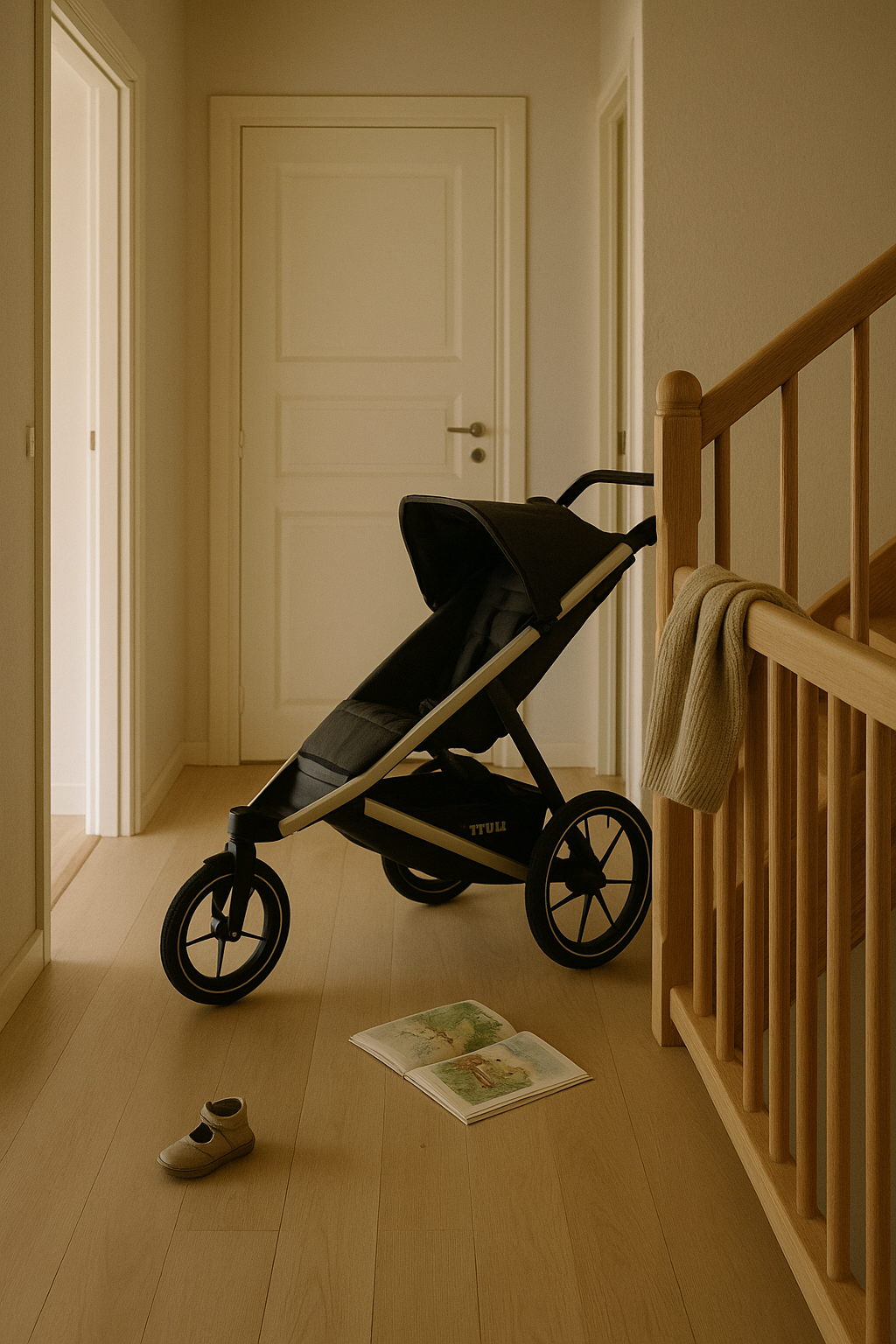
A softly lit hallway in a Scandinavian home with pale oak flooring and unvarnished wooden bannisters. A black Thule Urban Glide 2 buggy is positioned near the stairs, slightly in the way but undisturbed. On the floor lie a single child’s beige shoe and an open picture book. A wool jumper is draped casually over the bannister. The walls are off-white, and natural morning light fills the space. The scene feels unstyled and honest, capturing the quiet residue of family life.

This is the third in an accidental series of essays about design, constraint, and real life. The first explored ownership and editing, the second mapped those principles onto systems thinking. This one’s about the myth of the uninterrupted workspace, and what raising small humans has taught me about creative process, product integrity, and emotional design.

Last week I was catching up on some unplayed podcasts and heard Marina and Richard mention the Cyril Connolly line: “There is no more sombre enemy of good art than the pram in the hallway.” It’s a tidy little number but, like a lot of pithy mid-century takes, it doesn’t hold up brilliantly under daylight. So, as I continue to navigate our Thule buggy at the foot of the stairs, I thought I’d take a 2025 view.

It’s not just the casual misogyny (though yes, there’s that). It’s the deeper implication: that creativity requires retreat. That meaningful work, especially in design, happens at hushed desks; free of crumbs, notifications, or anyone yelling “Shoooooesies.”

This idea still carries weight in design and UX culture. You see it in reverent desk photos on Instagram and podcast guests earnestly waffling on about ‘flow state’, as though uninterrupted focus were the only path to quality. But what if that’s backwards? What if the mess of real life (parenting, caregiving, the emotional admin of being human) doesn’t dilute our creativity, but sharpens it?

Parenting compresses time like nothing else. Afternoons vanish. Tasks bleed into one another. The illusion of ‘ideal working conditions’ gets quietly shelved between snack prep and bedtime logistics. And yet, in those gaps, between drop-offs and Teams pings, on walks to see the cows, while fishing blueberries out of cardigans, some of the sharpest thinking gets done. Not in spite of distraction, but because of it.

Writers like Stephanie Merritt and Jude Rogers have spoken to this: how urgency and containment recalibrate creative priorities. You triage ideas fast. Half-baked ones don’t survive. The good ones clarify themselves under pressure.

In UX, we talk a lot about constraint as a catalyst. Creativity thrives on boundaries. But we rarely apply that logic to ourselves. Parenthood doesn’t just add constraints, it shifts your perspective. You’re no longer thinking about the user. You’re living with one. Or two. One tantrumming in the hallway, the other arguing about their Prep.

Design culture still clings to the myth of the monastic workspace: noise-cancelling headphones, immaculate desk setups, flow-state rituals. As though life must be suspended for work to begin. But most of the things we design are for people whose lives don’t pause. Parents in mid-tantrum. Carers juggling logistics. People buying insurance, ordering groceries, trying to rebook a dentist while coaxing a child (back) into trousers.

We design for frictionless experience, yet fetishise workflows that rely on silence. On having both hands free and the truth is: proximity to real life doesn’t dilute our design work. It deepens it.

You stop wasting time on polish and start noticing what actually matters. You develop an emotional radar: spotting friction, pre-empting dead ends, sensing what might quietly delight (or indeed quietly break) someone. And as I wrote recently, perfection has become a tell. In a world of generative smoothness, what we trust is the textured, the slightly improvised, the things made while someone was also making lunch.

Most importantly, you stop designing for personas. You start designing for real humans, chaotic, distracted, interrupted. The same kind of people we talked about when designing for enough. The kind who don’t need more features. They need clarity. Mercy. A digital space that behaves well under pressure.

Creativity and caregiving aren’t in conflict. In fact, it’s often caregiving that teaches us how to notice. To prioritise. To mean it.

This piece was edited with the help of AI, to shape rhythm, reference tone, and trim the fat. The excerpt, tagging and image were the result of carefully considered AI prompts. The words and arguments are mine. The tempo is deliberate. The polish is, therefore, human.

Tagged , , , , , , , , , , , , , ,