The other day, I was reading a children’s book with our daughter when I saw it: a corded telephone. Black, wall-mounted, with a dangling spiral wire. The sort of phone that last rang in anger sometime around the Blair years.
The Telephone rang. Little Miss Neat picked it up.
A few mornings later, it happened again, Baby Club on the BBC, all primary colours and soft clapping, and there, on the play mat , was a car. Not one she’d ever recognise. A boxy saloon. Straight-edged. Round headlights. The kind of thing you’d find idling outside a golf club in 1987.
What’s odd isn’t that these images exist, they’re charming, even lovingly drawn. It’s that they still feel like the default. Most phones today are glass bricks. Most cars look like they’ve been inflated rather than put together in a factory.
But when we illustrate for children, we reach back, not to what they know, but to what we remember. This isn’t a developmental crisis. Children don’t need realism to read meaning.
Jean Mandler’s research (thank you ‘Ai research team’) showed they use schematic categories, “car,” “dog,” “phone”, not photoreal recall.
Furthermore, Ellen Winner proved they can grasp symbolism early on (i.e. hey don’t need realism to understand things). So, no one’s confused. That’s not the point. The point is that these images persist, long after their referents have disappeared. The floppy disk still means save. A film reel still means video. A telephone still curls like a question mark.
We say it’s just design shorthand, but it isn’t. It’s something stickier.
These are the ghosts of our interfaces, icons of touchpoints no child will ever touch.
Gunther Kress‘ observations describe how meaning doesn’t update on command. It drags history behind it and changing the meaning of symbols requires overcoming an awful lot of cultural inertia. And children’s media, shaped entirely by adults, ends up as a kind of curated hauntology: a world that looks nothing like theirs, but everything like ours did, right around the time we were their age.
They swipe past rotary phones, expect Santa to come down a chimney no longer connected to a fireplace, draw little square cars with four doors and no raised suspension. It’s sentimental and not remotely sinister but it does mean they grow up consuming artefacts of use they’ll never need.
And maybe that’s fine. Maybe it’s like castles in fairy tales. But it’s hard not to feel the ache of it, that their books are filled with our objects, our past, our cultural residue.
Perhaps more concerningly, they’re not learning to navigate the world as it is. They’re learning to decode the leftovers of how we once did.
So I find myself wondering now what a picture book drawn from today would look like. Would the car even be recognisable? Would anyone bother sketching a glass rectangle phone? Or would the page just show a toddler, alone, swiping at the air, waiting for something to respond.
AI: This piece used AI to help me research the psychology references and summarise their observations. I used it for the tags, excerpt, and a little sub-editing. The ideas, references, and anecdotes were all mine.
Ten years, three seats, still loyal. The app says otherwise.
I’ve been through the Cybex catalogue more than once. Our son (2014) graduated seat by seat. Our daughter (2023) reset the cycle. That’s two children, multiple seats, a base, plus the odd accessory. All dutifully registered with Cybex’s Club, a loyalty scheme that promises free shipping, birthday treats, “exclusive offers” , y’know, the usual garnish.
This isn’t a flex. Cybex is high-end stuff, and we bought it because I lost a friend and his son in a dreadful car accident years ago and I became obsessed with buying the very best. That said …
Here’s how loyalty actually played out:
Jul-Sep 2023 — I registered three products: Cloud T (baby seat), Base T (for same), Sol Z-fix (Child’s booster). About 136 points earned.
Nov 2023 — a 100-point “bonus” dropped.
Summer–Autumn 2024 — the slow bleed: –45, –86, –5, –100. By the end of the year, the balance was gone. I saw the expiry warnings, but they were irrelevant – I didn’t need new products at that point.
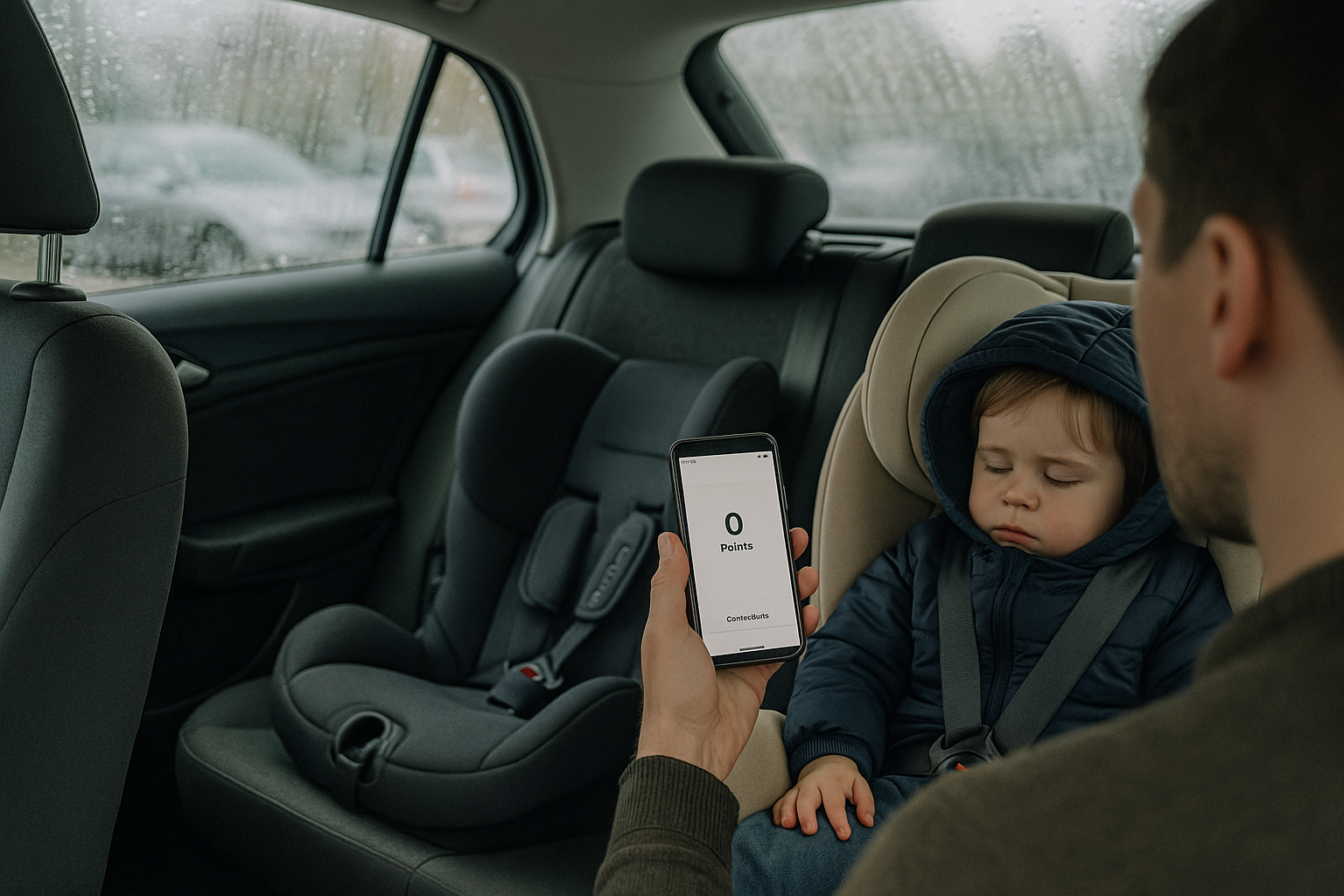
Sep 2025 — I came back for our daughter’s next seat, the Sirona. Logged in before checkout: 0 points. Of course, after paying the account lit up with +150 “bonus”.
So the scheme doesn’t reward loyalty at all (beyond ‘free postage’). It rewards the purchase you’ve just made. A pat on the back after you’ve handed over your card.
I think you see where I’m going though, the deeper flaw is structural. Car seats don’t follow marketing calendars; they follow biology. Parents buy in long arcs: infant to toddler, toddler to child, every two to four years. A one-year expiry is a guaranteed wipeout. The cadence of childhood doesn’t match the cadence of a CRM dashboard.
What would a loyalty scheme look like if it took parenthood seriously?
Moments – top-ups on birthdays or product anniversaries, nudges to check fittings and sizes/weights, effectively MOT-style safety checks.
Upgrade triggers – automatic credits seeded ahead of the next seat, not after it.
Accessories and cover — redeemable on spare covers, pads, travel bags. Or fold them into warranty extensions — the things parents actually use between major purchases.
Recycling – the chronic gap. Car seats can’t be resold, gifting feels reckless, and regulations block obvious reuse. A scheme could collect and recycle them responsibly, with credits back for doing the right thing.
Family pooling — roll credits across siblings so value doesn’t die with one child’s cycle.
None of that is radical. It just respects the rhythm of a family’s life.
Instead, the experience feels like bait and switch: promises on the front page, expiry in the small print. Which is clever if the goal is data capture, catastrophic if the goal is trust.
Of course, I still bought the Sirona. Safety and product quality trump irritation. But the goodwill is thinner now. The wider lesson is simple: if your model ignores the customer’s real timeline, you’re not building loyalty. You’re designing disappointment.
Freya India’s “A Time We Never Knew” is, on the face of it, a lament. But not for something tangible, not for a policy or platform or even a particular childhood. It’s a mourning for an idea of childhood. One shaped by distance, longing, and a deep sense that something quietly essential has been lost.
She writes from within the generation often described as digital natives, the ones we, as parents, designers, and the more pretentious cultural observers, keep diagnosing. But what she offers isn’t data. It’s affect. Grief. And reading it, you realise: this isn’t nostalgia. It’s anemoia (a term for the ache we feel for something we never really had). This is a pre-digital adolescence glimpsed only through fiction, photo albums, or the vague warmth of a life not filtered through lenses and likes.
Freya’s piece is moving because it’s not arguing a case. It’s inhabiting one. She shows you what it feels like to have grown up inside a version of it that always felt slightly off.
“We never knew friendship before it became keeping up a Snapstreak or using each other like props to look popular on Instagram.”
You can’t optimise your way out of that. No digital literacy workshop or screen-time-tracking feature will undo the sense of being used by your own image, or complicit in someone else’s performance of belonging. That’s not a UX flaw, it’s existential distortion.
I’ve argued (and still believe) that design can play its part and restore rhythm, attention, and emotional fidelity. But Freya’s piece sharpened that for me. It’s not enough to critique what’s broken as so many do with no alternative, we need to take seriously the kind of childhood that’s been lost, and ask: What now?
Not conceptually. Practically. What now?
Here are five places to start; if not to fix things, then to stop making them worse:
1. Start with the household, not the handset
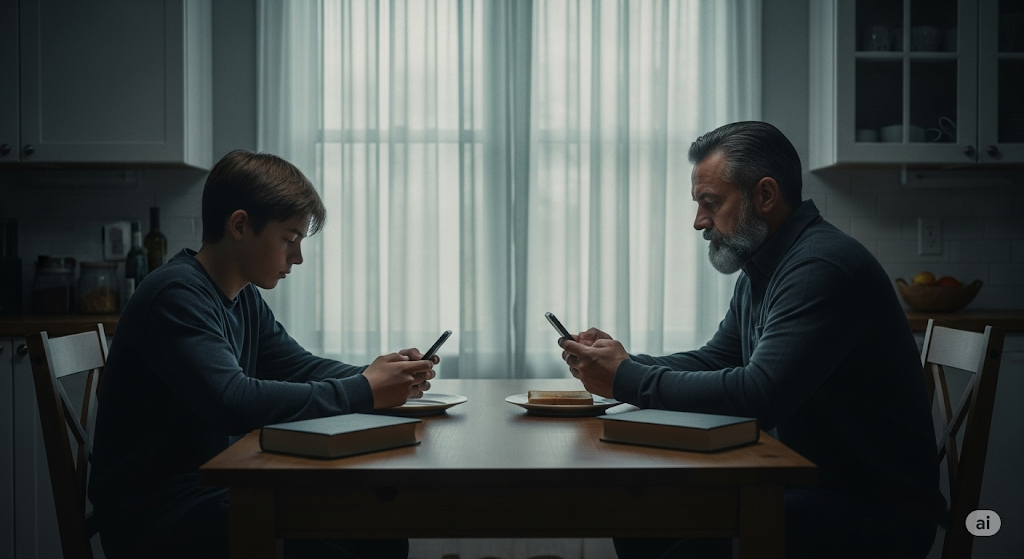
Stop asking what the app is doing to your kid. Ask what your own habits are modelling. Shared mealtimes won’t solve everything, but they set a tempo. Phone baskets, landlines, analogue clocks, not as statements, but as defaults. Ordinary, visible, repeatable.
2. Make physical things accessible, not aspirational
Stationery shops now look like gift boutiques. That’s a design failure. Kids shouldn’t need £38 Moleskines and Bullet journals to feel entitled to write something down. Re-normalise pen and paper without a need for it to looked designed and perfect. Put it on the table. Make it disposable. Used, not treasured.
3. Build spaces for lingering, not passing through
If you’re designing environments, cafes, libraries, waiting rooms, even apps, make them boredom-compatible. Low-stimulus, soft-lit, acoustically calm. Places you can sit without being prompted, pitched to, or processed. Most teens have never known that feeling. In apps this means zero notifications, tapered onboarding, low information density. No autoplay, restful animation.
4. Reclaim awkwardness
Digital fluency has obliterated the slow burn of uncertainty. But life happens in those gaps. If you’re a teacher, don’t fill every silence. If you’re a parent, let the car journey be wordless, let them be bored. Awkwardness isn’t failure it’s part of growing up.
I’ve had enough with breathwork apps and dopamine dashboards. If your platform wants to support mental health, stop inventing new notifications. Introduce blank states. Dead-ends. Hard stops. Have a very high bar for introducing infinite scroll. If the user’s done, say so. Let them leave with #NOFOMO.
In the piece I wrote last month, I framed our dilemma as a kind of middle-class dread, knowing something’s wrong but unsure how to respond without sounding puritanical or panicked. Haidt warns us of the cost of inaction. Burnett warns us not to lose our heads. Freya reminds us what it feels like. And somewhere between their caution, grief, and scepticism, we need to act, not with slogans or screen-time charts, but with work that answers in the way I have above, modelling better rhythms, removing false urgency.
We don’t all need to log-off, we just need to show up offline too, be awkward and occasionally uninteresting.
AI disclaimer: This piece was written by me, but I used ChatGPT to sub-edit, surface research, help shape the structure, and keep the tone aligned with my voice. The experiences, perspectives, and final edits are mine. AI also produced the tag list, excerpts and image that accompanies it.
Here’s a sentence that shouldn’t exist: our two-year-old has a savings pot inside her eleven-year-old brother’s bank account.
Not because we’re trying to confuse HMRC or because we’ve discovered some fintech hack that’s too good to share. Simply because no UK bank will give her an account until she turns six, and when she does, it will still be hamstrung by limits that assume every child’s money arrives in neat, predictable chunks from a parent’s allowance.
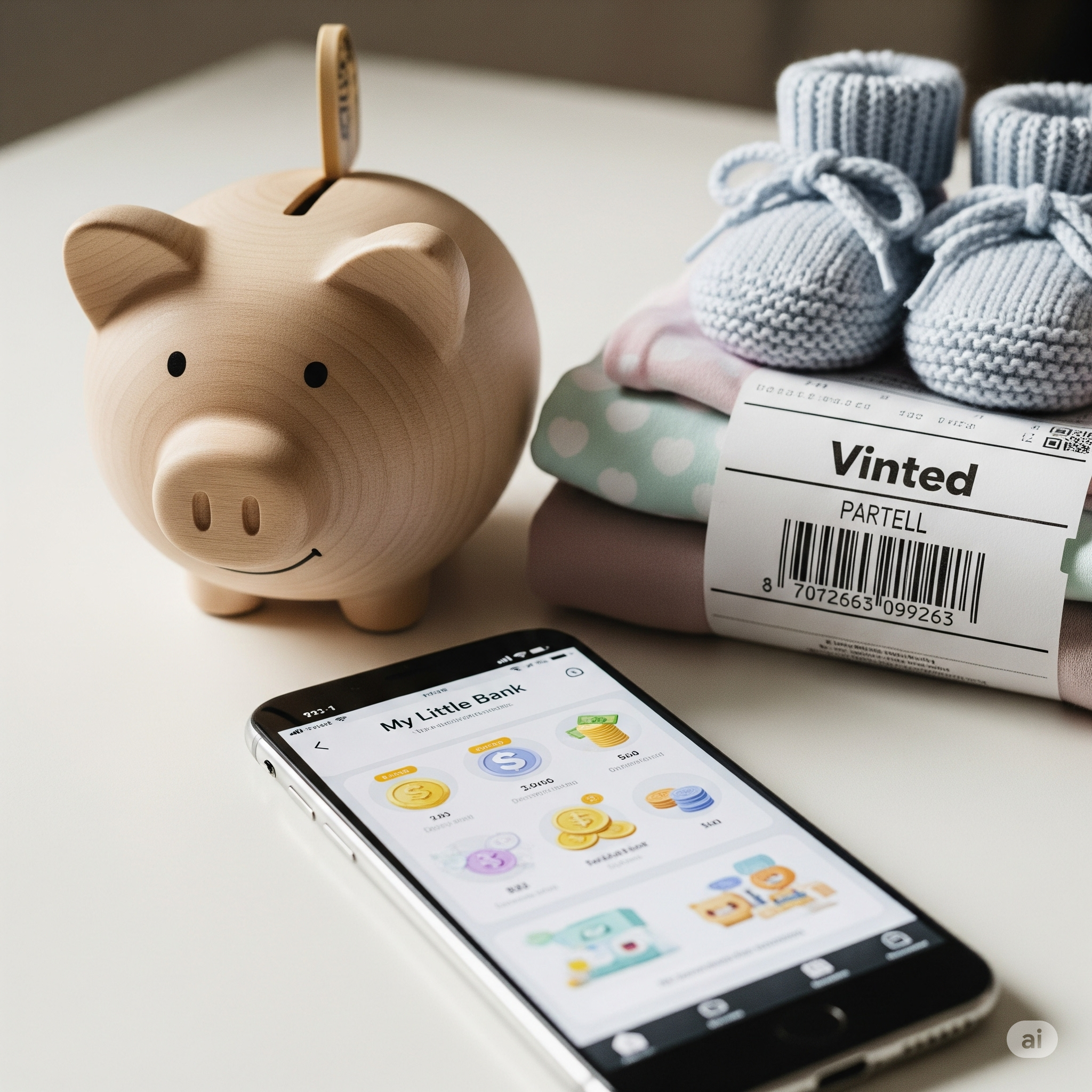
The set-up is simple. We sell her old clothes and toys on Vinted. It’s honest, traceable money, every transaction recorded by a platform that has its own anti–money laundering checks baked in. The items avoid landfill. The proceeds go to her future self. It’s the kind of wholesome circular economy PR departments love to posture about. And yet the only way to park that money somewhere with her name on it (sort of) is to create a ‘pot’ inside her brother’s Rooster account.
This is not a problem the Financial Conduct Authority asked the banks to solve. There is no specific regulation that says under-sixes cannot have a bank account. This is a product design decision, dressed up in safeguarding logic. NatWest’s own Rooster service told me:
“We’ve had to introduce limits, with these limits created and set at what we believe is a generous amount for a child’s pocket money app… We recommend that you make fewer larger top-ups in the month, and then boost the money over as often as you like.” Katie, 15.AUG.25
The logic, if you squint, is that transaction caps stop laundering. But laundering what, exactly? In our case: a baby’s outgrown sleepsuits. The “10 loads a month” cap on Rooster is not cumulative-value–driven (the actual pound-limit is much higher). It’s a blunt instrument, applied as though fewer transactions automatically means less risk.
In reality, this isn’t about AML at all. It’s about the convenience of enforcing one simple rule across the board rather than designing for the messy reality of modern family finances:
Parents with irregular incomes.
Blended households with multiple contributors.
Ad-hoc earnings from resale platforms.
Grandparents who send £5 here and there for birthdays or because they saw a cute jumper in M&S.
Under the current design, the system doesn’t distinguish between proceeds from a second-hand pushchair and proceeds from illicit activity. The compliance blanket is thrown equally over both.
The result: we’ve built a workaround. Her ‘earnings’ from Vinted go into his account, into her pot, under our management. One day, in about four years, we’ll withdraw the lot and hand it to her. Which is absurd, not least because we’ll have to move it in fewer than ten transactions to avoid tripping the same rules all over again.
If we were serious about aligning banking with real life, we’d have:
A from-birth, save-only account – visible in the parent’s banking app, locked against spending, able to receive small, traceable contributions from approved sources.
Transaction rules shaped by value and source, not arbitrary counts.
A seamless graduation path at age six to a junior current account with a card and spending controls.
The point is not to hand toddlers contactless cards. It’s to start building the habits, and the visibility, early. Money in, money saved, money safe. The actual ‘banking’ part should be the least absurd bit of that equation.
This piece was written and fact checked by me and then sub-edited with the assistance of AI. The image was rendered by Gemini and excerpt, ALT tag were AI generated.
When I was around 15, I’d get into trouble for calling a girl I was ‘seeing’ after 9pm on the house phone. I remember the jeopardy when her dad answered. It wasn’t just awkward, it felt catastrophic in that very teenage sense. There was no texting, no soft-launching your feelings via Reels. If you wanted to reach someone, you reached their entire household. Privacy was negotiated in real time, and a cordless phone allowing you to slink off to a private corner was borderline futuristic.
I mention this not to romanticise a pre-digital age but to mark a boundary: I don’t truly understand what it’s like to grow up now. Not really.
We’ve been told, often with good reason, that today’s teenagers are in trouble. Jonathan Haidt calls them the “anxious generation”, a cohort rewired by phones and social media. Since around 2012, adolescent mental health (especially among girls) has deteriorated alarmingly. Haidt blames the smartphone: a device that didn’t just enter childhood but, frankly, annexed it. The evidence is worrying, declines in sleep, attention, face-to-face connection. An uptick in self-harm, anxiety, emotional exhaustion. The argument isn’t hysterical. It lands.
But Dean Burnett suggests we’ve misdiagnosed the patient. The panic, he argues, isn’t just in the teens, it’s in us. The parents, the teachers, the adults nervously refreshing headlines while peeking at their own screen time stats. According to Burnett, much of this alarm stems from a mix of generational disorientation (a kind of collective unease that what we grew up with is no longer relevant), recurring moral panic, and good old-fashioned ignorance. We didn’t grow up with these tools, so we assume they’re harmful. We project. We catastrophise. We fear what we don’t fluently use.
The result is a pervasive sense of being at a loss. Some parents clamp down, banning apps, enforcing rigid rules on screen-time that feel increasingly arbitrary. Others detach, paralysed by the sheer bloody complexity of it all. But the most common response that I pick up from parents around me is probably the most human: low-level dread wrapped in middle-class guilt. We don’t really understand what our kids are doing, but we feel complicit anyway.
And then, just as we start to piece together a measured response, “Right! phone-free supper time!”, delayed access, schools running digital literacy workshops, the next threat pops up. Welcome to Whack-a-Mole Parenting. Just as the cultural tide begins to turn on one device, another rises, this time more subtle, more embedded, more seductive.
Take me, for example. I ask ChatGPT more (personal) questions, now than I ever asked Google. Some are practical: how to structure an email, what to cook with these leftovers, when should I plant out these seeds. But others are… not. I’ve caught myself consulting it about health worries, internal dilemmas, parenting doubts, things I wouldn’t bring up at dinner, or even necessarily with my family, my friends. Because it remembers. Because it adapts. Because it flatters you by bending to your will.
And this is me: a reasonably grounded adult with (I hope) a steady compass and a mild allergy to digital hysteria. Yet even I find it maddeningly addictive. Not the technology itself, but the relation. The illusion of being known, helped, mirrored. I can only imagine how powerful this is for a 14-year-old who isn’t just seeking answers but identity.
So the question isn’t whether smartphones are making kids anxious. They are, in some ways. But the deeper story is that we’re all overwhelmed by the sheer pace of paradigm shifts. We can’t metabolise one tech wave before the next hits us in the face.
What Would Good Design Do?
This is where design comes in. Not as damage limitation, but hopefully as orientation. The best design doesn’t just solve problems. It asks better questions. Like: what rhythms support attention? What thresholds help people feel held, not hijacked? How can digital relationships exist without replacing the real ones?
The design problem is not abstract. It’s visible everywhere. Think of Snapstreaks – a design mechanism that rewards compulsive interaction with digital trophies. Or TikTok’s For You page – a personalised feed of videos that TikTok’s algorithm thinks you’ll be interested in, which notoriously appears to learn vulnerability faster than it learns taste. These aren’t neutral tools. They’re attention economies wired for compulsion, not care. If you’re a parent watching this unfold, it’s not just confusing, it’s existential.
A brief aside here: Earlier this year, OpenAI’s Sam Altman and LoveFrom’s Jony Ive announced a collaboration to create a physical device for the “AI age.” They talked about daily rhythms, calm interfaces, emotional connection. And while their vision sounds noble, it also confirms the underlying anxiety: that our tools are no longer just functional, they’re emotional infrastructure. If anything, their announcement makes this conversation more urgent. Because the question isn’t whether the tech will be beautifully built. It’s whether it will reflect what matters.
That means not just critiquing the addictiveness of AI companions, but imagining something better. Less extractive. More human. Here’s what that might look like (after an hour of making notes this morning):
Design for pause, not push. Platforms should default to stillness, not stimulation. Kill the endless scroll. e.g. “You’ve seen it all, for now” or opening to a prompt rather than a firehose of dopamine content, or making ‘like’ less of a tap and more of a hold, restricted to just a few per day. Default to a quiet mode after 20 mins. Ask a user “why are you sharing this?”
Design for self-awareness. Don’t just track engagement. Track how users feel when they leave. Make reflection part of the loop. e.g. “How did that make you feel?”, reporting this along with screen time weekly reports. An in-app emotion metric that algorithmically analyses your interaction cadence, scroll patterns, message tone.
Design for companionship, not substitution. If AI is going to listen, let it redirect. Let it nudge us toward real conversations, not just simulated ones. e.g. “This sounds important. Have you considered talk to [name]?” or helping the user plan social activities, remember dates or conversation starters.
The tools aren’t going away. But the way we design them can still reflect care, pace, and conscience. That’s not a nostalgic idea, it’s a classic UX problem and one worth solving.
Coda
When I was a teenager, the phone was something you had to ask permission to use. Now, it’s something we all struggle to put down. Maybe the answer isn’t more rules or fewer apps. Maybe it’s knowing what to do with ourselves in the quiet space that’s left when the screen goes dark.
That’s where design still has a role to play, instead of locking us out, it guides us home.
AI disclaimer: This piece was written by me, but I used ChatGPT to sub-edit, surface research, help shape the structure, and keep the tone aligned with my voice. The experiences, perspectives, and final edits are mine. AI also produced the tag list, excerpts and image that accompanies it.
When everything is falling apart around you, but you’ve accepted that Bing is just… Bing.
It’s 5:47 AM. You’ve been wrenched from sleep by a tiny, sticky hand slapping your face. Your crime? Not waking up before the toddler. Bleary-eyed, you stumble downstairs, pop on Bing in a desperate bid for ten minutes of peace, and – congratulations! – you’ve made a terrible mistake.
Because Bing is not a break. It’s emotional guerrilla warfare disguised as children’s television. A relentless cycle of mild disasters, narrated by pure, undiluted toddler whinge. And parents, trapped in its slow, syrupy clutches, are left questioning their life choices.
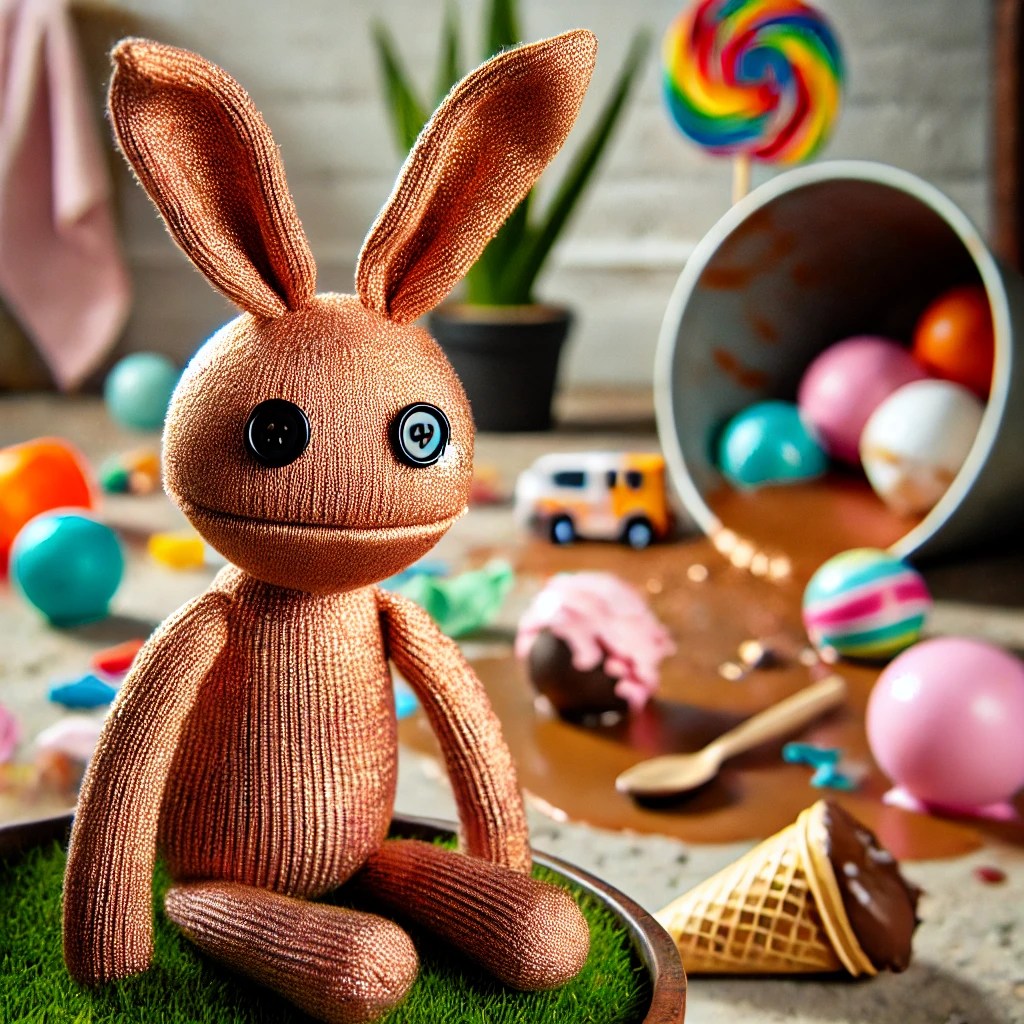
At first, Bing seems like a sweet, low-stakes show about a rabbit child navigating the small traumas of everyday life. And that’s true, if by “navigating,” we mean “flailing headlong into catastrophe over incidents as minor as a dropped ice cream.”
Developmental psychologists call this emotional mirroring: a way for toddlers to see their own feelings validated on screen. Lovely in theory. In practice, it means you, the long-suffering adult, are subjected to twenty full minutes of Bing catastrophising about a balloon. Or yoghurt. Or the unbearable injustice of having to share.
Toddlers see themselves. Parents see a replay of their actual Tuesday morning. We don’t need Bing to remind us how excruciating it is when a small, irrational dictator loses their mind over the wrong-coloured spoon. We were there. We lived it. We cleaned up the spoon-related carnage. We need a break.
Enter Flop, Patron Saint of Impossible Patience
Then there’s Flop, Bing’s eternal, unnervingly calm carer. If you’ve ever thought, I should be more like Flop, congratulations. You are now burdened with a brand-new source of parental guilt.
Because Flop never sighs. Flop never raises his voice. Flop watches Bing make the same godforsaken mistake for the seventeenth time that week and responds only with gentle understanding.
If I reacted to my child smearing peanut butter into their hair with a serene “Ah, peanut butter. It’s no big thing,” I would be swiftly clubbed to death by my fellow parents.
Flop isn’t a role model. He’s a fantasy construct of saintly patience. And he is the reason so many of us sit, seething in the glow of CBeebies, knowing in our hearts that we will never achieve his level of Zen.
Meanwhile, Bing makes a mess. Bing refuses to listen. And yet, nothing happens. No time-outs. No firm words. No hint of consequence beyond a gentle discussion of feelings.
The Cult of Gentle Parenting
This is intentional. Bing is built on a constructivist approach to learning, where children explore mistakes safely, absorbing the lesson without fear of punishment.
Lovely, right?
Sure. Except in real life, when a toddler empties an entire box of cereal onto the floor while maintaining furious eye contact, they need more than a kind discussion about oats. They need to help clean it up. They need to understand that some mistakes have consequences beyond personal emotional growth.
At the very least, they need to stop f-ing smirking.
The Bing Paradox: Well-Made, Deeply Infuriating
To be fair, Bing isn’t some half-baked accident of children’s television. It’s an Emmy-winning, heavily researched, beautifully animated show, based on books by Ted Dewan and shaped by years of child psychology expertise.
Mikael Shields, the guy who helped bring us Teletubbies and Wallace & Gromit, says Bing is meant to teach emotional resilience. And model conflict resolution. For parents.
Which is all very admirable.
But here’s the problem. We don’t particularly want a lecture in emotional resilience when we’re one rabbit crisis away from pouring a large Waitrose red.
That’s what Bluey gets right. It respects both the toddler and the exhausted adult watching alongside them. It gives us light and shade. It offers moments of humour and self-awareness, winking at the reality of parenting while still making space for childhood wonder.
Bing, on the other hand, commits so fully to the toddler experience that it leaves parents stranded, silent, passive witnesses to yet another yoghurt-related meltdown. And while that’s certainly realistic, it’s not exactly soothing.
Just The One Episode, Yeah?
So no, parents aren’t wrong to loathe Bing. It’s not just the whining, or the flailing, or the slow, excruciating dissection of minor toddler crises.
It’s that Bing asks us to relive our own parenting nightmares without offering us an ounce of relief.
Another Bing-induced crisis and I’m invoicing CBeebies for psychological distress.
AI disclosure: This post used AI to help generate the image, select blog tags, craft the excerpt, and sub-edit the text to match my tone of voice.
The Mayor of London has been urged to “champion relatable, positive male role models” to stop boys being radicalised online, which is exactly the sort of thing you suggest when you’ve already decided not to talk about the real problem.
Instead of facing the collapse of family structures and the chronic absence of fathers in too many boys’ lives, we get a proposal for an information campaign. A Toolkit. A few posters. Maybe Southgate can record a reassuring YouTube video.
Apparently, the hope is that if we churn out enough branded content about ‘healthy masculinity,’ it will somehow fill the gaping hole left by Dad never being there at all. As if boys are just a design challenge, a user group to be nudged away from extremism by better comms.
Of course, and I can’t stress this enough, some fathers should not be in their children’s lives at all. Where there is violence, cruelty or fear, absence is protection. A boy and their mum are better off fatherless than poisoned by a man who teaches him that domination is love. No argument there. None.
But that’s not the majority story.
The real crisis is the steady normalisation of fathers absenting themselves, through neglect, indifference, casual abandonment, and the refusal of politicians to say so, for fear of sounding judgmental.
You don’t fix fatherlessness with a toolkit.
But modern politics is allergic to root causes. Safer to pretend it’s a branding issue. Safer to talk about awareness, feelings, “positive role models.” Anything except the one thing that actually matters: Dads. Ordinary, everyday Dads, who stay, love, protect, and teach, often imperfectly, but crucially.
Until then, you can print all the Toolkits you like and put out the PowerPoints in a special school asssembly. The boys will still go looking for their fathers, and if they don’t find them at home, they’ll find them online.


 John Gibbard
Absent Dads, Absent Truth
The Mayor of London has been urged to “champion relatable, positive male role models” to stop boys being radicalised online, which is exactly the sort of thing you suggest when you’ve already decided not to talk about the real problem.
Instead of facing the collapse of family structures and the chronic absence of fathers in too many boys’ lives, we get a proposal for an information campaign. A Toolkit. A few posters. Maybe Southgate can record a reassuring YouTube video.
Apparently, the hope is that if we churn out enough branded content about ‘healthy masculinity,’ it will somehow fill the gaping hole left by Dad never being there at all. As if boys are just a design challenge, a user group to be nudged away from extremism by better comms.
Of course, and I can’t stress this enough, some fathers should not be in their children’s lives at all. Where there is violence, cruelty or fear, absence is protection. A boy and their mum are better off fatherless than poisoned by a man who teaches him that domination is love. No argument there. None.
But that’s not the majority story.
The real crisis is the steady normalisation of fathers absenting themselves, through neglect, indifference, casual abandonment, and the refusal of politicians to say so, for fear of sounding judgmental.
You don’t fix fatherlessness with a toolkit.
But modern politics is allergic to root causes. Safer to pretend it’s a branding issue. Safer to talk about awareness, feelings, “positive role models.” Anything except the one thing that actually matters: Dads. Ordinary, everyday Dads, who stay, love, protect, and teach, often imperfectly, but crucially.
Until then, you can print all the Toolkits you like and put out the PowerPoints in a special school asssembly. The boys will still go looking for their fathers, and if they don’t find them at home, they’ll find them online.
And that won’t be Gareth Southgate.