Tag Archives: middle age

The Cliff Edge of Middle Age

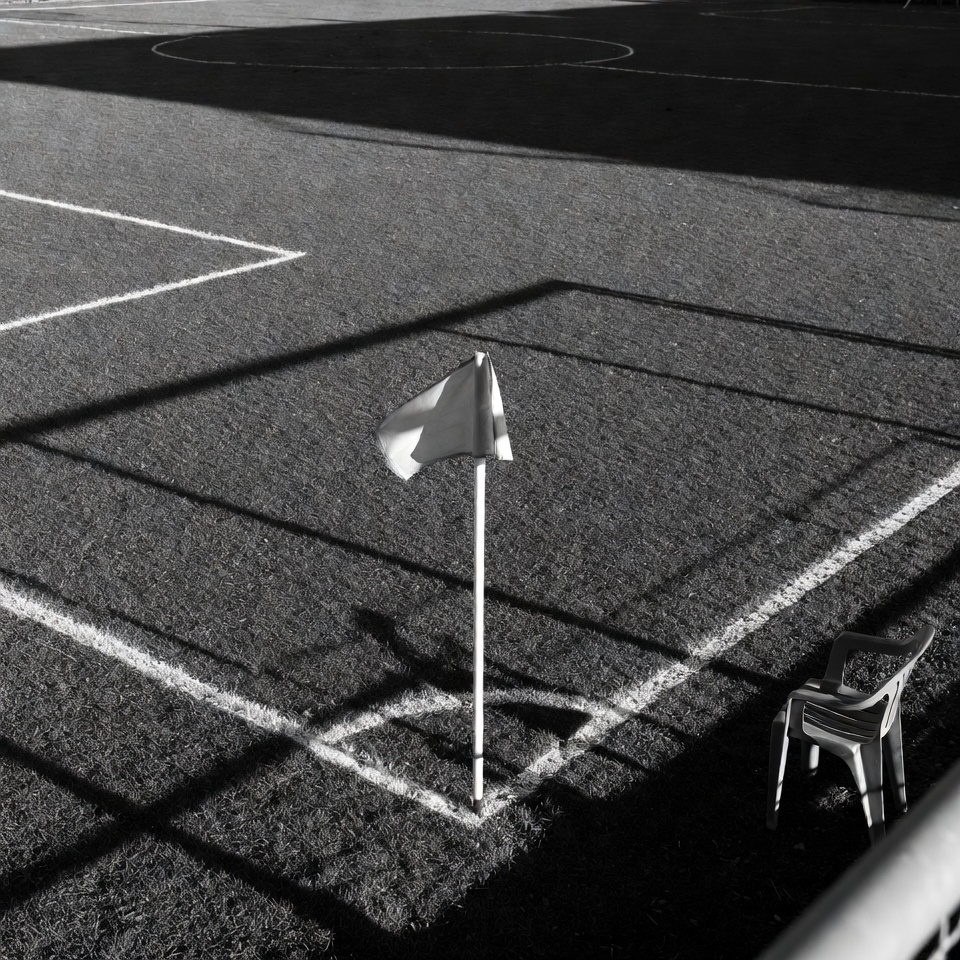
Black-and-white photograph of an empty, frost-dusted sports pitch at dawn, with long shadows, metal goalposts, and stacked plastic chairs, conveying the quiet absence of routine and community structure.
The things that keep men standing are usually the things no one notices until they’re empty.

We hear it almost every week on social media and in the press: if only men talked more. As if silence were the root cause of everything.

But men do talk. We’ve never had more campaigns, workshops, football-ground ads, celebrity confessions, podcasts, or workplace check-ins. Awareness is not the bottleneck. You can’t fling a flat white in Shoreditch without hitting someone making a documentary or orchestrating a campaign about “men opening up”.

And yet, the suicide rate for men peaks not in youth, but in midlife, forty-five to fifty-four. These are the supposedly settled years, when family and career should provide sufficient ballast. Instead, it’s the cliff edge.

The parallel with childhood in the smartphone era is hard to miss. Just as children have lost the structures of boredom, awkwardness, and unmediated friendship, adults are losing the structures of duty, craft, and continuity. Those same forces, phones, performative identity, secular drift – are hollowing both ends of life. Middle-aged despair and nostalgia for a lost childhood are two sides of the same cultural erosion.

Part of it is the work itself. Men who once called themselves carpenters, miners, or postmen now call themselves contractors on three apps. This loss isn’t simply one of continuity or economics, it’s ontological. When the trades and institutions that once anchored male identity dissolved, nothing replaced them. Progress rightly broadened women’s roles but left men’s scaffolding to rust.

What I think is missing isn’t another awareness week or a better hashtag, it’s structure. That reliable, unglamorous web of roles and obligations that demand consistent presence and usefulness. Structure, I truly believe, creates the conditions for grit, stoicism, resilience; the quality required to face life’s chaos without disintegrating.

Four Pillars

  • Stable roles: work or duties that confer identity beyond the next contract.
  • Shared obligations: being the one who brings the kit, runs the line, sets out the chairs.
  • Continuity: clubs of all kinds, parishes, allotments, institutions that outlast individual seasons.
  • Recognition in absence: places where you’re noticed if you don’t show up.

Now, these aren’t nostalgic tokens. They’re the mechanisms of accountability and friction. Friction builds strength. It stops people flapping when real adversity hits. Talking helps, but talk without structure is vapour: empathy without scaffolding.

Having purpose then is not an insight, it’s an act. A sequence of embodied, useful gestures that prove one’s value to others. It’s a personal responsibility, not something to be delegated to an app, a therapist, or a men’s shed. Those are just the supports, not substitutes. They matter most and are useful augmentations only when attached to the rhythm of an ordinary, useful life.

Because purpose lives in function, not in show. So, until we rebuild those structures of continuity and obligation, the well-meaning chorus of “men just need to talk more” will keep echoing across empty ground, like a gossamer-thin corporate wellness seminar where everyone nods sagely at the flipchart, fills out a feedback form, and goes straight back to crying in the gents.

AI and disclosures: This piece used AI to surface relevant psychology references to support my personal thesis. I also used it for the tags, excerpt, and a little sub-editing. The writing, and personal reflections were all mine and informed in part through close personal experience with these matters.
Tagged , , , , , , , , , , , , , , , , , , ,

The Week Away That Never Quite Happens

Every few weeks at this time of year, my thumb betrays me. It hovers over a post of a cabin somewhere on the edge of a loch or moor, all shō sugi ban cladding, light oak, mid-century desks and ‘vintage’ lightbulbs, and presses like. The algorithm now thinks I’m the sort of man who wears wool socks and writes preposterously neatly in propelling pencil beside a woodburner. It’s not entirely wrong.

There’s something magnetic about those images: the design-led minimalism that’s somehow still warm; the promise of solitude that doesn’t look lonely. I imagine a week in one of them — laptop off, phone on airplane, words finally unspooling in peace. I can practically smell the Danish oil.

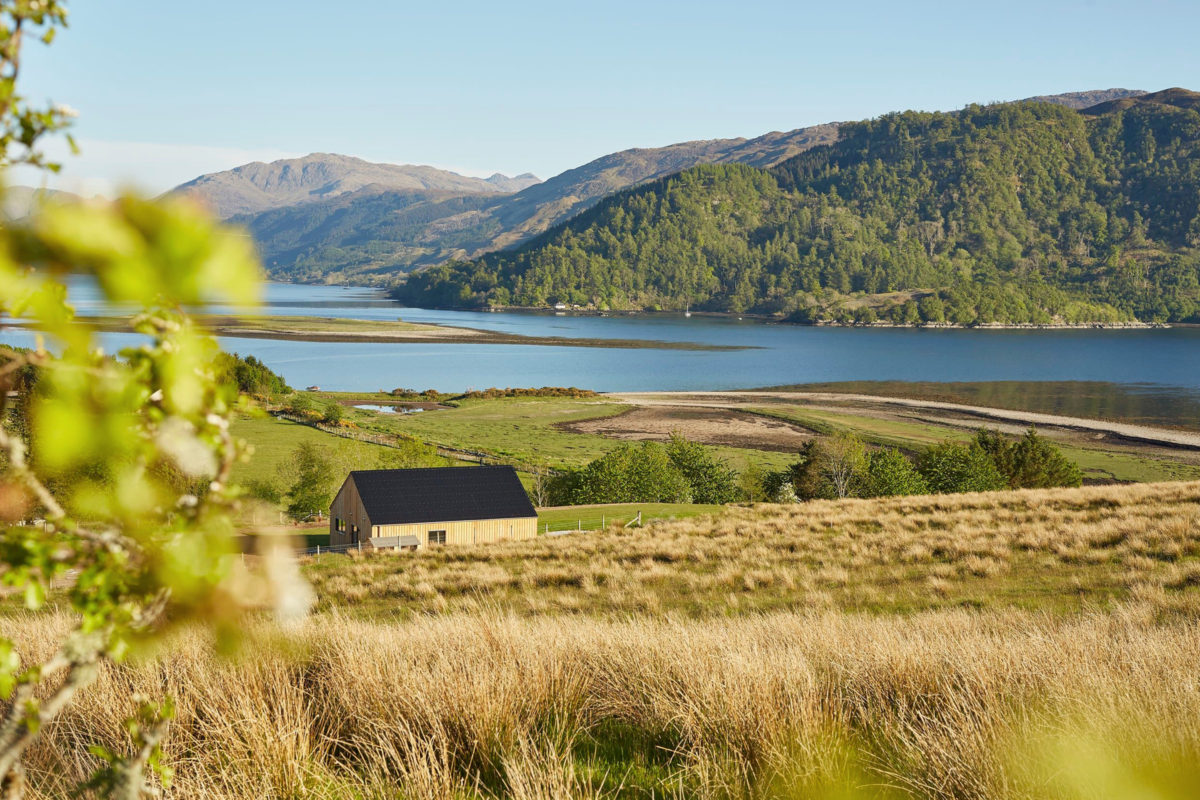
A lone Scandinavian-looking cabin from 57 Nord contemplates its life choices above a Scottish loch, surrounded by smugly photogenic hills pretending it’s always this sunny.
The luxury of slow living at 57 Nord: 57nord.co.uk .. a cabin I adore, can’t afford and will never book

This time of year encourages such delusions. There’s just enough light in the mornings to feel alive, but enough dusk to make retreat seem reasonable. You could slip away for a week and no one would really notice. The trees are almost bare, the pubs half-empty, and the countryside looks half-finished, as if waiting for someone to turn up with a notebook.

In my head, I’m dictating into my phone while trudging through leaf-sodden lanes or across a windswept upland. Evenings mean simple food, one-pot stews, bread, the sort of red wine you can chew, and perhaps the odd night at a pub, purely for proof of humanity. I’d come back leaner, calmer, possibly holding the first chapter of The Book*.

Except I never go. Yes, a little because of fear or money (and the logistics of family life) but mostly because the fantasy works too well.. The idea of the week away does its job before it begins: it restores a sense of possible order. Just imagining the solitude feels productive, which is as close to it as most of us ever get.

What makes us crave it? Age, maybe – the mid-life suspicion that our attention’s been pawned off to apps and admin. Or perhaps it’s just winter and that soft command to draw inwards, to tidy one’s psyche before spring. Either way, the idea of leaving it all behind has become one more thing to scroll through, admire … and postpone.

I like to think it’s not laziness but calibration by which I mean a quiet audit of what would actually change if I went. Would I write more? Probably not. Would I look less at my phone? For a day, perhaps two. Mostly, I’d just be somewhere else doing the same gentle dance of distraction, albeit with better lighting and a view.

Still, the fantasy has its use. It reminds me there’s another tempo available, one I could, in theory, choose. And maybe that’s enough for now. Some people meditate. I browse cabins I’ll never book. We each find our way back to silence, even if it’s only through the screen.

AI: This piece was refined with AI, for the image prompt, tags, excerpt, and a little sub-editing. The ideas, references, and rhythm are mine and were composed in Surrey, not Scotland.

* this is my first public announcement that I do have a (non fiction) book in mind. It may also be the only time I ever mention it.

Tagged , , , , , , , , , , , , , , , , , ,