Life’s too short to be buttering existential crises out of a plastic tub.
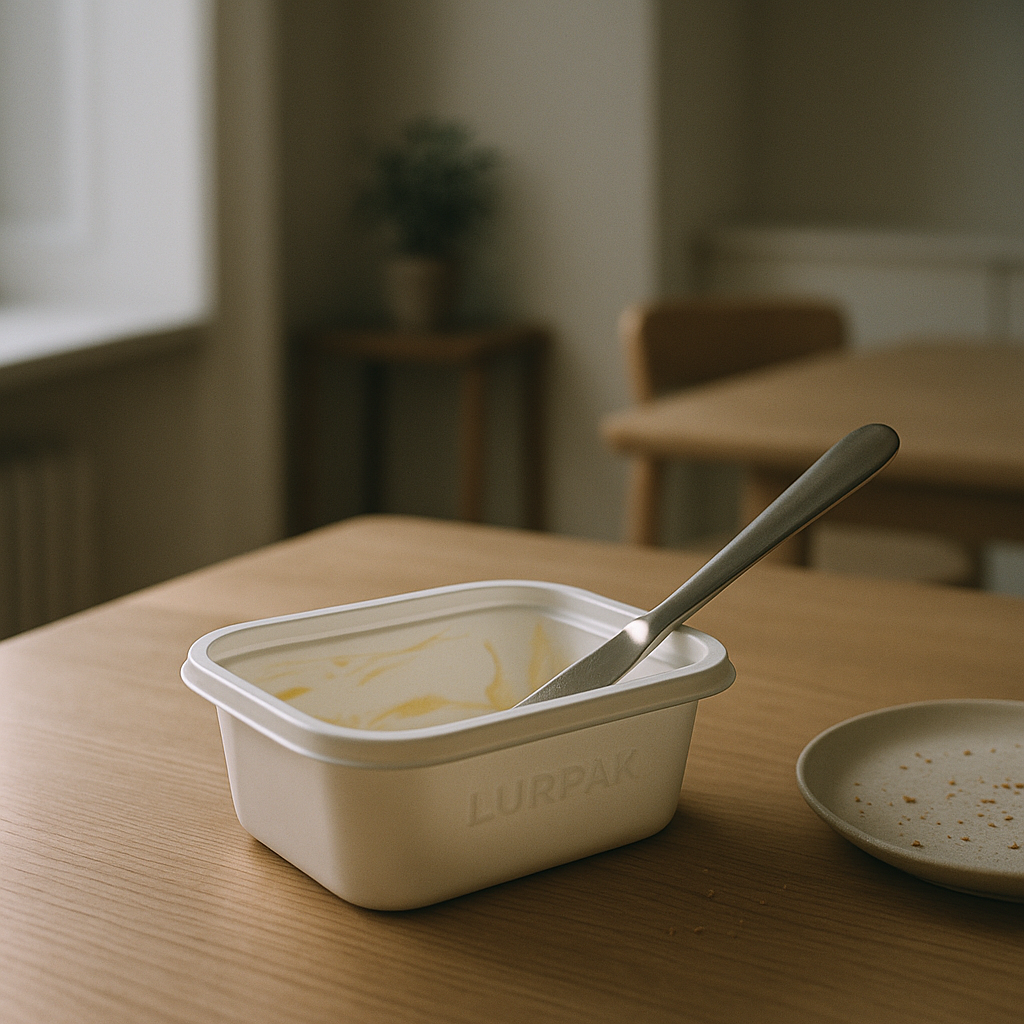
This morning I found myself scraping the bottom of a Lurpak tub.
A white, gently bowing receptacle with just enough residual butter to tease the knife, but not enough to make it worth the effort. And yet, there I was: wrist contorted, scraping sideways, skimming over craters of cold margarine laminate, determined to liberate one last smear.
For toast.
I paused, mid-scrape, and felt the creeping absurdity of it all. Why do we do this? This frugal choreography. This dignified desperation. Is it habit? Shame? Some Protestant hangover of moral rectitude that equates waste with weakness?
Or is it worse than that, is it training?
A kind of domesticated eco-asceticism, learned not out of genuine conviction but out of decades of thinly veiled moral instruction. Don’t waste. Save scraps. Rinse your yoghurt pots. Aspire to net zero in all things, including pleasure. Butter, it turns out, is not neutral.
I don’t want to be the kind of man who scrapes the last dregs of butter from the corners of a tub. It feels small. Slightly emasculating. A man reduced to margarine management. And yet, aren’t these the very values we claim to admire? Moderation. Responsibility. The quiet dignity of thrift.
There’s a strange modern tension here: the aesthetic of abundance, paired with the rituals of restraint. Middle-class frugality presented as virtue. A lifestyle of minimalism, yes, but premium minimalism. We don’t waste Lurpak because it costs £4.50 a tub. Because we bought the “Spreadable” version as a treat and now feel complicit in dairy decadence.
But scratch deeper and it’s not really about the butter at all.
It’s about effort. It’s about where we place it. We pour our energies into small, containable acts of domestic diligence because the larger systems feel untouchable. We cannot fix politics, housing, the climate, or the cultural entropy of our time, but by God, can we finish a tub of butter.
And maybe that’s OK. Maybe part of surviving modern life is choosing the scale at which we can still act meaningfully, however trivial it seems. Scraping the butter is absurd. But so is most of life, and at least this kind of absurdity ends with warm toast.
Still, I didn’t finish it. I threw the tub away, started a new one, and felt a small thrill of liberation.
No one applauds the man who knows when to stop scraping. But they should.
No, I don’t know why the phone is like that either mate. But you get the point. Too many podcasts.
Or, why skipping an episode feels like abandoning a friend.
There’s a particular guilt that comes from skipping ahead in a podcast series. Not the comedian-chats-to-comedian ones, or Desert Island Discs, those you can binge or bin at will. I’m talking about the recurring ones. The talky ones. The ones hosted by people you like, or worse, people you know. Miss a week and you don’t just lose the thread, you lose the right to laugh. The callbacks make no sense. The in-jokes have moved on. You’re no longer in on it.
I’m aware this sounds neurotic. But I’ve stopped listening to several podcasts not because they got worse, but because I missed two episodes and couldn’t face the trauma of catching up. I know I could jump in. I know no one cares. But somehow, I do. It’s the same part of me that keeps unread issues of The Spectator in a stack, muttering, “I’ll start again from the first issue.” That all came about when Jeremy Clarke got ill and I couldn’t bear reading his brilliant column out of sequence, inevitably posthumously.
The problem therefore, I think, is narrative continuity without narrative urgency. Podcasts, like newsletters or Jeremy’s Low Life column, have become serialised companionships. Their UX rewards loyalty, but punishes lapsed affection. It’s a structure built for the always-on, and it assumes you never really leave.
And the volume. The sheer, relentless sprawl of it. Everyone has a podcast now. Kind, intelligent friends. Former colleagues. Distant people I admire. I say this with genuine affection and no small dose of complicity, I write a blog read by literally tens, so I’m not throwing stones from the hilltop. But podcasting’s democratisation has created a landscape where the bar to entry is nil and the bar to quality is… unacknowledged.
This isn’t a snobby defence of old gatekeepers. The best podcasts out there are often the weirder, niche ones. The ones that would never make it past a commissioner’s desk. But that doesn’t mean the friction was all bad. A copywriter at my former agency once said, “Don’t waste the reader’s time.” With podcasts, the time-wasting is part of the premise.
There’s also the question of emotional design. If podcasts are a medium of intimacy, why are the interfaces and audio frequently so transactional? There’s no gentle onboarding for returners. No “here’s what you missed.” No warm “start here.” Just a reverse-chronological list and an assumption that you’ve kept up.
Imagine if books worked like that. Chapter 17 opens with “As we were saying…” and you’re left frantically flipping back (actually, come to think of it, that’s the exact reason why I really started to hate Thursday Murder Club). Or if Netflix removed season recaps because you should’ve been paying attention. It’s not hostile, exactly. Just… indifferent.
So what would better design look like? Perhaps:
A podcast player UI that lets hosts flag standalone episodes for returners.
A soft re-entry note at the top of an episode: “You don’t need the last three. This one’s its own thing.”
A brief recap audio snippet or even a written primer for regulars who’ve been away.
Small things. But they matter. Because as much as podcasts masquerade as friends chatting in your ears, they’re still products. And products that ignore re-entry, or punish time away, eventually lose people, not to rage, but to fatigue.
I don’t think we need fewer podcasts. That would be like saying we need fewer books. But we do need better affordances for how people actually consume them: messily, sporadically, guiltily.
We don’t stop listening because we’re bored. We stop because the emotional lift of rejoining feels heavier than just starting something new.
And if you’re wondering whether I’ll catch up on that podcast you recommended last month, the answer is no. I fell behind. And now I can’t remember when his dog died.
AI: This piece was written by me, I did use ChatGPT to sub-edit, help shape the structure, and keep the tone aligned with my voice. The experiences, perspectives, and final edits are mine. AI also produced the tag list, excerpts and image that accompanies it.
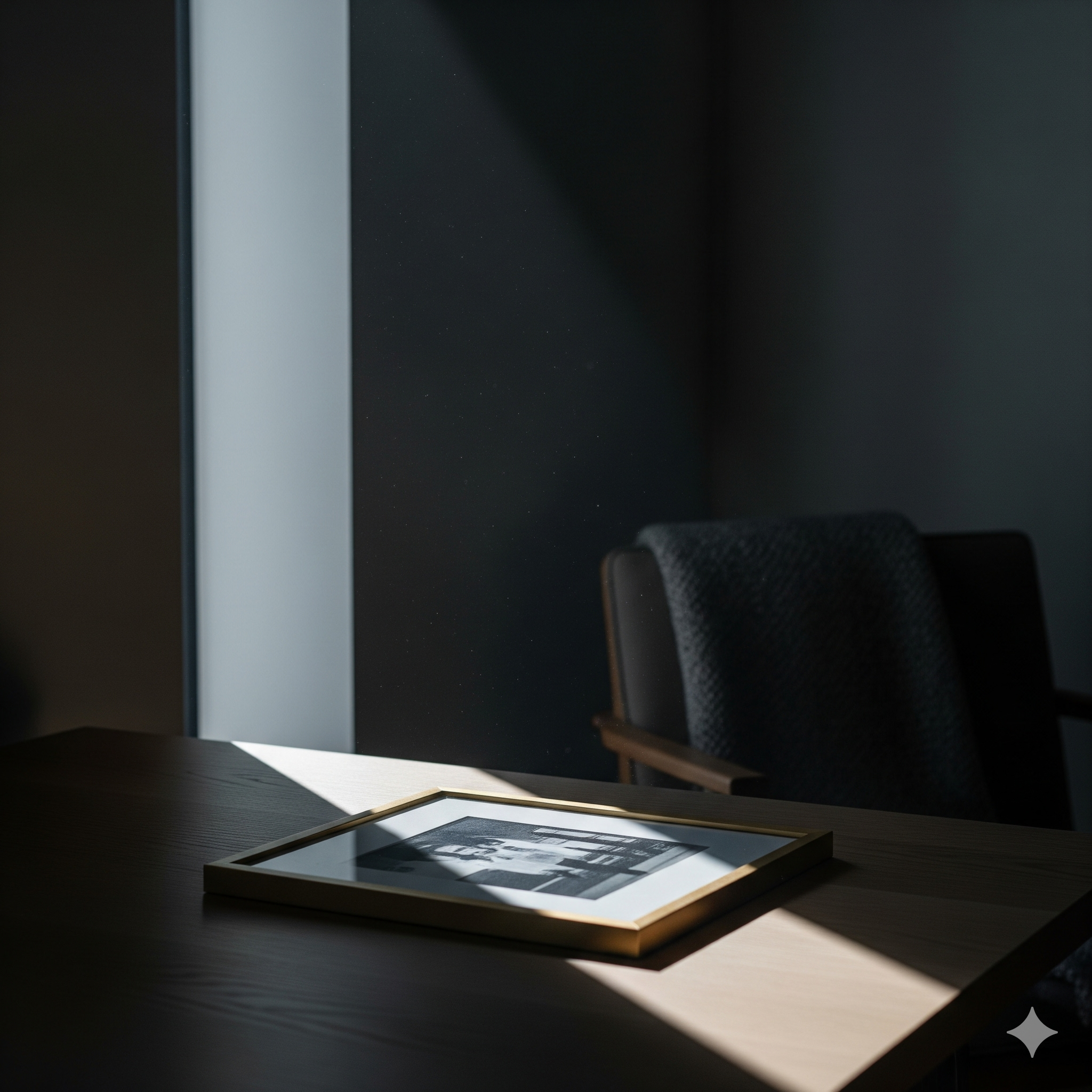
This morning I watched Richard E. Grant talk about his late wife Joan. Four years gone, he said, but what his mind serves up now isn’t the frailty of her last months, but her in good health.
“The wonderful trick of memory means that we now remember her in full health rather than the last 8 months of her Life.”
And he’s right, it is a trick, but not sleight-of-hand. Psychologists have know of this bias for decades. Negative emotions tied to autobiographical memories fade quicker than positive ones. It’s called the fading affect bias. Your mind isn’t erasing facts, it’s acting like a producer in the studio, quietly turning down the volume on the anguish while letting the warmth keep playing at full volume.
Other processes chime in. Every time we recall a memory it’s rewritten, not replayed. That’s reconsolidation, and it means memories get smudged and softened, sometimes in our favour. Trauma therapists use this to their advantage, nudging one’s recall toward less damaging associations. In grief, the brain seems to do it on its own, substituting the image of the person in decline for the person as they really were. Not denial. Not repression. A form of mercy.
I’ve had a rough few years myself, different terrain, not bereavement. But I’ve clung to the old adage that time heals. It turns out that isn’t just Pollyanna sentimentality: it’s neurology. The sting dulls, the good bits endure. The mind edits.
Yet (Grant aside) scroll through the socials or (even the trad press) and you’d think the brain is a broken appliance needing constant external servicing. Talking therapies, sound baths, mindfulness apps (with subscriptions, natch). So. Much. Talking. All while PTSD headlines insist almost the opposite, that memory is a cement block dragging lives under.
Of course, trauma can lock memory in its raw, searing form. That’s the clinical exception. But for the rest of us, maybe the task isn’t endless intervention? Maybe it’s a lighter hand. Trusting that our brains are, on balance, fairly decent editors. That focussing on the good, replaying and re-storifying it, gives it more weight in the archive. I’m taking a leap here but perhaps Richard E. Grant didn’t “work through” those final months. He simply outlived their dominance.
There’s something oddly hopeful in that. Not a quick fix, not an app notification or a breathlessly titled self-help paperback, but a reminder that forgetting is not failure, it’s function. Memory is a museum curator, and sometimes the exhibition changes.
AI disclaimer: This piece was written by me, but I used ChatGPT to sub-edit, check and surface study references, and keep the tone aligned with my voice. The experiences, perspectives, and final edits are mine. AI also produced the tag list, excerpts and image that accompanies it.
Freya India’s “A Time We Never Knew” is, on the face of it, a lament. But not for something tangible, not for a policy or platform or even a particular childhood. It’s a mourning for an idea of childhood. One shaped by distance, longing, and a deep sense that something quietly essential has been lost.
She writes from within the generation often described as digital natives, the ones we, as parents, designers, and the more pretentious cultural observers, keep diagnosing. But what she offers isn’t data. It’s affect. Grief. And reading it, you realise: this isn’t nostalgia. It’s anemoia (a term for the ache we feel for something we never really had). This is a pre-digital adolescence glimpsed only through fiction, photo albums, or the vague warmth of a life not filtered through lenses and likes.
Freya’s piece is moving because it’s not arguing a case. It’s inhabiting one. She shows you what it feels like to have grown up inside a version of it that always felt slightly off.
“We never knew friendship before it became keeping up a Snapstreak or using each other like props to look popular on Instagram.”
You can’t optimise your way out of that. No digital literacy workshop or screen-time-tracking feature will undo the sense of being used by your own image, or complicit in someone else’s performance of belonging. That’s not a UX flaw, it’s existential distortion.
I’ve argued (and still believe) that design can play its part and restore rhythm, attention, and emotional fidelity. But Freya’s piece sharpened that for me. It’s not enough to critique what’s broken as so many do with no alternative, we need to take seriously the kind of childhood that’s been lost, and ask: What now?
Not conceptually. Practically. What now?
Here are five places to start; if not to fix things, then to stop making them worse:
1. Start with the household, not the handset
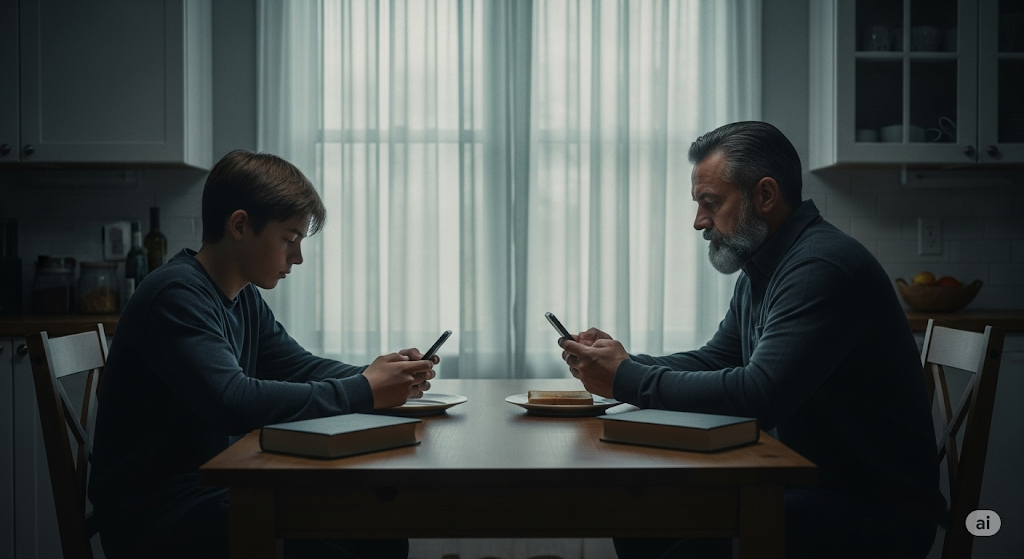
Stop asking what the app is doing to your kid. Ask what your own habits are modelling. Shared mealtimes won’t solve everything, but they set a tempo. Phone baskets, landlines, analogue clocks, not as statements, but as defaults. Ordinary, visible, repeatable.
2. Make physical things accessible, not aspirational
Stationery shops now look like gift boutiques. That’s a design failure. Kids shouldn’t need £38 Moleskines and Bullet journals to feel entitled to write something down. Re-normalise pen and paper without a need for it to looked designed and perfect. Put it on the table. Make it disposable. Used, not treasured.
3. Build spaces for lingering, not passing through
If you’re designing environments, cafes, libraries, waiting rooms, even apps, make them boredom-compatible. Low-stimulus, soft-lit, acoustically calm. Places you can sit without being prompted, pitched to, or processed. Most teens have never known that feeling. In apps this means zero notifications, tapered onboarding, low information density. No autoplay, restful animation.
4. Reclaim awkwardness
Digital fluency has obliterated the slow burn of uncertainty. But life happens in those gaps. If you’re a teacher, don’t fill every silence. If you’re a parent, let the car journey be wordless, let them be bored. Awkwardness isn’t failure it’s part of growing up.
I’ve had enough with breathwork apps and dopamine dashboards. If your platform wants to support mental health, stop inventing new notifications. Introduce blank states. Dead-ends. Hard stops. Have a very high bar for introducing infinite scroll. If the user’s done, say so. Let them leave with #NOFOMO.
In the piece I wrote last month, I framed our dilemma as a kind of middle-class dread, knowing something’s wrong but unsure how to respond without sounding puritanical or panicked. Haidt warns us of the cost of inaction. Burnett warns us not to lose our heads. Freya reminds us what it feels like. And somewhere between their caution, grief, and scepticism, we need to act, not with slogans or screen-time charts, but with work that answers in the way I have above, modelling better rhythms, removing false urgency.
We don’t all need to log-off, we just need to show up offline too, be awkward and occasionally uninteresting.
AI disclaimer: This piece was written by me, but I used ChatGPT to sub-edit, surface research, help shape the structure, and keep the tone aligned with my voice. The experiences, perspectives, and final edits are mine. AI also produced the tag list, excerpts and image that accompanies it.
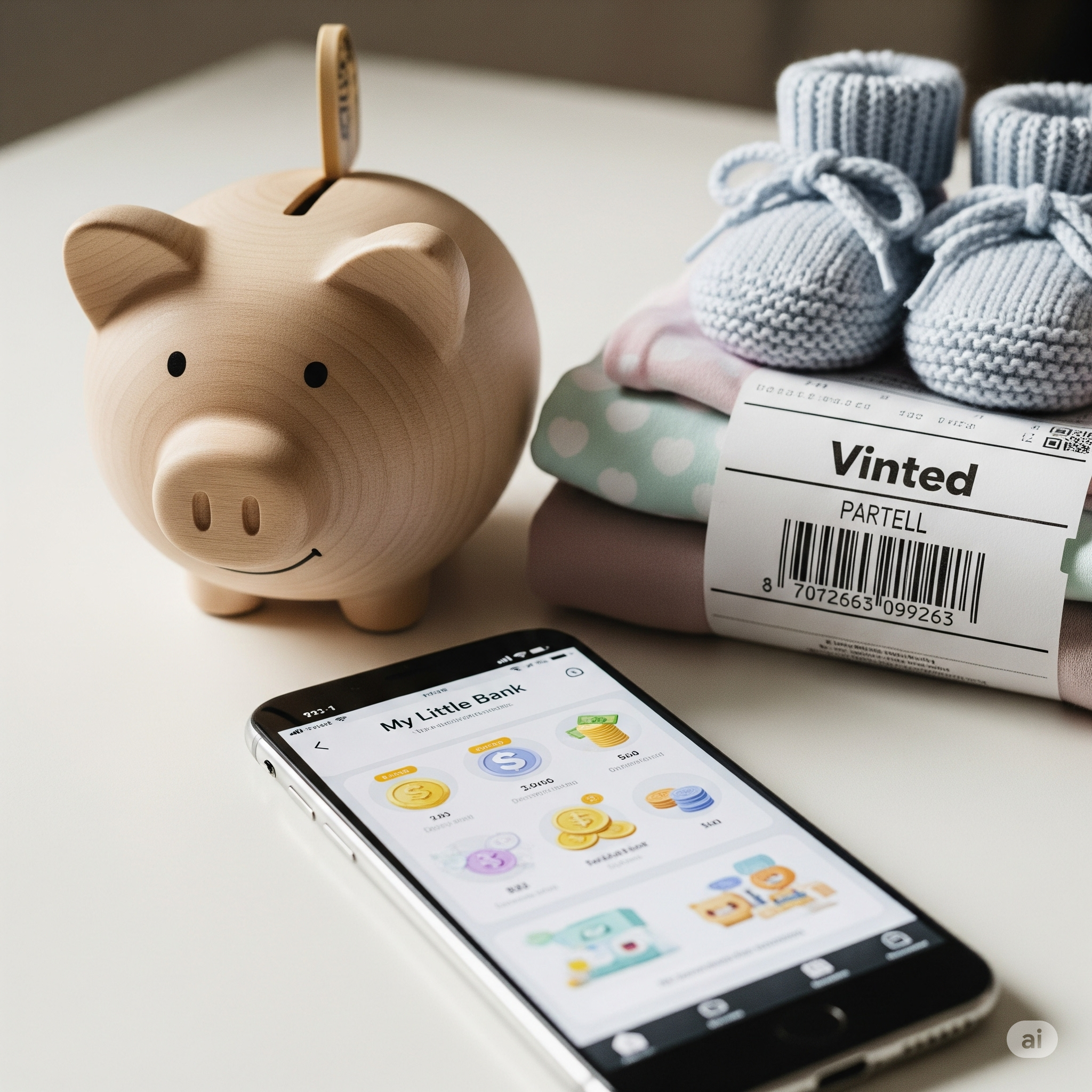
Here’s a sentence that shouldn’t exist: our two-year-old has a savings pot inside her eleven-year-old brother’s bank account.
Not because we’re trying to confuse HMRC or because we’ve discovered some fintech hack that’s too good to share. Simply because no UK bank will give her an account until she turns six, and when she does, it will still be hamstrung by limits that assume every child’s money arrives in neat, predictable chunks from a parent’s allowance.
The set-up is simple. We sell her old clothes and toys on Vinted. It’s honest, traceable money, every transaction recorded by a platform that has its own anti–money laundering checks baked in. The items avoid landfill. The proceeds go to her future self. It’s the kind of wholesome circular economy PR departments love to posture about. And yet the only way to park that money somewhere with her name on it (sort of) is to create a ‘pot’ inside her brother’s Rooster account.
This is not a problem the Financial Conduct Authority asked the banks to solve. There is no specific regulation that says under-sixes cannot have a bank account. This is a product design decision, dressed up in safeguarding logic. NatWest’s own Rooster service told me:
“We’ve had to introduce limits, with these limits created and set at what we believe is a generous amount for a child’s pocket money app… We recommend that you make fewer larger top-ups in the month, and then boost the money over as often as you like.” Katie, 15.AUG.25
The logic, if you squint, is that transaction caps stop laundering. But laundering what, exactly? In our case: a baby’s outgrown sleepsuits. The “10 loads a month” cap on Rooster is not cumulative-value–driven (the actual pound-limit is much higher). It’s a blunt instrument, applied as though fewer transactions automatically means less risk.
In reality, this isn’t about AML at all. It’s about the convenience of enforcing one simple rule across the board rather than designing for the messy reality of modern family finances:
Parents with irregular incomes.
Blended households with multiple contributors.
Ad-hoc earnings from resale platforms.
Grandparents who send £5 here and there for birthdays or because they saw a cute jumper in M&S.
Under the current design, the system doesn’t distinguish between proceeds from a second-hand pushchair and proceeds from illicit activity. The compliance blanket is thrown equally over both.
The result: we’ve built a workaround. Her ‘earnings’ from Vinted go into his account, into her pot, under our management. One day, in about four years, we’ll withdraw the lot and hand it to her. Which is absurd, not least because we’ll have to move it in fewer than ten transactions to avoid tripping the same rules all over again.
If we were serious about aligning banking with real life, we’d have:
A from-birth, save-only account – visible in the parent’s banking app, locked against spending, able to receive small, traceable contributions from approved sources.
Transaction rules shaped by value and source, not arbitrary counts.
A seamless graduation path at age six to a junior current account with a card and spending controls.
The point is not to hand toddlers contactless cards. It’s to start building the habits, and the visibility, early. Money in, money saved, money safe. The actual ‘banking’ part should be the least absurd bit of that equation.
This piece was written and fact checked by me and then sub-edited with the assistance of AI. The image was rendered by Gemini and excerpt, ALT tag were AI generated.
When I was around 15, I’d get into trouble for calling a girl I was ‘seeing’ after 9pm on the house phone. I remember the jeopardy when her dad answered. It wasn’t just awkward, it felt catastrophic in that very teenage sense. There was no texting, no soft-launching your feelings via Reels. If you wanted to reach someone, you reached their entire household. Privacy was negotiated in real time, and a cordless phone allowing you to slink off to a private corner was borderline futuristic.
I mention this not to romanticise a pre-digital age but to mark a boundary: I don’t truly understand what it’s like to grow up now. Not really.
We’ve been told, often with good reason, that today’s teenagers are in trouble. Jonathan Haidt calls them the “anxious generation”, a cohort rewired by phones and social media. Since around 2012, adolescent mental health (especially among girls) has deteriorated alarmingly. Haidt blames the smartphone: a device that didn’t just enter childhood but, frankly, annexed it. The evidence is worrying, declines in sleep, attention, face-to-face connection. An uptick in self-harm, anxiety, emotional exhaustion. The argument isn’t hysterical. It lands.
But Dean Burnett suggests we’ve misdiagnosed the patient. The panic, he argues, isn’t just in the teens, it’s in us. The parents, the teachers, the adults nervously refreshing headlines while peeking at their own screen time stats. According to Burnett, much of this alarm stems from a mix of generational disorientation (a kind of collective unease that what we grew up with is no longer relevant), recurring moral panic, and good old-fashioned ignorance. We didn’t grow up with these tools, so we assume they’re harmful. We project. We catastrophise. We fear what we don’t fluently use.
The result is a pervasive sense of being at a loss. Some parents clamp down, banning apps, enforcing rigid rules on screen-time that feel increasingly arbitrary. Others detach, paralysed by the sheer bloody complexity of it all. But the most common response that I pick up from parents around me is probably the most human: low-level dread wrapped in middle-class guilt. We don’t really understand what our kids are doing, but we feel complicit anyway.
And then, just as we start to piece together a measured response, “Right! phone-free supper time!”, delayed access, schools running digital literacy workshops, the next threat pops up. Welcome to Whack-a-Mole Parenting. Just as the cultural tide begins to turn on one device, another rises, this time more subtle, more embedded, more seductive.
Take me, for example. I ask ChatGPT more (personal) questions, now than I ever asked Google. Some are practical: how to structure an email, what to cook with these leftovers, when should I plant out these seeds. But others are… not. I’ve caught myself consulting it about health worries, internal dilemmas, parenting doubts, things I wouldn’t bring up at dinner, or even necessarily with my family, my friends. Because it remembers. Because it adapts. Because it flatters you by bending to your will.
And this is me: a reasonably grounded adult with (I hope) a steady compass and a mild allergy to digital hysteria. Yet even I find it maddeningly addictive. Not the technology itself, but the relation. The illusion of being known, helped, mirrored. I can only imagine how powerful this is for a 14-year-old who isn’t just seeking answers but identity.
So the question isn’t whether smartphones are making kids anxious. They are, in some ways. But the deeper story is that we’re all overwhelmed by the sheer pace of paradigm shifts. We can’t metabolise one tech wave before the next hits us in the face.
What Would Good Design Do?
This is where design comes in. Not as damage limitation, but hopefully as orientation. The best design doesn’t just solve problems. It asks better questions. Like: what rhythms support attention? What thresholds help people feel held, not hijacked? How can digital relationships exist without replacing the real ones?
The design problem is not abstract. It’s visible everywhere. Think of Snapstreaks – a design mechanism that rewards compulsive interaction with digital trophies. Or TikTok’s For You page – a personalised feed of videos that TikTok’s algorithm thinks you’ll be interested in, which notoriously appears to learn vulnerability faster than it learns taste. These aren’t neutral tools. They’re attention economies wired for compulsion, not care. If you’re a parent watching this unfold, it’s not just confusing, it’s existential.
A brief aside here: Earlier this year, OpenAI’s Sam Altman and LoveFrom’s Jony Ive announced a collaboration to create a physical device for the “AI age.” They talked about daily rhythms, calm interfaces, emotional connection. And while their vision sounds noble, it also confirms the underlying anxiety: that our tools are no longer just functional, they’re emotional infrastructure. If anything, their announcement makes this conversation more urgent. Because the question isn’t whether the tech will be beautifully built. It’s whether it will reflect what matters.
That means not just critiquing the addictiveness of AI companions, but imagining something better. Less extractive. More human. Here’s what that might look like (after an hour of making notes this morning):
Design for pause, not push. Platforms should default to stillness, not stimulation. Kill the endless scroll. e.g. “You’ve seen it all, for now” or opening to a prompt rather than a firehose of dopamine content, or making ‘like’ less of a tap and more of a hold, restricted to just a few per day. Default to a quiet mode after 20 mins. Ask a user “why are you sharing this?”
Design for self-awareness. Don’t just track engagement. Track how users feel when they leave. Make reflection part of the loop. e.g. “How did that make you feel?”, reporting this along with screen time weekly reports. An in-app emotion metric that algorithmically analyses your interaction cadence, scroll patterns, message tone.
Design for companionship, not substitution. If AI is going to listen, let it redirect. Let it nudge us toward real conversations, not just simulated ones. e.g. “This sounds important. Have you considered talk to [name]?” or helping the user plan social activities, remember dates or conversation starters.
The tools aren’t going away. But the way we design them can still reflect care, pace, and conscience. That’s not a nostalgic idea, it’s a classic UX problem and one worth solving.
Coda
When I was a teenager, the phone was something you had to ask permission to use. Now, it’s something we all struggle to put down. Maybe the answer isn’t more rules or fewer apps. Maybe it’s knowing what to do with ourselves in the quiet space that’s left when the screen goes dark.
That’s where design still has a role to play, instead of locking us out, it guides us home.
AI disclaimer: This piece was written by me, but I used ChatGPT to sub-edit, surface research, help shape the structure, and keep the tone aligned with my voice. The experiences, perspectives, and final edits are mine. AI also produced the tag list, excerpts and image that accompanies it.
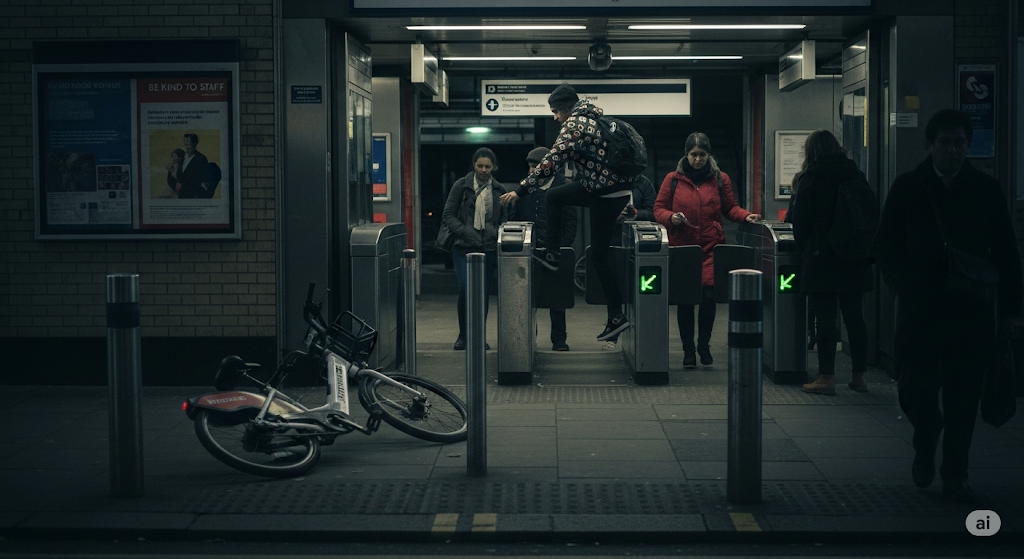
London’s decline into low-level disorder hasn’t happened overnight, and it hasn’t happened through some grand cultural collapse. It’s been a slow demagnetising of civic expectation, one graffitied carriage, one dumped rental bike, one unchallenged fare-dodger at a time.
And for all the commentary, the plans, the posters, the social media pleas from Sadiq Khan gently asking us to be kind to TfL staff, the system continues to fray. Because it’s not just about policy. It’s about psychology. A city, like a child, becomes what you quietly tolerate.
Take a stroll through Camden. Or Putney. Or Vauxhall, or Shepherds Bush. It’s not just the spike in phone thefts or fare evasion. It’s the collective flinch away from even acknowledging it. Authority is outsourced, first to security guards who are contractually told not to intervene, then to CCTV operators watching with all the urgency of a screensaver. The presence of order exists only in post-event paperwork.
This isn’t a new problem. Every generation thinks it invented disorder. But what marks this moment is the collapse of presence. The people who once embodied low-stakes authority – ticket inspectors, bus conductors, even the occasional stern-faced commuter, have all retreated. And without those micro-moments of correction, the boundary dissolves.
Because there was a time, not utopia, not Victoriana, just the mid-2000s, when the Tube was cleaner, antisocial behaviour meant something, and fare dodgers looked over their shoulders. And crucially, someone would have said something if you left your bike in the middle of the pavement.
Now? Saying something feels like an act of madness.
Even a relatively fit man in his forties (ahem, let’s say one with the outline of muscle memory from rowing and once-upon a time lifting in the gym) thinks twice. Not because he’s afraid of being shouted at. Because he might get stabbed. Not metaphorically. Actually stabbed. By a 14-year-old with a 9-inch blade and nothing to lose.
So we look away. We (not I, reader) film instead of act. We turn up the headphones and pretend not to see. Because the calculus has changed. What used to be a moment of friction – “Oi, pack it in” – has become an existential risk assessment. Is this worth dying over?
Yes, austerity hollowed out visible staffing. But not every act of disrespect can be blamed on poverty. You can’t say the teenager in £100 sliders and a Balenciaga hoodie is evading the fare because the system failed him. Nor that the grad in Clapham dumping a Lime bike across the pavement is a victim of systemic neglect.
This isn’t all about deprivation. It’s about detachment. From consequence. From collective norms. From the sense that shared space has shared rules.
So what do we do? Because the answer isn’t doubling police numbers or shaming people on social media. Culture doesn’t change through crackdowns. And civic behaviour isn’t restored by a stronger PR campaign.
You don’t police culture. You design for it.
London’s problem isn’t just one of law or design, it’s one of contrast. As other towns and smaller cities have quietly levelled up, the capital has coasted on past prestige. Behavioural standards lag not because Londoners are worse, but because London is no longer best. The Tube is better, but the civic fabric? Worn thin. What once justified the stress (the vibrancy, the culture, the sheer aliveness) now feels out of balance. You dodge fare evaders and dumped e-bikes, but for what? A Pret subscription and an off-peak West End ticket? Meanwhile, Sheffield has sourdough, Manchester has swagger, and Kent has all the ex-London chefs who could no longer justify paying £3,500 a month to fry mushrooms near a bin store.
That’s where behavioural science (and, yes, some gentle psyops) comes in.
Behaviour is context-dependent. What people do in public space is shaped by cues, affordances, and social norms more than personal ethics. If the system is designed to look away, people will act accordingly. So design it to notice. Design it to remind. Design it to suggest.
What we need to rebuild is civic equivalent of a raised eyebrow.
Start small. Use nudges that aren’t insulting. Place messages where norms are breached, not in corporate safe zones. A sign at the Tube barrier isn’t for the person tapping in, it’s for the kid about to hop it. Use tone accordingly.
Bring back the sense of being noticed. Not punished. Not tracked. Just observed.
We could do worse than call in Rory Sutherland and a few behavioural strategists with teeth. The work they’ve done on transport psychology (understanding how we navigate space, status, and visibility) is ripe for civic deployment.
Imagine a pilot scheme on the Bakerloo Line that doesn’t install more barriers, but changes the posture of the space. Mirrors. Eye-level signage. Floor friction that makes hopping awkward. Subtle lighting changes that simulate visibility. Staff trained not to chase, but to notice.
We could run this for twenty years. Quietly. Iteratively. Without press releases.
The point isn’t to eliminate every act of disorder. It’s to rebuild a culture that expects better.
Because somewhere along the line, shame became taboo. Correction became aggression. We outsourced authority to laminated posters and video cameras and hoped it would be enough. It wasn’t.
Civilisation is not a vibe. It’s a ritual.
And it’s time we noticed what we’re no longer willing to defend.
AI disclosure: AI used to sub-edit the copy and perform factual research which was cross-referenced manually. AI generated the image (obviously), excerpt and tag list to enhance exposure.
When everything is falling apart around you, but you’ve accepted that Bing is just… Bing.
It’s 5:47 AM. You’ve been wrenched from sleep by a tiny, sticky hand slapping your face. Your crime? Not waking up before the toddler. Bleary-eyed, you stumble downstairs, pop on Bing in a desperate bid for ten minutes of peace, and – congratulations! – you’ve made a terrible mistake.
Because Bing is not a break. It’s emotional guerrilla warfare disguised as children’s television. A relentless cycle of mild disasters, narrated by pure, undiluted toddler whinge. And parents, trapped in its slow, syrupy clutches, are left questioning their life choices.
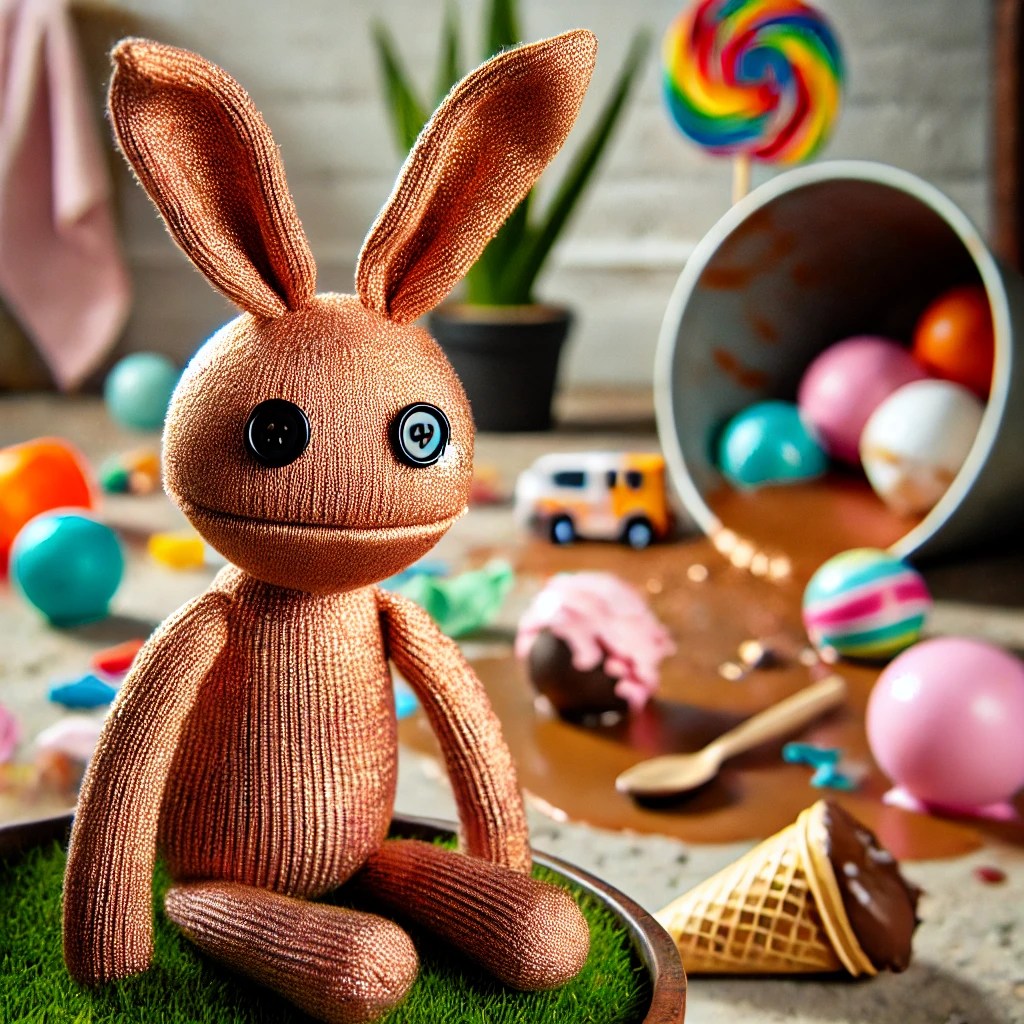
At first, Bing seems like a sweet, low-stakes show about a rabbit child navigating the small traumas of everyday life. And that’s true, if by “navigating,” we mean “flailing headlong into catastrophe over incidents as minor as a dropped ice cream.”
Developmental psychologists call this emotional mirroring: a way for toddlers to see their own feelings validated on screen. Lovely in theory. In practice, it means you, the long-suffering adult, are subjected to twenty full minutes of Bing catastrophising about a balloon. Or yoghurt. Or the unbearable injustice of having to share.
Toddlers see themselves. Parents see a replay of their actual Tuesday morning. We don’t need Bing to remind us how excruciating it is when a small, irrational dictator loses their mind over the wrong-coloured spoon. We were there. We lived it. We cleaned up the spoon-related carnage. We need a break.
Enter Flop, Patron Saint of Impossible Patience
Then there’s Flop, Bing’s eternal, unnervingly calm carer. If you’ve ever thought, I should be more like Flop, congratulations. You are now burdened with a brand-new source of parental guilt.
Because Flop never sighs. Flop never raises his voice. Flop watches Bing make the same godforsaken mistake for the seventeenth time that week and responds only with gentle understanding.
If I reacted to my child smearing peanut butter into their hair with a serene “Ah, peanut butter. It’s no big thing,” I would be swiftly clubbed to death by my fellow parents.
Flop isn’t a role model. He’s a fantasy construct of saintly patience. And he is the reason so many of us sit, seething in the glow of CBeebies, knowing in our hearts that we will never achieve his level of Zen.
Meanwhile, Bing makes a mess. Bing refuses to listen. And yet, nothing happens. No time-outs. No firm words. No hint of consequence beyond a gentle discussion of feelings.
The Cult of Gentle Parenting
This is intentional. Bing is built on a constructivist approach to learning, where children explore mistakes safely, absorbing the lesson without fear of punishment.
Lovely, right?
Sure. Except in real life, when a toddler empties an entire box of cereal onto the floor while maintaining furious eye contact, they need more than a kind discussion about oats. They need to help clean it up. They need to understand that some mistakes have consequences beyond personal emotional growth.
At the very least, they need to stop f-ing smirking.
The Bing Paradox: Well-Made, Deeply Infuriating
To be fair, Bing isn’t some half-baked accident of children’s television. It’s an Emmy-winning, heavily researched, beautifully animated show, based on books by Ted Dewan and shaped by years of child psychology expertise.
Mikael Shields, the guy who helped bring us Teletubbies and Wallace & Gromit, says Bing is meant to teach emotional resilience. And model conflict resolution. For parents.
Which is all very admirable.
But here’s the problem. We don’t particularly want a lecture in emotional resilience when we’re one rabbit crisis away from pouring a large Waitrose red.
That’s what Bluey gets right. It respects both the toddler and the exhausted adult watching alongside them. It gives us light and shade. It offers moments of humour and self-awareness, winking at the reality of parenting while still making space for childhood wonder.
Bing, on the other hand, commits so fully to the toddler experience that it leaves parents stranded, silent, passive witnesses to yet another yoghurt-related meltdown. And while that’s certainly realistic, it’s not exactly soothing.
Just The One Episode, Yeah?
So no, parents aren’t wrong to loathe Bing. It’s not just the whining, or the flailing, or the slow, excruciating dissection of minor toddler crises.
It’s that Bing asks us to relive our own parenting nightmares without offering us an ounce of relief.
Another Bing-induced crisis and I’m invoicing CBeebies for psychological distress.
AI disclosure: This post used AI to help generate the image, select blog tags, craft the excerpt, and sub-edit the text to match my tone of voice.
I’ve been on a career break since November. For the first time in years, I’ve moved at the same speed as my own community. I’ve dropped off at Scouts and nursery, sat in waiting rooms for doctors and dentists, queued at the post office. I’ve watched the builders’ vans come and go, the Micras pull up with cleaners, the conversations in cafés and allotments and playgroups unfold in a hundred different tongues and tempos. And yes, I’ve got older. My parents are reflecting. And I’ve started to reflect too.
It starts with something you didn’t realise you’d miss. A sandwich from my old Fitzrovia café favourite, The Daley Bread, warm, under a fiver. The musty tang of a church hall where the windows rarely get opened. A pub that had been quietly open for 140 years, now covered in armoured window shutters and graffiti, but still with the chalkboard ‘What’s On’ by the front door, clinging on like it remembers something.
None of these moments ever asked to be remembered. That’s why they lasted.
When Queen Elizabeth II died, something snapped. Not just a reign, but a rhythm. Not of empire or deference, but of expectation, that the fabric of everyday life, the England of hedges and hymn books and heat-damaged laminated menus on brittle café tables, would hold. That continuity, once taken for granted, would continue.
Now, I’m not sure it has.
At the end of winter, I felt it most clearly in the waiting room of Teddington Memorial Hospital. A red-brick Edwardian building with high ceilings and cloudy glass, whose entrance still hums with a kind of institutional memory. But the waiting room felt… unfamiliar. Around me, a few families who might have stepped out of my childhood. And many more who hadn’t. Different languages, cadences, faiths, mannerisms. No hostility. Just a disconnection. Like arriving late to a meeting and realising everyone else has a different perspective.
And yet, a month or so later I sat in my old school hall at BGS surrounded by seventy mostly grey-haired Old Boys in suits and sang Auld Lang Syne, said grace, and reminisced about our headmaster’s pipe smoke, the tuck shop, and flinging cheese triangles at the walls. Despite our best intentions, I doubt this traditional dinner will be remotely the same in ten years’ time.
That isn’t about race, or even nationality. It’s about rhythm. What felt legible once, now feels opaque. I know that what felt predictable to me may have felt excluding or limited to others. But predictability, even flawed, creates cultural ballast.
I grew up in Wormshill and went to school in Rodmersham, a Kentish village with fewer than 40 pupils. The building was Victorian, the sort that smelt faintly of floor polish and instant, milky coffee. It had a scullery where knees would be patched and cabbage boiled. Thursday nights meant karate club in an old church in Sittingbourne; Sundays were Sunday school. Tuesdays were cubs at the village hall. At camps, we drank weak squash and sang around the fire with an eccentric leader belting out “Ging Gang Gooley”. We had birthday parties at the Beefeater. You got a balloon and a home-made cake and it was all unremarkable. It was meant to be. That was the point.
The pub on the high street smelled of cigarettes and damp bar towels when you walked past on a Saturday morning aged eight. It was still there with the same name when you went in at sixteen. Still there when you came back from uni at twenty-one.
Now, nothing sticks. Even that sandwich shop I loved in the 2010s, The Daley Bread in Fitzrovia, staffed by a lovely working-class London couple, is long gone. Probably turned into something pop-up and forgettable. I don’t so much miss the sandwich. I miss the assumption that it would be there tomorrow.
We’ve replaced endurance with churn. A coffee shop lasts two years if it’s lucky. Pubs close, reopen as “The Lemongrass Thai”, then vanish. Housing estates arrive with names that pretend something was saved, The Pines, Mill Way, The Courtyard. Everything designed to sound like memory without having any.
Some of the erasures feel personal. A genial old neighbour in a 1930s local authority house who clipped his borders with quiet pride and watered the pavement in summer won’t be replaced. There are almshouses in Thames Ditton still holding a kind of timewarp grace – wind chimes, bird feeders, Zimmer frames at the door. But these are remnants, not structures. Continuity lives there, but only in hospice.
It’s why I comment frequently on planning applications now. Not because I think nothing should change. But because the way, and velocity, with which things change feels so incurious. The Café Rouge in Esher (formerly the Orleans Arms) will inevitably be demolished and replaced with another brushed-steel block with clip-on balconies and a vape shop at the bottom. The building was tired, of course it was, ‘nothing special’, unless you happened to have met your spouse there, or cried into a pint after the races at Sandown, or, as I recall, sat with Jo and picked over a difficult argument. Soon its memory will be preserved only in the awkward bend of the pavement.
Polyapes Scout Camp, still rich with woodsmoke and wild scrub, is next. Hemmed in by housing developments that promise a “landscape-led vision” and end with a private driveway named after a tree that never grew there.
Even when reuse is done well, it’s never quite secure. The gym I (should) go to in Long Ditton occupies an old waterworks. You can still feel the ghosts of its past—the workers crossing the cobbles (still visible on the pavement entrance) with rolled-up sleeves. But places like this feel like a reprieve, not a precedent.
Some say it was always thus. That even in 1982, people mourned the loss of the corner shop. Maybe. But they mourned loss. We’re mourning speed. Things didn’t use to disappear before you’d had a chance to learn the barista’s name. A shop might close. But it didn’t become a poke bowl kiosk, then a dog-groomer, then a boarded-up shell all in one electoral cycle.
We don’t inherit places anymore. We iterate them.
Even our rituals have thinned. Colleagues don’t go to the pub after work; they go to the gym. They don’t marry in church with tailcoats and hymns; they book a morning at the registry office, then host a party at a hotel. No criticism. But it means that when the pub closes, or the Scout hut is converted into flats, nothing stands in its place. The cultural function simply vanishes.
Even COVID didn’t give us a unifying story when we thought it would be our 39–45. It could have bound us. It didn’t. We emerged resentful, atomised, and uncommemorated. There are no statues. No ceremonies. Just a sense that it happened, we handled it badly, the pan-banging was cringeworthy, and we’d all rather not mention it. A shared trauma, now quietly redacted.
And yes, there’s the harder part to say. The part you can’t raise without sounding like a closed curtain twitching. I walk through Sittingbourne, Surbiton, or Kingston, or Esher and I don’t recognise what I hear. The shouting of Eastern European builders. The clipped conversations of families I don’t know how to read and who aren’t there for post-office queue small talk. Not hostile. Not impolite. But sharp-edged. Voices I can’t quite tune into—not the words, but the mood beneath them. What feels like cultural drift to me may well feel like arrival to someone else. But it’s the lack of overlap I notice most.
I’ve worked with plenty of diverse people who are diligent and decent and warm. But I still feel unmoored. Because the culture I knew wasn’t defined by skin or origin, it was defined by shared grammar. The knowledge they grew up listening to the same music, eating the same crisps, watching the same Saturday night TV and playing the same games in the park. A tempo. A way of being in public. That’s gone.
And with it, something unspoken: the idea that England could remember itself.
And anyway, it’s not just the voices, it’s the way people move through the world. The delivery riders who weave between cars in summer heat, knees flapping under handlebar skirts, bundled in puffer jackets like it’s February. The SUV parents who inch through the school run with all the urgency of an urban tank convoy, it boils my piss that not one of them waves a bloody thank-you when you let them through. And the vape-sucking driver in the pickup, lunging up onto the kerb to grab six cans of Monster from the Co-Op, to hell with the sight-lines, the pushchair, or the old fella on his walking frame.
There are still traces. Churches with rusted gates and ageing choirs. Pubs with Monday quiz nights and hand pumps. Allotments. Scout groups. Carol services. Street parties with bunting and that weak squash. But they feel more like re-enactments than institutions. More like memory theatre than civic rhythm.
We thought we’d miss the buildings. It turns out we miss the punctuation. The pauses, the greetings, the knowing what came next. When that goes, it’s not just a different place, it’s no place at all.
If your pub still has a snug, go. If the Scout group needs a hand, turn up. If your church still lights candles, show your face. Wave a thank-you if the car waits for you in a gap. If there’s a planning notice on the thing you loved, write the objection. Even if it’s ignored.
Because otherwise, the last trace of it all will be a street name. Something vaguely commemorative. Almshouse Mews. The Glebe. The Old Vicarage Place.
The Mayor of London has been urged to “champion relatable, positive male role models” to stop boys being radicalised online, which is exactly the sort of thing you suggest when you’ve already decided not to talk about the real problem.
Instead of facing the collapse of family structures and the chronic absence of fathers in too many boys’ lives, we get a proposal for an information campaign. A Toolkit. A few posters. Maybe Southgate can record a reassuring YouTube video.
Apparently, the hope is that if we churn out enough branded content about ‘healthy masculinity,’ it will somehow fill the gaping hole left by Dad never being there at all. As if boys are just a design challenge, a user group to be nudged away from extremism by better comms.
Of course, and I can’t stress this enough, some fathers should not be in their children’s lives at all. Where there is violence, cruelty or fear, absence is protection. A boy and their mum are better off fatherless than poisoned by a man who teaches him that domination is love. No argument there. None.
But that’s not the majority story.
The real crisis is the steady normalisation of fathers absenting themselves, through neglect, indifference, casual abandonment, and the refusal of politicians to say so, for fear of sounding judgmental.
You don’t fix fatherlessness with a toolkit.
But modern politics is allergic to root causes. Safer to pretend it’s a branding issue. Safer to talk about awareness, feelings, “positive role models.” Anything except the one thing that actually matters: Dads. Ordinary, everyday Dads, who stay, love, protect, and teach, often imperfectly, but crucially.
Until then, you can print all the Toolkits you like and put out the PowerPoints in a special school asssembly. The boys will still go looking for their fathers, and if they don’t find them at home, they’ll find them online.


 John Gibbard
Too Many Podcasts?
Or, why skipping an episode feels like abandoning a friend.
There’s a particular guilt that comes from skipping ahead in a podcast series. Not the comedian-chats-to-comedian ones, or Desert Island Discs, those you can binge or bin at will. I’m talking about the recurring ones. The talky ones. The ones hosted by people you like, or worse, people you know. Miss a week and you don’t just lose the thread, you lose the right to laugh. The callbacks make no sense. The in-jokes have moved on. You’re no longer in on it.
I’m aware this sounds neurotic. But I’ve stopped listening to several podcasts not because they got worse, but because I missed two episodes and couldn’t face the trauma of catching up. I know I could jump in. I know no one cares. But somehow, I do. It’s the same part of me that keeps unread issues of The Spectator in a stack, muttering, “I’ll start again from the first issue.” That all came about when Jeremy Clarke got ill and I couldn’t bear reading his brilliant column out of sequence, inevitably posthumously.
The problem therefore, I think, is narrative continuity without narrative urgency. Podcasts, like newsletters or Jeremy’s Low Life column, have become serialised companionships. Their UX rewards loyalty, but punishes lapsed affection. It’s a structure built for the always-on, and it assumes you never really leave.
And the volume. The sheer, relentless sprawl of it. Everyone has a podcast now. Kind, intelligent friends. Former colleagues. Distant people I admire. I say this with genuine affection and no small dose of complicity, I write a blog read by literally tens, so I’m not throwing stones from the hilltop. But podcasting’s democratisation has created a landscape where the bar to entry is nil and the bar to quality is… unacknowledged.
This isn’t a snobby defence of old gatekeepers. The best podcasts out there are often the weirder, niche ones. The ones that would never make it past a commissioner’s desk. But that doesn’t mean the friction was all bad. A copywriter at my former agency once said, “Don’t waste the reader’s time.” With podcasts, the time-wasting is part of the premise.
There’s also the question of emotional design. If podcasts are a medium of intimacy, why are the interfaces and audio frequently so transactional? There’s no gentle onboarding for returners. No “here’s what you missed.” No warm “start here.” Just a reverse-chronological list and an assumption that you’ve kept up.
Imagine if books worked like that. Chapter 17 opens with “As we were saying…” and you’re left frantically flipping back (actually, come to think of it, that’s the exact reason why I really started to hate Thursday Murder Club). Or if Netflix removed season recaps because you should’ve been paying attention. It’s not hostile, exactly. Just… indifferent.
So what would better design look like? Perhaps:
Small things. But they matter. Because as much as podcasts masquerade as friends chatting in your ears, they’re still products. And products that ignore re-entry, or punish time away, eventually lose people, not to rage, but to fatigue.
I don’t think we need fewer podcasts. That would be like saying we need fewer books. But we do need better affordances for how people actually consume them: messily, sporadically, guiltily.
We don’t stop listening because we’re bored. We stop because the emotional lift of rejoining feels heavier than just starting something new.
And if you’re wondering whether I’ll catch up on that podcast you recommended last month, the answer is no. I fell behind. And now I can’t remember when his dog died.
AI: This piece was written by me, I did use ChatGPT to sub-edit, help shape the structure, and keep the tone aligned with my voice. The experiences, perspectives, and final edits are mine. AI also produced the tag list, excerpts and image that accompanies it.