I suspect I am not alone in experiencing some cognitive dissonance about personal sensations of peace, solitude and even enjoyment during the pandemic. Running outside at twilight brings an eerie sense of quiet as my local town reverts to the village it was 100 years ago; cats and foxes amble along tranquil traffic-free roads, the stacked Heathrow landing slots are quiet and the groups of social drinkers and restaurant clientele are nowhere to be seen. The initial sense of eerieness I felt in the early days of lockdown has progressed into a melancholy that this pastoral scene will eventually fade in coming weeks, reverting to all those things about modern life I don’t miss today: noise, crowds, traffic, pollution.
Here, in leafy Surrey under warm spring skies or sat at my ‘WFH’ desk, the morbid reality of ice-rink morgues, bruised and fatigued nurses, patients clinging on to gasps of breath and businesses facing utter devastation comes and goes in waves through screens and radio broadcasts.
My previous posts have looked at the behavioural science that has initiated the change in our way of life, in this post I want to explore how this change can be sustained, inspired in-part from that sense of mindfulness that amplified the salience of the sharply positive emotions I felt being out and about in a time of lockdown.
I made contact with several friends, former colleagues and acquaintances who spend a great deal of their time thinking about human behaviour, albeit from different perspectives and contexts. I wanted to know what, in their opinion, would help us sustain and adhere to the onerous conditions of lockdown: sclerotic food delivery, family and educational obligations, financial worries and the ever-present anxiety of living through a pandemic? I reproduce their thoughts here with genuine thanks.
Stefano Augello is a strategist at Business Integration Partners and began by exploring whether our perceptions of the post-lockdown experience are the principal driver:
“Many say that “life will never be the same” and that we’ll emerge changed. From their perspective, seeing this as an opportunity to rethink our world makes the lockdown, not just worthwhile, but also a convenient period to start imagining and taking steps towards that new world.” … before countering that this approach is questionable, a short-lived idealistic vision and that longer-term we won’t see fundamental change “I believe that, at least in the UK, while there may be significant changes in specific areas, overall we’ll revert to our usual life…. as we like to deal with traumatic events by pretending that they never happened in the first place”. To some extent, it’s convenient for us to compartmentalise this event as a Black Swan, though as Cennyd points out in his piece, this event was both predictable and predicted. Mark Ritson in Marketing Week took a similar view to Stefano, drawing on theological and philosophy and I found myself agreeing that “Consumers are miserable explainers of their … behaviour and even more hopeless at predicting what they will do in the future.”
What this means, Stefano insists is that “I don’t think we should invite people to endure the lockdown with an eye to the promised land that awaits us on the other side.” and he gives us four suggestions instead:
1 – Make the danger real: The invisibility of the virus needs to be made more visible and the low-probability of serious illness to the individual needs to be converted to a high probability of society being deeply affected but pulling people out of egocentric mindsets. Stefano praises the efforts of those who have made strangers’ deaths visible and personal. They are all of us.
2 – The majority are shown to be complying: Another case of ‘visibility’ and something I addressed previously, by reiterating the majority’s compliance we normalise it. Stefano suggests going so far as to suppress stories of disobedience, something our tabloid media would find particularly challenging.
3 – Good news, every day: We crave progress and despite the immediate future predicted to be bleak, we have the opportunity to use other countries to peek beyond the horizon, not to use them as a competitive comparison. Seek out the progress being made and present it as a clear prediction of where we’re headed.
4 – An end in sight: Much certainty is currently absent, building on (3) although we cannot place a finish line on our route, we can begin to identify what we need to do to reach that finish line. Providing the public with clarity on the process will help to soften the fixation on the outcome.
To pick up on the theme of uncertainty I wanted to share April Vellacott’s thoughts.
April Vellacott, Behavioural Consulting Lead, Cowry Consulting and co-author of ‘Ripple: The big effects of small behaviour changes in business‘.
Social distancing is a catch-all term that refers to standing apart when out and about as well as the broader requirement to spend the majority of time at home. April observes: “What’s interesting about … staying at home – is that it’s almost the absence of doing something. So, in essence, it’s a bit like waiting, and the psychology of waiting gives us some suggestions for how we can make lockdown behaviour sustainable.” Adding to the calls for more certainty, April continues “If we know how long we’ll be waiting for, we’re happier to wait for longer. If we’re told that we’ll have a 2-hour wait to see the doctor, this feels better than being told ‘you’ll be seen soon’. Whilst nobody can yet predict how long the lockdown will be needed for .. the Government might be better to give a longer-term expected period, rather than continually topping up every 3 weeks.”
Drawing parallels with other waiting scenarios, it’s apparent that a shared wait is more bearable, “If we’re waiting with other people, we’re happier to wait than if we were on our own. If we’re going to be on lockdown for a long time, it will help if we make the experience social – ‘we’re all in it together’ rather than ‘you’re alone in your flat for months’. This also makes it feel fairer – and a fair wait feels less long than an unfair wait.” Defining that ‘fairness’ is something we’ll return to later as others address the moral imperative of the situation.
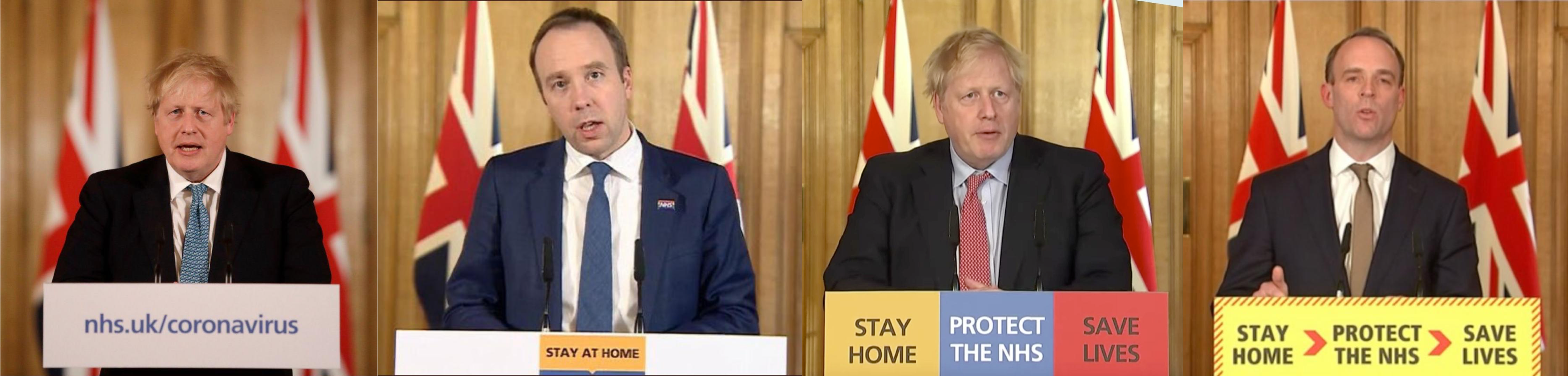
Ultimately, April believes the government’s role here is clear: “If we know why we’re waiting, we’re happier to wait. Having a reason for the waiting makes the wait feel shorter than when it’s not been explained. This means that regular updates – as the Government is doing with its daily press briefings – should give clear reasons for the duration of the lockdown.”
Mark Bell, Partner at Globant
Taking us back to our evolutionary past, Mark explored the programming hard-wired into us as a survivalist species: “something we as many animals are programmed to do is to quickly adapt to our changing environment to ensure survival. Whether that is changing seasons, working abroad or finding yourself in isolation.” … “I do hypothesise that if we reach out to a wider audience whether you are living alone or in a jam-packed squashed family environment that you have learnt to be social, roam and have freedom in your way.” Mark also believes that many of us will look back on the crises with a kind of nostalgia “[we will return to our old lives] with a … nostalgia of coping with the horrendous Coronavirus of spring 2019 and how we all pulled through together.”
These broad perspectives on the in-built survivalism we have got me thinking and I wanted to dig into the techniques we might be deploying a bit further. I’d personally drawn repeatedly on the analogies of running ultra distances. As endurance runners we’re often recommended to switch between association and disassociation strategies: thinking in detail about every step you’re taking, focusing in on your breathing vs. thinking about people you love, places you’d like to be or the food and drink you’d love. When I ran Race to the Stones in the summer of 2019 I couldn’t think about the 100k distance, I focussed instead on each 10k checkpoint. I contacted Dr Josephine Perry for her take.
Dr Josephine Perry, Chartered Sport Psychologist and author of Performance in Mind.
“To personally sustain difficult challenges in sport, we often focus on two areas: increasing motivation and reducing [the] perception of effort. [I] see the challenges COVID19 brings us in a similar way.”
“We need to increase our motivation to get through and rise to the challenge. One of my favourite theories of motivation (yes, I know, I need a life) is called Self-Determination Theory. It says to be truly motivated to do something we need three pillars in place; To feel a sense of belonging to the community in which we want to excel, to feel competent at what we are trying to do and to have [the] autonomy to choose our current and future activities.”
“We have new communities springing up where people are reaching out to others online and building volunteering which should enhance motivation. But we may also be feeling that we lack the autonomy to make our own choices when we are restricted by the government as to what we can do outside. Then, depending on our situation, we will feel either competent to step up to the challenge (good mental health, able to work from home in a secure job, feeling fit and well so able to shop for essentials) or not (if we have lost income, are self-isolating or already suffered with depression or anxiety). To increase our motivation for the challenge we need to look in each of the three pillars, see where we are weak and work on strengthening the elements within them.”
Dr Perry adds that motivation will take us some way but the effort to achieve and sustain these conditions needs to be made easier: “The more something feels hard work and like lots of effort the harder it is to push ourselves through it. In sport we reduce [the] perception of effort through activities like training hard, using caffeine or playing mind games with ourselves. In real life, we can use something called ACE (Achieve, Connect, Enjoy).”
Achieve: Make sure each day we achieve something. Doesn’t matter how big or small but achieving something helps release our reward chemical in our brain giving us a feel-good feeling.
Connect: We need to connect with others. So connecting in some way with someone outside of your household (chatting on a WhatsApp group, FaceTiming someone, joining a Zoom class) to feel like you are staying in touch with the world.
Enjoy: We need to do something each day we enjoy. Can be a little thing or something huge but it needs to be there in our lives to help us relax and to feel some purpose.”
This cognitive behavioural therapy approach struck a chord, it seemed – like so much good psychology – tangible common sense.
Dr Martin Yelling, endurance sports consultant, coach and architect of children’s movement and mental health project, Stormbreak.
Like several people I’ve spoken to, Martin is unconvinced by the immediate high-volume low-effort interventions: “What frustrates me is the influx of short-termism solutions. Quickly thought out ’solutions’ to help people towards temporary change that will be forgotten about when they return to normality. An opportunity here is to try and see through the cloudiness of the current ‘have a go at everything’ and something might stick.” For someone that naturally wrinkles their nose at the 1st January resolutions pile on, I concur as he continues: “It .. feels like the worlds worst attempt at motivating people for a ‘New year new you’ I think there is a place for immediacy and quick fix but … we should also consider the broader implications of this. Sustainable behaviour change is realised when people feel empowered by the change, have a sense of ownership of the change, when it’s meaningful, purposeful and fulfilling”.
The clarity of the lens through which we’re having to view the full range of our personal life, our work and our hobbies provide us with a unique opportunity, Martin says: “people have been forced to look at some areas of their life they currently operate in (e.g. running) and see how they respond when they cannot do that in the way they are accustomed to / expect to. … how [do] these people respond? Can they rise to the challenge of difference … do they resist and try and keep doing what they were always doing?” I think we’ve all observed something similar like this happening and, as others have already identified above, the behaviours we are suggesting are changing might not be changing that dramatically, in Martin’s words “.. maybe no long-lasting change has taken place. It’s just a sticking plaster short term solution.”
Reflecting on Martin and Josie’s words I was reminded of how I have stuck to a routine. My alarm continues to go off at 05:30 as it did as a commuter. I have the same morning and evening rituals as before. Routine and normality have helped buffer against the highly abnormal elements of my life, it’s a protective personal responsibility I have taken naturally.
Individual responsibilities for rising to these challenges are one thing, we can think carefully about how we might respond, but we’re not the only actors. Other respondents took on the role authorities might need to play and how they can use applied behavioural science accordingly.
John Owen, Behavioural Scientist and founder of The Decision Practice.
Following my question, John took up the challenge and comprehensively covered the topic in his blog post. His observations focus on the effect of ‘spillovers’, actions we take after the adoption of new or target behaviours. These spillovers can have positive, reinforcing effects or negative contradictory ones. He reminds us of a typical ‘permitting’ spillover response: “I might start going to the gym again, and then feel so pleased with my efforts that I treat myself to a flat white and a slice of cake” and contrasts this with the ‘promoting’ response “I might instead feel such a surge of healthy goodness from my gym session that I want to maintain that feeling, by ordering a whey protein breakfast blast and a pot of green tea.” John suggests, (from Thogerson, 1999) that a principal determinant of which spillovers take place is “the degree to which I am committed, at a moral level, to the consequences of my target behaviour.”
In the COVID19 pandemic, we can take social distancing as the target behaviour. The consequences are known: viral spread, healthcare systems overwhelmed, lives saved or lost. As Stefano mentioned above, the distance from personal action to these (very real) consequences is part of the problem for most people. John describes the observation of social distancing as something some people are doing “grudgingly, out of obligation, but without truly feeling the need, or comprehending the terrible impact they could have on others if they broke the rules.” in these circumstances, the likelihood of ‘permitting spillovers’ increases, particularly as time goes by and they feel they’ve put enough ‘good behaviour’ credit in the bank. Might we draw an inverse relationship of a sense of virtuousness with a decline in willpower?
Well, all is not lost, the moral purpose has a profoundly positive effect too with ‘promoting spillovers’. John observes the 750k people signing up to the NHS volunteer scheme amongst others that shows “[moral purpose from our COVID19 actions] make it more likely that they will subsequently feel the urge to do more to mitigate the crisis.” So how might governments fuel the promoters while dousing the permitters? It’s no surprise that as former ‘ad people’ John and I see communication as a vital response, and it’s something we’ve already seen in action. Appealing to ‘hearts and minds’, as John says “emphasise the moral argument at every opportunity” and the theme here continues “this needs to be sustained over the long term. The communication challenge will be to strike the right balance between the repetition of key phrases and messages on the one hand and, on the other, refreshing the core argument with new and engaging angles”.
Whilst Stefano advocated the suppression of the finger-wagging at disobedient behaviour, John takes a different perspective to preserve the foundations of this critical moral argument: “Moral arguments cannot be successfully made if the messenger is shown to be hypocritical.” and in this case, calling out the behaviour of Catherine Calderwood, Scottish Chief Medical Officer (CMO) when she repeatedly flouted her own office’s advice is essential. In her actions travelling to her holiday home, the CMO highlighted a significant issue: the high-risk ‘pemitters’ seem able to side-step the moral argument. The defence here is to continue to amplify the much higher percentage of adherent behaviour amongst the herd. wonderfully a society-initiated response is having exactly this effect according to John: “a nationwide ritual such as the applause for NHS workers every Thursday evening is so powerful. This isn’t an argument being made by those in power, which I can avoid or find reasons to dismiss, but an action being taken by my neighbours, who will notice and quite possibly judge me if I don’t join in, and whose noise I certainly can’t ignore. Even if I don’t agree with them, I can’t help but register that their moral position is the norm.”
This is something I can entirely relate to, on an essential journey last week I found myself on the road at 8 pm as the clap sounded out. I enthusiastically beeped my car horn and felt a profound and moving sense of satisfaction and togetherness as for 2 minutes through residential streets in the twilight we were all applauding the same positive sentiment. Physiologically this released dopamine, the pleasure centre of the brain was getting a fix and of course, I’ll want more of the same. Can we get addicted to being this virtuous? Not such a bad thing for a while is it? Even if, as John suggests, clapping itself might not be enough over time and so we’ll be looking to communities to encourage variety: carer claps, essential workers, one-week claps, the next pots and pans.
I think we’d all rather see these ‘descriptive norms’ emphasising the positive behaviours than the low-effort shaming of ‘injunctive norms’ (after Cialdini, 2003) that are so typical of the material that a vigilante social media and tabloid press incorrectly assume has a disciplining effect.
I was delighted with the enthusiasm with which everyone I spoke to had considered the significant challenges of sustained behaviour change in this circumstance. It was apparent that the responsibility of this is a shared one, firstly with individual motivation pushing up against the pragmatic realism of feeding ourselves, keeping money coming in and staying physically and mentally well. Then secondly the governmental responsibility of maintaining the higher purpose, communicating effectively, keeping us safe and unburdening us of some of those practical complexities.
I’d close by adding that I feel we mustn’t lose sight of the significant positives that the crisis has brought to many (sadly not all) of our lives: the children’s bathtimes we no longer miss thanks to rail or road delays, the meals we’re now sharing, talents we’re discovering, hobbies, passions and people we’d forgotten about. The footpaths, and neighbourhoods we’re seeing in new lights, the delight at technophobic relatives appearing in video calls. People are generally good, predominantly egocentric but acting as conditional co-operators in the best interest of society. I think you’ll have seen from my contributors that we’d all agree these are the stories we need to tell.
My sincere thanks to John, April, Martin, Josie, Stefano and Mark for their contributions.