Author Archives: John Gibbard

Draw Sometimes

Image

News reaches us today that Draw Something, a game I’m not ashamed to say I recently played A LOT, is suffering a sharp decline in usage. Unlike Angry Birds or similar meteorically successful mobile games, Draw Something exploded very quickly, peaking in April and has boomeranged – at least for frequent users – in recent weeks.

The BBC article raises the argument that this might be due to a general drop in appeal but doesn’t really explore what the pathology of this malaise might be. Here, for what they’re worth, are my thoughts:

Connection
One of my biggest bugbears with mobile app developers is their lazy attitude to making their apps work without a connection. Designing and testing an app in a production house with a gigabyte network is great but it’s not the real world. Draw Something is a time-killer app that’s perfect for the train, the tube/metro, planes and so-on – i.e. all the places you can’t get a reliable connection. That Draw Something insists on a connection is an Achilles heel. It wouldn’t be hard to design an offline process where you could complete your drawings and the data is cached to send next time a connection is obtained.

Regionalisation/Regionalization
The game used an American-centric dictionary and American-centric references. Obscure pop artists, minor celebrities and TV shows would regularly appear in the word list and lead to frustration as you’d have no idea who these people or items were – and could be pretty sure your friend wouldn’t know either. Cue using up valuable bombs to get new words. How hard would it be to localise the word database? Even when you did know the word the spelling might be the Yank version … again, easily fixed.

Effort
Roz points out that each game actually takes quite a bit of time. From the viewing of the other player’s guess (even if you skip it) to then watching the other player’s drawing. As an aside, even though there’s fun in seeing the construction of an image, especially when done by an artistically gifted friend, I still want to skip to the end and see the final image  in most cases. If you could just do your guesses and and leave the drawing bit until you have more time, that might make it feel a bit more manageable. There’s no ‘I’ll just have a quick go’ process built in to the sequence.

Inundation
All of those elements add up and As Ben Griffin says, the app was initially easy to manage as you had two or three friends playing. Once it became successful you could find yourself inundated with drawing requests. Compounded by the time it takes to play each game this meant that you are having to administer an ever-growing and impatient list of friends wanting to play. It’s a nagging list that feels like an unmanageable inbox which you, albeit in a mild way, resent and duly avoid.

Whilst I’m confident that Zynga and the team behind it will continue to develop the app and ensure its long-term success (releasing commenting features shows it understands how people use the app – replacing artists writing messages to each other in the first frame), the undeniable failings I describe above do give us pause to reflect what makes a truly engaging mobile game experience that, importantly, can scale with popularity.

In the meantime, take a look at this collection of the most-talked about Draw Something efforts.

Tagged , , , , , , , , ,

Target 3hrs 10

There’s good, and there’s Good. I absolutely will not take anything away from anyone who runs a marathon (and that includes run-walk-run), but to be blunt there are times that are exceptional, times that are good, average and below average. Marathons are now very popular yet still you’re in less than 1% of the population if you’ve completed one. So, by that token, even an average effort is rather impressive.

It’s against this framework that most efforts are judged. Because friends and family are likely to be non-runners without the context and knowledge of age-gradings and suchlike, they base their judgements on what they might have heard other recreational runners achieve. Good news if all your friends have known is a 50 yr old retired fireman running a 5hr 30 effort for charity. Not so good news if you’re friends are also friends with top-end club runners and chaps like David Cartwright of Poole Runners (02:54:36 at age 63). Fortunately there are things like age gradings to help you understand whether these achievements stand relative to your age. There are also handicap systems like the runbritain rankings. So, whilst friends, family and colleagues happily applaud my 3:29:58 and I’m personally delighted with dropping my PB by nearly 30 minutes this year, I’m pretty aware that the (male) qualifying time for Boston is 3hrs 10 (18-34) or 3hrs 15 (35-39) and that London‘s ‘Good for Age‘ entry is reserved for 3.10 runners (under 40). What made me settle on this was seeing Nell McAndrew cross the line at London (just in front of Mr. Cartwright) in under 3hrs. A time that placed her in the top 40 women in the UK. She started with a 3hr 22 eight years ago at the age of 31.

> To see how my time compares to everyone else in the race, the ugly but v. interesting RunPix has the data

Whilst my two marathons were a year apart, I can’t honestly say I trained solidly in that year to get my time down. After 2011 I sat out most of the summer, a few short runs here and there and gradually built up to running distances around 12-13km. When I took on the Run Kingston (16mile) race in October I was under-trained and had a miserable final 6 miles to scrape in well over 2hrs. I then did a bit more to keep a base going and eventually started a 16 week plan following Jeff Gaudette’s Runkeeper 3hr 30 schedule for London 2012. With a few sessions missed thanks to injury, a ski holiday and the odd work-life-unbalance it wasn’t a perfect build up but as close to perfect as I’m likely to get. I might not have had ideal nutrition or done much in the way of stretching and strength (quite  contrast to last year when I religiously did both) but some of my splits in my training intervals were really surprising me. I was able to run pretty fast, comfortably. When I went out and did Asics Fleet pre-London Half Marathon in March I ran conservatively and intelligently and ducked comfortably under 1hr 40.

I have told too many people that I’m going to run a marathon every year until I’m 40 (and who’s to say I won’t carry on beyond) so I feel like I really should keep that up. Having said that, I suggested ‘never again’ to the reception party in Horse Guards’ Parade last sunday but a bit of time and perspective helps! Since watching Berlin from a hotel room in September last year and knowing how my friends have talked about it as a race (and a city) I think I’d really like to do that. It’s too late to enter for 2012 and, in any case I’ve got something else planned for this September anyway. So, 2013 it is which means 17-18 months of training to get that 3.10.

There’s precedent here though. My good friend Darren is a little older than me, very similar build, been running a little longer and has a (much) busier life –  but he has had some great success in recent years (using Jeff’s plan) to drop his marathon from the 3.30s-3.13.43 (Royal Shakespeare) to a PB of 3.07.05 in windy conditions in Rotterdam this year and is aiming to go sub 3 at some point soon.

To do this I want to draw a straight line between today’s PB and September 2013. I have some milestones to reach along the way and I need to methodically tick these off to achieve that goal. Milestones like gaining strength in the legs and my core, in improving my cadence (footfalls per minute) and general form (transitioning to a more mid-foot strike). With those ticked off I can continue to work on my aerobic capacity and my psychological strategies to ensure I can dig in for longer at faster paces.

With that in mind I have two races coming up. Sadly they’re not really compatible but I want to PB in both of them. The first is the LGN Inter-Advertising 5km race in Regent’s Park. This is a flat and easy course and it’s important to me to put in a good showing there in front of colleagues and peers. I can definitely shave a slice of my previous best of 22-ish minutes. The second however is the Great North Run. A race I’ve been bag-holder for twice and always been jealous of, it’s got a fantastic atmosphere, a reasonably straightforward (though not super-fast) course. It is only three days after the LGN 5km though so it probably means that it will have to take precedence and mean that my 5k PB could happen sooner in the year, at a parkrun for example.

I need to work out what the Great North should be run in. I think it should be a 90 minute race, based largely on the fact that the  McMillan pace calculator suggests a 3hr 10 marathoner should be capable of a 1hr 30.07 half (and a 19.29 5k). So, that’s the short term target. With the long summer evenings, warm weekends in the parks and towpaths and maybe a bit of trail running in the Surrey hills, it should be a good time to put the miles in. Added to the big goals of strength and speed, I want to run with others a bit more
Dare Run helps with this particularly as some of the lads have good 5k speed. I’m keen to hook up with some old rowing chums (James & Owen) too, both of whom have much better PBs than me.

And that’s it, for a little while. I’ll just quietly get on with it. If you want to follow my progress (!) then the usual Runkeeper, Endomondo and Garmin links are out there, as well as Twitter of course.

Post-script
Just as I was wrapping this post up, Laurian (Dare and fellow VLM sub 4hr runner) posted a link to an article in a paper I detest, which  did draw attention to the fact that amongst certain middle-class aspirational circles that posting PBs and talking about your endurance feats is the new rat-race. It is actually alarmingly accurate and brings this post of mine wonderfully back down to earth. So thank-you, horrible paper, for making me realise that this might actually be pretty gauche to many of you. For that, I apologise!

Tagged , ,

Marathon 2012: My race report

It might seem obvious but 26.2 miles is a long way. It’s actually quite easy to forget that. Where I grew up in Kent, I used to think that when I’d drive the 26 miles from home to the end of the M26. A journey that even at 70mph in the car seemed quite a way.

But today, one week on from my second marathon in London, I’m struck by how quickly it went. I was having breakfast this morning and realised it was 09.45, exactly the same time as I set off last week from pen 3, blue start, Blackheath. I finished my breakfast, watched an entire film, did some chores and helped Jo make and bake some cookies. The week before I’d still have been running. It felt like a long time this week but back then it flew by.

That’s not to say it’s easy, just that your mind is actually very occupied throughout and, through some cognitive chunking, the race is separated into a series of moments. So much so that now, even after having watched the BBC footage, listened to the Marathon Talk podcast round up, viewed the photos and had debriefs with uninterested colleagues and fellow runners, I still can’t remember too much about it. Here’s what I do remember:

A good start
This year I travelled to the start with Naomi Dunne and Zeeta from Clapham Chasers. Naomi’s a great friend and colleague who was starting her third marathon and – in spite of injury – after a sub 4 hour time. We had plenty of time on the (more busy than 2011) trains and arrived in good spirits. Sun shining, start buzzing and we found a spot out of the wind an near the loo queues. After dumping bags and hugging for luck we hit our respective pens. I lucked-out this year and with a low number (6226) I was in pen 3. Blue start is the best start in my opinion. It’s the elite and championship start and it follows the ‘proper’ route rather than joining the route a few miles in like red and green do. We moved forward a couple of times and by the time the announcements of the men’s elite were being made I was about 60ft from the front line. I crossed the line under a minute from the starting gun so my splits would be close to the official gun time which was pretty handy.

Last year back amongst the Fun (capitals intentional) runners I had a mare. Stopping an shuffling for at least a mile. This year I was running from the start and much more relaxed too. I stuck to the Jeff Gaudette’s plan and settled in to 8.10-15/miles for the first 5 miles.  I passed Iwan Thomas with a cheery hello about 2 miles in, enjoyed the ‘humps’ up Charlton Park Lane, the Olympic shooting test event  and generally got in to the swing of things. Just after Charlton we hit the 5 mile mark and from that point I had to make sure I was closer to 8 min miles (4.57km). But for the first 2km I’d been comfortably under 5 min/km and my heart rate was an easy 155. I could see the 8 min mile (3.30hr) pacing team so I hopped on their ‘bus’ and thought that would take my mind off the next 15 miles and the fact that I was starting to need a wee quite a bit.

Pit Stop
I’d hydrated on SiS before the race and had been really making sure I started the race properly hydrated. It’s a gamble as to how far you take that and despite using the facilities en-route to my start pen, you can’t legislate for how quickly it goes through you. I thought I could hold out and that sweat would deal with it but a few miles later I was in the same situation I’d been in a Fleet half marathon a month before and was looking around for the next portaloo.

Knowing I needed a time cushion to cope with the pit stop I picked up my pace (4.54, 4.52/km) after Cuty Sark (which looked amazing and brilliant to be back after missing it last year) and the winding detour of Greenwich I finally ‘scratched the itch’ just by Deptford Park at about 13km. I lost about 30 seconds in the stop but kept my watch running to have my total time, and picked up the pace (4.49, 4.55, 4.51) to try and get back in touch with the pace bus.

This was hard work (heart rate nudging 160) and despite some pretty attractive cheerleaders at Surrey Quays the miles rattled on toward Tower Bridge without any real incident or any real gain on the pacers. So I settled back into my own rhythm to tick off the miles in Rotherhithe and get to Tower Bridge in good shape. Well, that was the plan.

Hill Start
The trouble with Tower Bridge is that it’s great. And straight after it I knew my family would be near Tower Hill. So I sort of got excited again and put some faster km in again to take me over the bridge and on to The Highway. Knowing that it was about that point that I started to feel shocking last year I did at least reign it in and hit 8 min miles again. To some extent (as the elites passed us on the other side) heading down toward Narrow Street and Limehouse I knew I’d been a bit naughty with the pace.

I came up behind James Barnard around this point and since I’d been following his blog Sir Jogalot for a year after we both had similar experiences in VLM 2011 [him / me], I introduced myself. Both going for sub 3.30 we exchanged pleasantries and then had that awkward moment when you say goodbye/luck and then continue to run in silence alongside eachother for a bit. James looked in control at this point and I figured as an experienced pacer I’d keep in touch with him. However, I seemed to be naturally pulling away a little and as we headed down into docklands I lost touch with him. Reading his post later that weekend it’s clear he had some challenges of his own but I’m delighted to see how well the Newcastle United Foundation have done out of his run.

Watching the tide roll away…
Last year I was in tatters in docklands and the first of my walk breaks came in to play. This year I was determined that wouldn’t happen. I knew I had to hang on to the 18 mile mark which was going to be my first of three gels. I’d taken on Lucozade sport at 5, 10 and 15 miles (a quarter to a third of a bottle each time) and water intermittently. Psychologically I was feeling ok. I’d had some tired legs and some dark thoughts around 14-16 miles but by the time the crowds built through Canrary Wharf I felt happy about getting out of docklands and heading for home. The data tells a slightly different story. It’s tricky to be specific as the tall buildings and tunnels play around with the GPS but I was definitely slowing and my heart rate was getting into the high 160s. As someone in the crowd announced ‘single digits now’ I was getting excited about turning back west.

I’d expected that by this point we’d be getting pretty wet. The forecast had been for the wind to build to be a moderate westerly, a headwind all the way home along Embankment and for the rain to start around 1pm but neither really arrived. It’s always windy in the towers of the Wharf so I didn’t notice a significant headwind and the scraps of shade that arrived with a few clouds and tall buildings helped to reduce the inevitable overheating.

“The race starts at 20 miles”
Reaching the 20 mile marker with a 10km race ahead I felt tired but that I’d done enough sessions in training to know that I could put some speed into my legs in spite of it. I didn’t know how low I could drop the pace only that I needed to go ‘as fast as you can’. I hit 4.48 in that first km (7.43 miles) and kept my ear out for my km splits as I tapped in a 4.53, 4.48, 4.47 in the following kms. Weirdly this extra pace seemed to be good for me psychologically as I began passing runners – including Tony Audenshaw on his was to becoming Fastest Schoolboy – comfortably and the miles were passing faster. It wasn’t easy though, by this time I was in the 170s for heart rate. I expected to pass my family again at 22 miles but they’d moved and I thought I’d missed them. This caused a little slump in pace which picked up again when I saw them a little further down the road. As Canon Street passed and the underpasses dragged on I stopped looking at my watch and focussed on feel. Running down the miles and picking up my last drink at 23 and gel at 24. Embankment turns to face Westminster and I realised I was still ticking off good splits. Perhaps understimating the distance, I dropped a gear at 40km and put in a 4.44km (7.37mile) split to take me around the bend into bridge street and the wide Birdcage walk, head up and looking for the marker boards.

Birdcage Walk is a bizarre part of the race. It’s much wider than the previous few miles (or at least it seems like it) and it seems to drag on for ages. Knowing you’re 2km, then 1km from the finish you realise you eat those distances for breakfast normally but there’s nothing in the tank.I’d passed the 3.30 pacer I’d all but forgotten about since the pit stop somewhere on Embankment so I knew I must have had 3.30 in my sights but I didn’t want to look at my watch as I knew I was giving it all I had anyway, knowing the time wouldn’t have made any difference.

The BBC cameras caught me as I thumped ungainly up the Mall puffing like Ivor the Engine (replayed at the company meeting the next day) and I crossed the line having dropped a 4.12km (6.45 mile) for the last 1000m. My Garmin had it as 3.29.59. I couldn’t believe it. So much so that I fully expected it be revised up by a few seconds when the chip time came in.

Success
The lonely 800m walk, photos and bag collection followed and I couldn’t believe my legs were as minced as they were. Where had those final 10k come from? I could barely shuffle to Horse Guards. Desperately looking out for water (I couldn’t face any more sweet sugary drinks) I didn’t realise there was one in my bag so I swiped up the Pink Lady apple they’d popped in there and by the time my family arrived at the meeting point I was halfway through that. Happily my brother revealed the chip time had me one second quicker. 3.29.58. A solid negative split (1.45.38 and 1.44.20) and inside my goal. Delighted and demons from 2011 expelled.

Straight afterwards I said “never again” just like most of the non-elite runners I suspect but here I am,a week later with new goals in my head. But they will wait for another post. On what was a terribly dark day for others, it seems churlish to celebrate too much but the honest reality is that I felt pretty damn smug the following day, even if my legs were incapable of providing me with any dignity.
—–
Photos here > Marathonfoto.com
Data here >Garmin, Endomondo and Runkeeper (splits have all been corrected as distance set to 26.2)
Official results

Tagged ,

Seduction & Persuasion

A seductive look from French actress Audrey Tautou

This week I had the pleasure of presenting to our Planning department at Dare and, whilst it’s not a new topic to many readers of this blog, it’s certainly rather popular – in fact, one could say this tool is sine qua non to the kit-bag of any Experience or Strategic planner in the advertising industry. And so it came to pass that I spent 45 minutes talking about seduction.

Firstly I’d like to express my thanks to Stephen P. Anderson without whom much of this presentation would not have existed. It was inspired and informed by his excellent book Seductive Interaction Design which is currently trading at an excellent price on Amazon in paperback & Kindle editions.

I presented not in terms of rules or mere anecdotes but tried to provide practical examples of where we have been and could be seduced into acting on – and this is important – hitherto-unexplored motivations. I chunked the slides into a series of moments in our encounters:

Aesthetics
From the utilitarian beauty of Google and Craigslist, to the the viscocity of the Apple iOS and taking in examples such as the role of female faces in encouraging ‘LiveChat’ encounters, I hope my audience could see the value in paying attention to what our experiences look like and what this says about our brands and the memories users take with them.

Tease
The ‘Stop Looking at my bottom‘ line on Innocent smoothies was a good example of being playful in seducing people, I’m sure there are plenty of quirky examples of this sort of stuff digitally. Sadly many of these are Error 404 pages that – if we’re good our jobs – our users shouldn’t see very often. After writing the presentation I came across this great example of copy on an Ocado email which represents a playful tease. Then there’s more obvious playful activities like the randomising functions you find on Wikipedia, Google’s Lucky button and so-on. Though few will ever beat Ben Fold’s Ode to Merton chat roulette.

I always like the anecdote that Apple had to make their random function on the iPod less random in order for it to feel more random.

“As humans, when we come across random clusters we naturally superimpose a pattern. We instinctively project an order on the chaos. It’s part of our psychological make-up. For example, when the iPod first came out and people started to use the shuffle feature, which plays songs in a random order, many people complained that it didn’t work. They said that too often songs from the same album, or the same artist, came up one after another. Yet that’s what randomness does – it creates counter-intuitively dense clusters.

‘We’re making it (the shuffle) less random to make it feel more random’: Apple CEO Steve Jobs changed the feature on the iPod after complaints from users In response to complaints from users, Jobs changed the programming behind the feature: ‘We’re making it (the shuffle) less random to make it feel more random.’  In other words, each new song now has to be significantly different from what came before, so as to conform to our expectation of randomness. Which isn’t really random at all.” – Alex Bellos

Then it was nice chance to show how figuring out and being stimulated by patterns can create compelling interfaces – which clearly meant reminding people of my award-winning work with Stefanie Posavec on myFry. I talk a lot about intentional friction when reminding people that user-centred design isn’t always about simplicity. After all, we all love a good poka-yoke, and so a bit of mystery like the Hot Wheels mystery car or the don’t open reward envelope is another example of intentionally making life (achievably) difficult in order to deepen the sense of engagement.

I closed this section by talking about how Cityville and Good Reads are great examples of interactions that allow users to play and be themselves, expressing themselves and their creativity. Cityville is a much bigger topic in terms of (eugh I hate this term) gamification which I didn’t have time to go into.

Subtleties
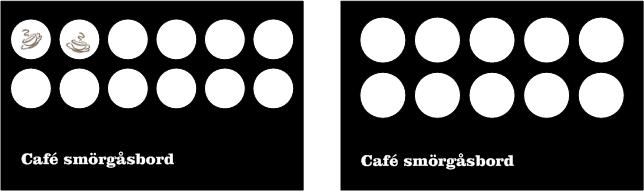
As Stephen points out, it’s all well and good talking about CityVille  and Innocent and seeing how fun brands can apply such approaches but what about when you’re dealing with a major financial services provider? It’s important to demonstrate that you don’t need to change the copy throughout your site or develop a game but rather just look at the little moments that make a difference in terms of perception and play to our existing biases. The classic Leventhal, Singer & Jones (1965) study at Yale led me in to showing two coffee loyalty cards for Cafe Gibbo. Both needed 10 stamps to achieve a free cup but one had the first two (of 12) stamped whilst the other was simply 10 blank circles. I asked the group to think about the behaviour that might result if the former card was stamped in front of you by a staff member who looked like they were doing you a favour whether that sense of reciprocity would be a sufficient nudge to you continuing to use that card. Perhaps it would. Pointing out that our decisions are not always economically perfect (both cards had the same economic effort to complete them) was important in establishing our irrationality.

Two coffee loyalty cards showing one with two circles of 12 complete, the other with all ten blank

Which would you be more likely to complete?

Of course this kind of stuff is nothing new to people in the hospitality industry; salting (or seeding) the tip jar, applying choice architecture to restaurant menus, this kind of thing shows the history of the real world application of persuasive techniques. techniques we consumers readily accept as fair game. In restaurants it might even be as minor as putting a glass seeded with an empty monkey nut shell next to the dish of unopened kernels to suggest where to put one’s wasteOn the web we see the value of order bias in the fact that Google and SEO companies makes a living from people clicking the first thing they see on the search results page and that having something visually promoted has a powerful effect.

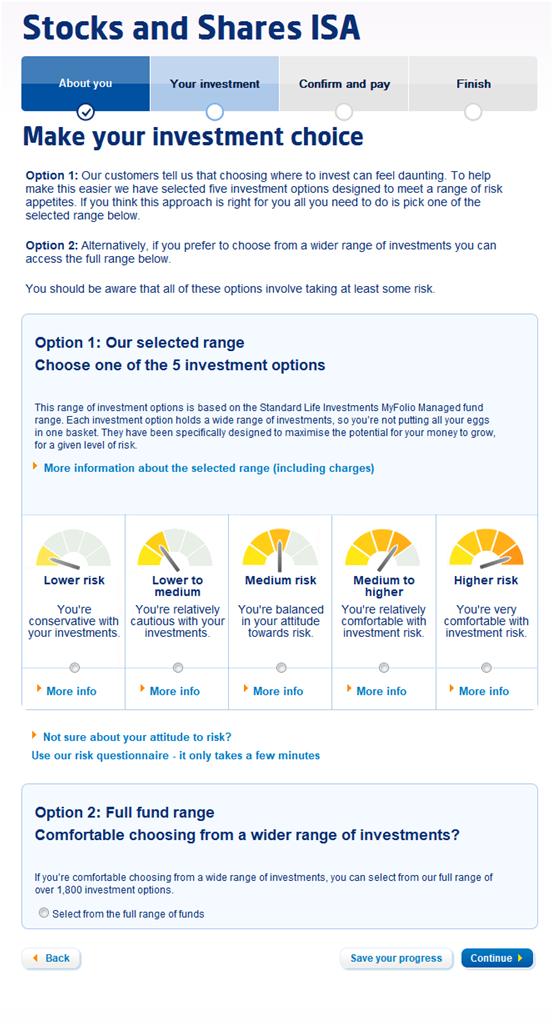
Here I showed our own bit of choice architecture where we reduced the overwhelming choice offered by Standard Life’s Investment ISA to present 5 ‘bundled’ simple choice offers on the application form. Option one is to take one of these pre-packaged solutions, Option two [the ‘experts’ choice] was to select from a supermarket of funds. Not only did we hierarchically structure the page to promote the path of least resistance, but we used strong visuals and human-centred introspective copy: “Comfortable choosing from a wider range?”.

A screen grab of the application form for a Standard Life Stocks & Shares ISA

Making choices easier

Even something as simple as Facebook showing you the friends you will lose touch with when you deactivate your account is a clear example of using loss aversion (our tendency to disproportionally value things we have above those we do not)  reciprocity (your friends have shared their information with you..) and social proofs (everyone else is here) to – in their case – significantly reduce the number of deactivations per year. A few words about the power of emotionally intelligent signage and hopefully the point was made, this doesn’t need to be massive.

I couldn’t resist pointing out the classic HCI logic in the goal-architecture that means you get your card back at the ATM before your cash so that you don’t walk off with money and forget your card if the sequence was the other way around. A simple sequence decision.

Making a commitment
To close my 45 minutes I wanted  to touch on how making people do something different for a second, a few minutes even, can be incredibly powerful but that long-lasting behavioural change is incredibly difficult and complex. Perspective and influence over time from the herd and an array of variables means that designing such solutions is fraught with challenges. Though I didn’t mention it at the time I have talked before about my relationship with my energy supplier. Having used an energy monitor and post-usage data I was able to reduce the amount of gas and electricity I used at home, but after a while I realised I wasn’t getting any better. I’d reached a  plateau in savings, all my devices were low energy or used at their most efficient settings and so-on. I lost interest and stopped looking at the monitor or my reports. My usage crept back up. The classic YoYo seen in dieters and addictive behaviour like smoking.

It’s not enough to take these examples above and apply them to solutions as varied as increasing up-sell on insurance products, shifting metallic paint on new car configurations, moving people to a different mobile tariff, quitting smoking or eating more fruit and veg. Each instance requires a deep understanding of the specific problem, it’s motivators and triggers.

Which seemed a perfect time to call on Fogg. Running out of time now so if you want to know more about the application of behaviour change then do seek out these useful kits:

Finally,
In the coming months I hope to be able to share with you some of the excellent work my team (Aarti Dhodia and Tom Harle) have been  producing to bring behavioural influence to an exciting service to be launched by one of Dare’s clients. Until then, I hope you find inspiration and enjoyment in the examples here.

Tagged , , , , , , , , ,

Customer Service Isn’t Rocket Science

Last year at dConstruct in Brighton, Kelly Goto (in a rather rushed, though charming, presentation) mentioned that we were reaching a point where user experiences were now, generally speaking, easy-enough to use. Not brilliant in most cases, but at a sufficient baseline that it was hard to find atrocious examples of  user experience.

Perhaps in North America. I recently went to Canada for the first time in many years and was instantly reminded on my first night there with Deb and Naomi, that the tipping-culture of the colonies is such that customer service is just consistently better. The simple motivating economics of working for tips begets a better experience. Here, not so much.[Be warned, what follows is a definite White Whine/First World Problem].

Stovax for example. I’ll try and keep this short. 2 Years ago we had a wood burning stove installed. I bought it online to save money, I had it installed by a local company. I think it now needs a service. I think this because I’m risk-averse and conscious that there are things like CO2 that can leak (possibly fatally) if not checked.

So, I start the process of trying to get it serviced. I start with the manufacturer, using their site to locate authorised resellers and service agents in my area. That was painless, their site allows me to see those offering service too, so I don’t need to bother retail-only outlets. But then it unravels. Each shop I emailed said they wouldn’t do it. Nobody would come out for a small fee to make a potential future customer happy. It begs the question why they would even say they were service agents. I got short shrift from all of them:

Galleon Fireplaces in Surbiton (Stovax’s preferred retailer) – Would not service a stove, despite it being less than 2 miles from their store, as it was not purchased from them. But they never responded to my email asking, I had to call in to be told, bluntly. In fact in all the dealings I’ve ever had with them to buy accessories they’ve been incredibly surly and rude on the phone and in-store.

EcoFires in Fleet – Despite selling us the stove, and despite several emails, Peter Hillier and Phillip Edwards never responded to my enquiry at all.

The Original Grate Expectations – Did respond by email but would not service a stove they didn’t install [despite me being told by Stovax they would].

The Fireplace Shop, Guildford – Neither Max nor anyone at the shop ever responded to my email

Croydon Mechanical & Electrical Service – Never responded to my email.

Cast Iron Fireplace Company – Listed on HETAS as a service agent for stoves yet Maureen was quick to respond to me to say “we do not carry out any servicing”, when I pointed out that they’re listed as such, she passed the buck and said it was not their site and they’d simple ‘suggest they change their wording’.

Kindle Stoves – Teddington, Did respond and Clare actually explained why they wouldn’t take on a small job like that during their peak installation season, providing some financial justification and pointing me at a possible solution.

By this point I was exasperated and chased it up with Stovax pointing out that its dealer network was failing customers. And yet again, it’s just a poor generic response.

It took [edit]17 days to respond to my email and when they did they simply said they don’t service (I wasn’t asking them to), then saying their dealers do (well, they say they do but they don’t). It took another 12 days after I replied that they said [paraphrased] ‘not our problem, blame the retailers’ and in doing so were entirely not bothered that I was unhappy and that their product was unusable. Instead they just blindly pointed me at more retailers that I’d have to ring/email. They passed the buck and instead acted as a reluctant and largely unhelpful directory service. In the end it was nearly a month after my original website enquiry that the chain of emails with Stovax Customer enquiries ended without a single apology for the delay in responding, the poor service from the dealer network they rely on or an acknowledgement that their emails had all the human tone of an automaton. Their website still suggests the same retailers. And this from a company that paid one of their directors nearly £500k in 2010.

Email customer service has allowed the agents to filter and respond in their own time, to not have to listen to a frustrated customer and to hide behind anonymity and stock responses.

What I just don’t get is that it’s not hard:

1. Respond quickly – email isn’t an excuse to sit on a problem until you can be bothered to get round to it, if you don’t have the time, employ more staff, change your working practises, don’t make the customer bear the burden.

2. Be personal – stock responses feel horribly generic. Named customer service representatives are much much better, it helps customers feel they they are being treated as a human being.

3. Always, always offer a solution – Several of the emails from the retailers and the manufacturer basically just stated the situation ‘we can’t help’ missing the irony that this itself is not helpful. Even if you can’t help, try to offer a solution where somebody else can so that the customer can at least associate you with some goodwill.

This stuff seems so obvious, common courtesy, manners even. Sadly, to suggest we’ve reached a baseline of good experience in the face of evidence like this is naive in my opinion. Small British business like those above you would think would be chasing every customer tail going in a time of financial prudence. Instead they’re sitting-on and mismanaging communications with potential new sources of revenue. They’re now in a situation where their reputation for at least one customer is permanently online, searchable and on-record as a bad one.

I’ve never had a strong urge to run a small business but I’d like to think that, if I did, I’d at least manage the customer experience from sale to service a damn site better than most of this lot.

UPDATE 17:57 25/Jan: Credit where it’s due, I have heard already this afternoon from Alun Williams at HETAS (industry regulator) and Stovax both of whom have be conciliatory and, in the case of the latter, are investigating.

Tagged , , , , ,

Pretty & Different ≠ Intuitive

Image

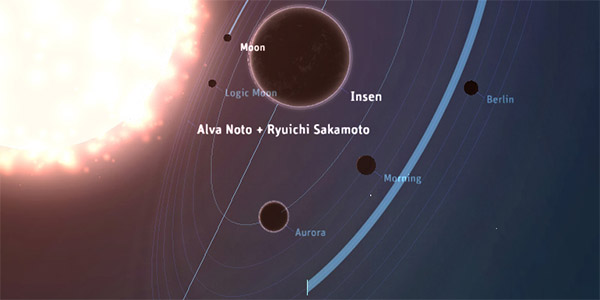
I like the idea of representing data sets in new ways. Particularly data sets where the relationships between entities are valuable. Because of this, and indeed the way it’s been rendered, I rather like Planetary by Bloom. However, in this rather fawning piece by John Pavlus on Fast Company, it’s astronomy-inspired interface is described variously as ‘intuitive’, ‘divinely ordered’ and with ‘human-friendly affordances’.

Forgive me, but didn’t it take humankind a rather long time to understand the causal relationships in the solar system to be understood? I wouldn’t necessarily say that we users would instinctively ‘get’ the metaphors used in Bloom’s work although we would appreciate them once shown. I think it takes some leap to suggest that there is more intuitive understanding of music data in seeing it in this new format than there would be in, say, a hierarchical list of artists, albums and tracks.

Tagged , , , , , ,

…the grey squirrel of user experience design is gnawing the legs off the red squirrel of information architecture. The focus is now squarely on the presentational and interaction elements of UX, and service design projects that start with beautiful, but largely imaginary page mockups. In a great metropolitan company right now, a senior executive is being seduced by a Photoshop comp that may or may not be buildable.

A smashing quote from Mike Atherton which I found in his notes on one of my favourite Slideshare presentations.

On presenting the unbuildable

Tagged , , ,

You don’t need to be digital to join-in.

Yesterday word spread about the latest cute little thing to drop out of Berg‘s enviable incubators, Little Printer. Rather than paraphrase, I shall copy verbatim their description of this forthcoming product:

Connected to the Web, Little Printer has wide range of sources available to check on your behalf. We call them “publications”. Subscribe to your favourites and choose when you’d like them delivered. Right on time Little Printer gathers everything it needs to prepare a neat little personalised package, printed as soon as you press the button. You can get deliveries multiple times a day, but we find once or twice works best–like your very own morning or evening newspaper. bergcloud.com/littleprinter

So many people missed the point whilst talking broadly around the idea of ‘why paper, when I’ve got it on digital’. The Washington Post assumes its for people to print and save their Tweets, BoingBoing described the output as a “little, disposable newspaper“, Wired is unconvinced “if I have a smartphone with me, I have a screen that can do all this and more”. The Huffington Post sits on the fence and invites their readers to answer “Is the concept behind ‘Little Printer’ a good idea?“. Peter Cashmore from Mashable opined “..sure is cute, but would we really use it – and read paper – every day?”

To summarise, @relativesanity blasted: “Little Printer solves a problem none of us has.”

The way I see it, this device (and its descendants) isn’t (just) for us. It’s also for the currently un-connected. Potentially, that is the biggest innovation, that’s who it’s solving a problem for. Way back in 2006 (as Russell Davies, one of the brains behind the similar Newspaper Club reminds us) Berg were talking about a connected social letterbox. Dig into that thread and you discover that HP have had this little Presto project for a while. It’s not as cute as Berg’s effort, but it’s been converting emails, photos and internet ephemera into tangible printed material for 6 years. The intention has been to provide a device to homes that don’t have a computer, allowing them to stay in touch with those who do.

To put this in to context, today I learned that the local paper where I grew up, the venerable East Kent Gazette is to close after 156 years of publication. It’s no longer making any money. People are moving online to receive hyper-local news.

But not everyone. The elderly and other unconnected residents of the EKG’s distribution area won’t know what’s going on. These are people that are both cut-off and with a fondness for the trivia of their family, friends and community. Devices like Little Printer could put us back in touch with them.

Thankfully I saw UX people saying similar things:

@johannakoll “..give to my father to send him my status updates, little sudokus, riddles and more..”

Sometimes it takes user-centric thinkers to look closer at use cases. Sure, there may be a bit of post-rationalisation going on but it’s undeniable that there’s a joy in the tangibility of printed content.

And what of us, the digital, connected people? Well it works for us too. A bit like Russell, I too am bored of screens. I spend all day in front of them, I have two smartphones that vie for my attention and the all-but inumerable apps that I’ve downloaded often mean that I go ‘in’ to my phone’s app dashboard forgetting what I went into it looking for. Little Printer will bring things closer to the context in which I’m using them; my to-do list is in my notepad, my shopping list is in my wallet my Nike run workout is in my kit bag.

My phone does too many things, having this information closer to where I use it could make it easier for me to deal with an ever-increasing stream.

Environmentally, I’m not sure I can comment with any authority. It seems at first that it’s wasteful, creating paper where there was no ‘need’. It’s been described repeatedly as ‘printing the contents of your phone‘,  which is an incredibly reductive observation

@katsamps “Not thrilled about Little Printer. I thought we were trying to move away from paper waste?”.

But paper doesn’t need to be bad does it? Sustainable printing is perfectly possible right? A drop in the ocean compared the the amount of paper wasted each day by printing ridiculously excessive email footers with legals and ‘please don’t print’ messages on them. And if saves me another screen, another charging cycle, well I don’t think we can say for sure that it’s entirely negative.

Looking beyond the obvious you can see when a design’s evolved from a mature idea born of observation and insight. Little Printer is the next step on an technology journey that will hopefully broaden the benefits of our connected world to those that can’t or don’t want to be slaves to a glowing screen.

Tagged , , , , , ,

SapientNitro, a storm in a teacup

Whilst many were quick to point out the negatives today (eConsultancy, NMA, The Wall) on the day that the somewhat cringe inducing Idea Engineers video was posted by SapientNitro, few were looking closer at ourselves as a community of ‘agency types’.

As a global agency, Sapient have enviable scale and diversity. A small group of Asian (my ignorance assumes they were Indian) staff decided they’d have a bit of lighthearted fun and project their image of life at Sapient to the world. The only crime they committed (aside from perhaps a touch of chauvinism) in their well-intentioned endeavour, was to be a little geeky and dated for our Western European tastes.

Personally, I thought it was unedifying to see people wade in to stick the boot in to the idea and then revel in the panic by, let’s assume a junior staff member, when posts were deleted from Facebook. Previously the comments from fellow Indian colleagues were uniformly positive. We inward-facing Soho and Shoreditch agencies were gleeful in our response:’Look! silly Sapient don’t get social media’.

But they probably do. Someone in charge of their Facebook account just made a mistake this time and by the time the momentum had built up, the shutters came down and they deleted it. Before we analyse what they should have done in response, let’s remember that this is an increasingly-mature, highly skilled agency. They have a client roster that’s undeniably impressive and 19 significant awards in 2011 alone. Many of us will have lost pitches against SapientNitro and, in today’s responses our bitterness at their success was definitely showing.

Sure, let’s spend a little time talking about the right way to deal with this kind of communications fuck up, that’s right and healthy (and it will vary for each brand and each time it happens) but let’s be honest, this is nothing more than a transient blip and to suggest it’s indicative of a fundamental failing of a hugely successful agency is the mistake of today.

Edit 17.NOV.2011. Edward Boches posted this neat piece about how to learn from the situation. Sapient themselves responded on their blog.

Tagged , , , , ,

Behavioural Economics / Psychology of Persuasion & Influence Reading List

Thanks to a Quora answer from Rory Sutherland I stumbled across this excellent (and lengthy) starter reading list for those interested in the sociology, psychology and economics of persuasion. Well worth looking at for the people that have said ‘I’m done with Nudge, anything else I should read?’

ASIDE: This is probably the first time I’ve found myself on Quora and learned something. That’s not to say it’s rubbish (and who’d care about my opinion anyway) just that I’ve been a member of it for about 6 months but don’t bother checking so I only discovered this when it popped up on Twitter. So Quora made it happen, Twitter made me find it.

Tagged , , ,