Tag Archives: satire

So the Hallway Shuts Up About It

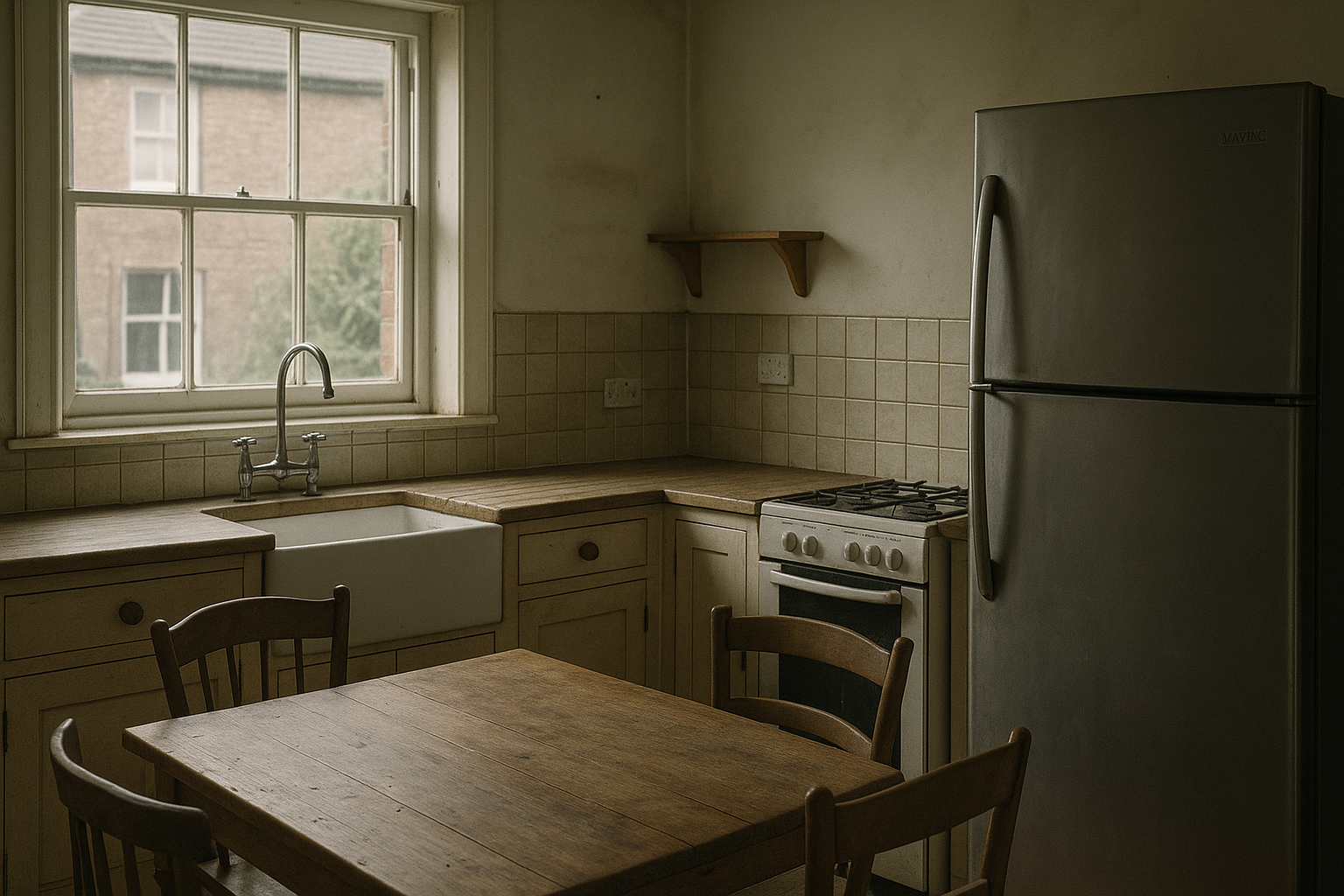
A quiet, lived-in Edwardian kitchen with soft natural light streaming through large sash windows. A brushed chrome tap stands over a deep white Belfast sink, set into pale wooden cabinets with faded cream tiling above. A worn oak table with mismatched wooden chairs sits in the centre of the room. To the right, a slightly scuffed stainless steel Maytag fridge and an old gas cooker are tucked into the corner. The space feels unstyled, with muted grey and off-white tones, and subtle signs of use but no clutter. The mood is still and contemplative, as if someone has just stepped out.
When you renovate every other room and the kitchen starts looking at you like it knows it’s next.

We’ve been doing up the house. Nothing dramatic, just the slow, financially ruinous crawl from upstairs to down. Bedrooms first. Then bathrooms. Then the living room. And now the kitchen (inherited from the previous owners) is sulking. Every time I walk into it, I swear the tiling looks a shade more shabby-shite 2006.

It’s not that much is broken. Except the tired Maytag fridge freezer, a burner that doesn’t ignite and the sink tap leaks, oh and the ruinously-expensive-to-repair-out-of-warranty Miele dishwasher. It’s just been… outclassed. Like turning up to a wedding in M&S when your wife’s in The Row.

And this irritates me, because I’d quite like to think I live with a bit of restraint. I’ve written before about resisting the upgrade spiral. About not living like a man permanently preparing for an estate agent’s photoshoot. But it turns out that once you start, the rest of the house doesn’t politely wait its turn, it stages a coup.

The formal name for this, according to Rory Sutherland, is the Diderot Effect. You buy one nice thing and everything else starts to look shit by comparison. Diderot got a red dressing gown and ended up replacing half his house. We bought a fancy shower mixer and now the kitchen tap feels like it came out of a skip.

Which is how we end up here. Discussing a kitchen renovation because although it’s neither urgent, nor falling apart, it’s because the surrounding rooms have raised the bar to a level our sad little units can’t clear. And I hate myself for it. Because I also know that if we do go ahead, the new kitchen will make the hallway feel dingy, and the garden and patio will look lazy and provincial, and so on until we die or go bankrupt.

And yet, this is the maddening bit, I also know we’ll probably do it. It’s not vanity. We don’t want quartz or fluted wood or some comically oversized kitchen island, we just want to stop thinking about it. To be able to walk through the space without mentally adding it to a list.

It’s the tyranny of the unfinished, the psychological admin of rooms and spaces you haven’t yet dealt with.

There is, of course, a way to dodge all this. You could adopt the Sutherland doctrine and buy a 16th century house. One of those glorious old piles that look better because they’re full of crap. But we don’t live in a Tudor house. We live in an Edwardian semi in Surrey where any attempt at minimalism makes the place look like a probate sale, and maximalism makes it look like you’re an edgy creative that’s gone mad on Etsy.

So here we are. Planning a kitchen. Not for resale. Not for guests. Not even for ourselves, really. Just so the hallway shuts up about it.

AI: This piece was, as ever, written by me. I used ChatGPT to sub-edit, and keep the tone aligned with my voice. The experiences, perspectives, and final edits are mine. AI also produced the tag list, excerpts and image that accompanies it.
Tagged , , , , , , , , , , , , , , , , , ,

Why do parents hate Bing?

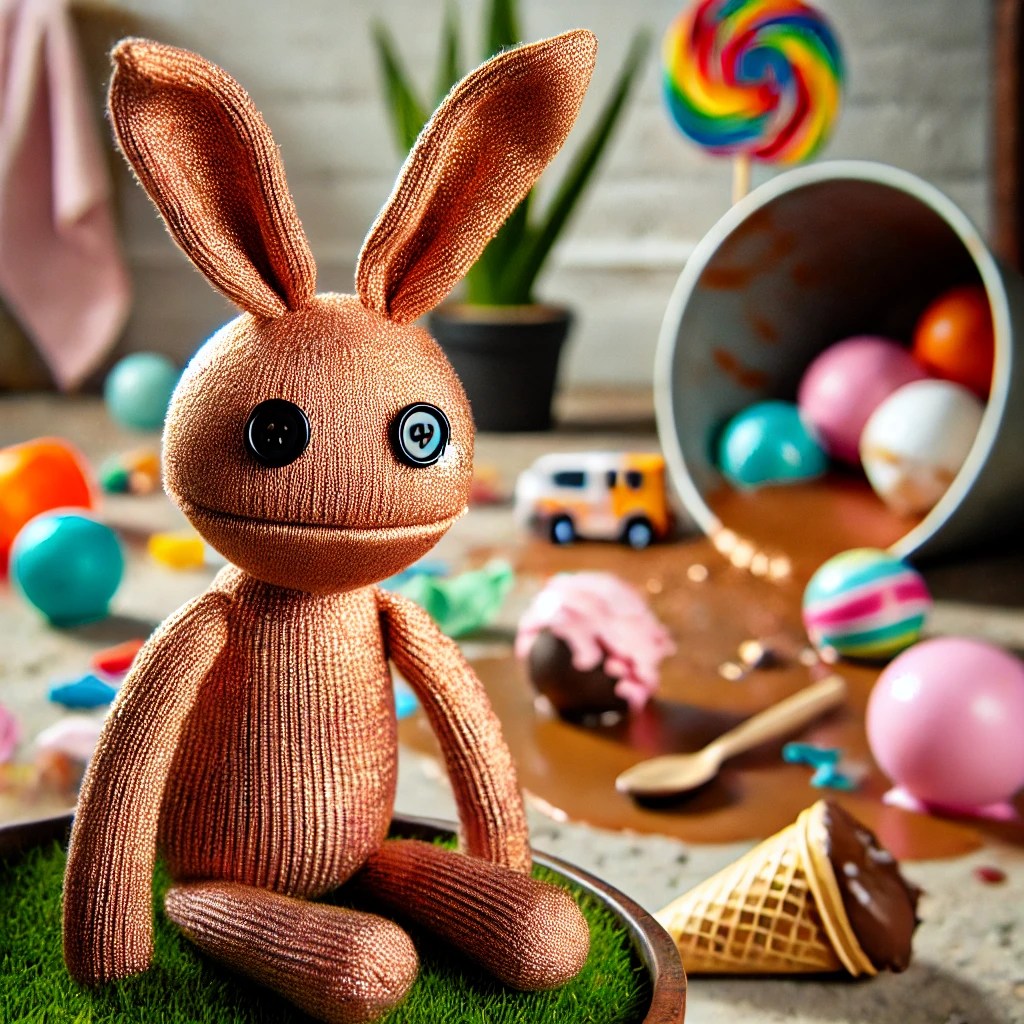
A copper-colored sock puppet with big button eyes and upright bunny ears sits serenely on a tiny patch of grass, seemingly unbothered by the absolute toddler-fueled chaos behind it. The background is a disaster zone—spilled chocolate, melting ice cream, scattered toys, lost balloons, and a toppled bucket of who-knows-what. Despite the carnage, the puppet remains in perfect zen mode, as if it's mastered the art of parenting-induced inner peace.
When everything is falling apart around you, but you’ve accepted that Bing is just… Bing.

It’s 5:47 AM. You’ve been wrenched from sleep by a tiny, sticky hand slapping your face. Your crime? Not waking up before the toddler. Bleary-eyed, you stumble downstairs, pop on Bing in a desperate bid for ten minutes of peace, and – congratulations! – you’ve made a terrible mistake.

Because Bing is not a break. It’s emotional guerrilla warfare disguised as children’s television. A relentless cycle of mild disasters, narrated by pure, undiluted toddler whinge. And parents, trapped in its slow, syrupy clutches, are left questioning their life choices.

At first, Bing seems like a sweet, low-stakes show about a rabbit child navigating the small traumas of everyday life. And that’s true, if by “navigating,” we mean “flailing headlong into catastrophe over incidents as minor as a dropped ice cream.”

Developmental psychologists call this emotional mirroring: a way for toddlers to see their own feelings validated on screen. Lovely in theory. In practice, it means you, the long-suffering adult, are subjected to twenty full minutes of Bing catastrophising about a balloon. Or yoghurt. Or the unbearable injustice of having to share.

Toddlers see themselves. Parents see a replay of their actual Tuesday morning. We don’t need Bing to remind us how excruciating it is when a small, irrational dictator loses their mind over the wrong-coloured spoon. We were there. We lived it. We cleaned up the spoon-related carnage. We need a break.

Enter Flop, Patron Saint of Impossible Patience

Then there’s Flop, Bing’s eternal, unnervingly calm carer. If you’ve ever thought, I should be more like Flop, congratulations. You are now burdened with a brand-new source of parental guilt.

Because Flop never sighs. Flop never raises his voice. Flop watches Bing make the same godforsaken mistake for the seventeenth time that week and responds only with gentle understanding.

If I reacted to my child smearing peanut butter into their hair with a serene “Ah, peanut butter. It’s no big thing,” I would be swiftly clubbed to death by my fellow parents.

Flop isn’t a role model. He’s a fantasy construct of saintly patience. And he is the reason so many of us sit, seething in the glow of CBeebies, knowing in our hearts that we will never achieve his level of Zen.

Meanwhile, Bing makes a mess. Bing refuses to listen. And yet, nothing happens. No time-outs. No firm words. No hint of consequence beyond a gentle discussion of feelings.

The Cult of Gentle Parenting

This is intentional. Bing is built on a constructivist approach to learning, where children explore mistakes safely, absorbing the lesson without fear of punishment.

Lovely, right?

Sure. Except in real life, when a toddler empties an entire box of cereal onto the floor while maintaining furious eye contact, they need more than a kind discussion about oats. They need to help clean it up. They need to understand that some mistakes have consequences beyond personal emotional growth.

At the very least, they need to stop f-ing smirking.

The Bing Paradox: Well-Made, Deeply Infuriating

To be fair, Bing isn’t some half-baked accident of children’s television. It’s an Emmy-winning, heavily researched, beautifully animated show, based on books by Ted Dewan and shaped by years of child psychology expertise.

Mikael Shields, the guy who helped bring us Teletubbies and Wallace & Gromit, says Bing is meant to teach emotional resilience. And model conflict resolution. For parents.

Which is all very admirable.

But here’s the problem. We don’t particularly want a lecture in emotional resilience when we’re one rabbit crisis away from pouring a large Waitrose red.

That’s what Bluey gets right. It respects both the toddler and the exhausted adult watching alongside them. It gives us light and shade. It offers moments of humour and self-awareness, winking at the reality of parenting while still making space for childhood wonder.

Bing, on the other hand, commits so fully to the toddler experience that it leaves parents stranded, silent, passive witnesses to yet another yoghurt-related meltdown. And while that’s certainly realistic, it’s not exactly soothing.

Just The One Episode, Yeah?

So no, parents aren’t wrong to loathe Bing. It’s not just the whining, or the flailing, or the slow, excruciating dissection of minor toddler crises.

It’s that Bing asks us to relive our own parenting nightmares without offering us an ounce of relief.

Another Bing-induced crisis and I’m invoicing CBeebies for psychological distress.

AI disclosure: This post used AI to help generate the image, select blog tags, craft the excerpt, and sub-edit the text to match my tone of voice.

Tagged , , , , , , , , , , , , , , , , , , ,