Autonomy promised freedom. Instead, it gave us metrics.
Every few years a new invention turns up promising to give us time back. The dishwasher did it, then the calendar app, now the self-driving car. Efficiency, they say, is liberation. But the minutes never come home. They’re quietly re-employed: answering messages that weren’t urgent until we saw them, scrolling through news we already half-read. We don’t get more time. It just comes back wearing a different outfit.
Design now speaks the intoxicating language of generosity. We’ll save you clicks. We’ll make it seamless. Lovely words, but they come with a tempo you didn’t choose. The system nudges, reminds, congratulates you on your streak. Even the oven chirps when it’s done pre-heating. Helpful, yes – in the way a personal trainer is helpful when all you wanted was a walk.
Efficiency was meant to hush the world, not make it chatter. Parcels update you mid-journey, cars suggest faster routes, TV apps interrupt the credits to make sure you don’t go off to bed just yet. You start to feel managed by your own apps and appliances. Is it me, or do they all sound slightly pleased with themselves?
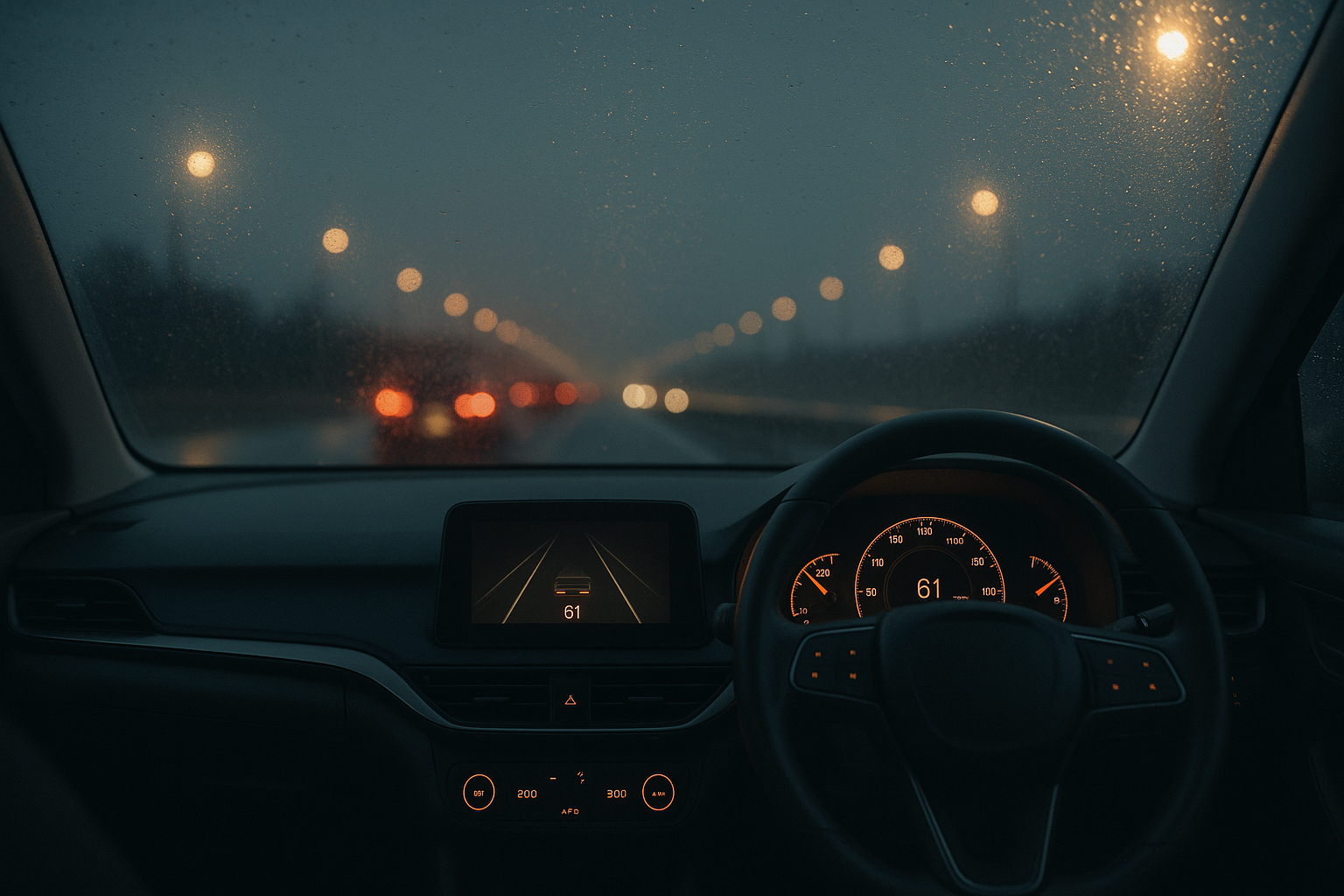
Still, there is a deeper promise in all this autonomy. Because the best thing about a self-driving car isn’t speed, it’s permission. The choice to drive when you want to: for rhythm, for presence, for drivers like me who relish the satisfaction of line and camber, and to switch off when you don’t. The long crawl north to the Lakes. The dawn blast to the airport. The late-night, rain-spray-soaked slog home when you’d gladly hand over the wheel and let the motorway unspool while you exhale, watch the window-light flicker, maybe half-doze through an episode of something forgettable. Control should be optional, not constant.
That’s what the technology could be about: selective surrender or a quieter freedom. But for some unfathomable reason, the marketing and product design departments have decided autonomy is best packaged as constant optimisation. That means another dashboard app full of metrics and prompts and juanty reminders. We built cars clever enough to drive themselves, then gave them personalities that never stop talking.
Real luxury now isn’t speed but discretion: the right to decide how long something should take. To drive when you feel like driving. To look out of the window when you don’t. Technology can make both possible.
Convenience promised to return our hours, but mostly it’s taught us to account for them. Every minute feels spoken for. Perhaps the odd thing is how willingly we’ve agreed to it and the peculiar pleasure we take in shaving seconds off tasks we didn’t enjoy anyway.
Maybe the best thing a self-driving car could do is forget the ETA and let us forget, too.
AI: This piece was refined with AI, for the image prompt, tags, excerpt, and a little sub-editing. The ideas, references, and rhythm are mine.
The paradox of modern luxury is that the more precisely it knows us, the less we seem to want it. AI-driven personalisation flatters our taste so efficiently that desire itself begins to flatten. You open an app and there it is – the jacket you’d half-imagined, or the playlist that mirrors your mood before you’ve named it. The system anticipates, arranges, and completes. It feels frictionless, even generous.
But when everything fits this neatly, what’s left to reach for? Desire once depended on a perceptible gap, the space between wanting and getting. Now that gap has been optimised away. We no longer aspire; we’re simply anticipated.
Behind that easy charm sits a machinery, an industry, of prediction. Every scroll, hover, and hesitation becomes a confession. From these micro-gestures, the algorithm builds a probabilistic portrait: accurate enough to sell to, not to know.
This is predictive luxury – the luxury of convenience. It packages aspiration for the mass-affluent, translating status into data. The product is still expensive, but the experience is engineered for scale: “exclusive” taste delivered by statistical consensus. What once required discernment now arrives pre-approved.
To be clear, this isn’t curation. It’s correlation. Your discernment becomes the weighted average of everyone who clicked before you. Luxury houses once guarded their ateliers; now they guard their datasets. What was once stitched by hand is now inferred by pattern.
The shift sounds harmless until you notice what it removes. Aspiration (the slow, self-defining kind) relies on uncertainty. We learned our taste through trial, boredom, and even embarrassment. Those edges are gone. There’s no risk in going to the restaurant where the algorithm has all but booked you the table. The algorithm keeps our preferences in a holding pattern, replaying what we’ve already confirmed, always within one standard deviation of safety.
The Predictive Plateau: a system that sells us the most probable choice, not the most interesting one. Left unchecked, it narrows the collective palate. As I argued in Luxury UX: Beyond Veneer, lasting equity comes from structure and restraint, not surface gloss. The real risk for luxury brands isn’t technological obsolescence but aesthetic homogeneity, a market trained to prefer the median.
Prediction is never neutral. Behind every act of personalisation sits a hierarchy of visibility, whom the machine believes is worth showing first. The more data you surrender, the clearer your silhouette in its model; those who resist become statistical ghosts.
There’s a quiet economics to this. By automating inequality, the algorithm devalues any form of wealth it cannot quantify or identify. The ultimate luxury, then, is to disappear from the data entirely, to operate through introductions, word of mouth, and private networks. The truly exclusive product is the one the algorithm cannot find, let alone recommend.
And yet there’s still one lever left: intentionality. The deliberate pause before purchase. The refusal to click “similar items”. The act of finding something the algorithm couldn’t possibly have foreseen. In a world of predictive luxury, this is not passive rebellion but an active aesthetic stance, a luxury of choice by will.
The smartest brands will design for this intentionality, not against it. They’ll reintroduce or retain friction as a feature: the waitlist, the mandatory consultation, the garment that demands to be felt. These are not inefficiencies but signals of depth, proof that the experience values attention over automation.
For all its precision, predictive luxury leaves a vacuum at the top. Once algorithms have colonised the middle (the mass-affluent market chasing “smart” recommendations), genuine exclusivity must move elsewhere. Increasingly, it drifts back to what machines can’t do: interpretation, eccentricity, the unrepeatable judgement of people who know.
That’s where true luxury now lives, in human-centred unpredictability. The ultra-wealthy and the culturally literate aren’t rejecting technology; they’re augmenting it. Data may light the runway, but the finale still belongs to the artisan, the editor, the quietly idiosyncratic expert who can surprise you in ways no model can.
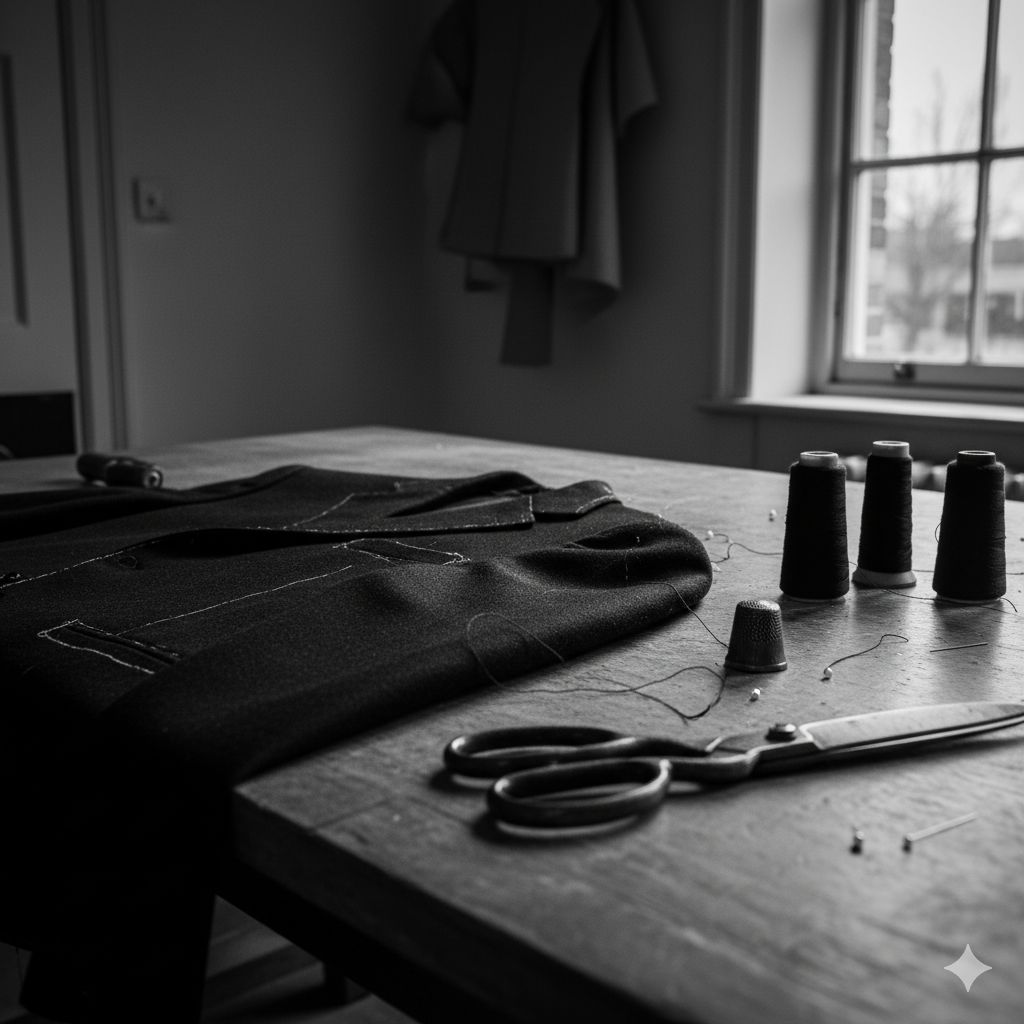
British luxury has long understood this. Our best exports – Savile Row, Bentley Mulliner, McQueen, Hockney, Grayson Perry – thrive on that narrow line between discipline and disobedience. Their genius isn’t efficiency but editing: knowing when to break symmetry, when to leave the imperfect seam that proves a hand was there. The imperfect seam is a brand’s deliberate investment in unscalable production – the final, physical proof of value when all scalable processes have been commoditised. Curation, as I’ve argued before, isn’t collection. It’s the art of choosing what not to automate.
The challenge for brands now is to build value not through correlation but through judgement. To shift from efficiency to experience, from prediction to anti-prediction. Their next digital frontier isn’t better personalisation; it’s deliberate unpredictability, the algorithm that refuses to close the loop. Designing such friction isn’t romantic contrarianism; it’s the only sustainable strategy for generating new forms of scarcity, and with them, price elasticity.
Because in an economy obsessed with knowing what comes next, the rarest thing a brand can offer is the pleasure of not knowing, of being surprised, seen, and momentarily off-script. That’s the new exclusivity. That’s predictive luxury, undone.
AI: This piece was refined with AI, for the image prompt, tags, excerpt, and a little sub-editing. The ideas, references, and rhythm are mine. You can still see my hand.
 John Gibbard