Tag Archives: innovation

Predictive Luxury: When the Algorithm Decides You’re Worth It

The paradox of modern luxury is that the more precisely it knows us, the less we seem to want it.
AI-driven personalisation flatters our taste so efficiently that desire itself begins to flatten. You open an app and there it is – the jacket you’d half-imagined, or the playlist that mirrors your mood before you’ve named it. The system anticipates, arranges, and completes. It feels frictionless, even generous.

But when everything fits this neatly, what’s left to reach for? Desire once depended on a perceptible gap, the space between wanting and getting. Now that gap has been optimised away. We no longer aspire; we’re simply anticipated.

Behind that easy charm sits a machinery, an industry, of prediction. Every scroll, hover, and hesitation becomes a confession. From these micro-gestures, the algorithm builds a probabilistic portrait: accurate enough to sell to, not to know.

This is predictive luxury – the luxury of convenience. It packages aspiration for the mass-affluent, translating status into data. The product is still expensive, but the experience is engineered for scale: “exclusive” taste delivered by statistical consensus. What once required discernment now arrives pre-approved.

To be clear, this isn’t curation. It’s correlation. Your discernment becomes the weighted average of everyone who clicked before you. Luxury houses once guarded their ateliers; now they guard their datasets. What was once stitched by hand is now inferred by pattern.

The shift sounds harmless until you notice what it removes.
Aspiration (the slow, self-defining kind) relies on uncertainty. We learned our taste through trial, boredom, and even embarrassment. Those edges are gone. There’s no risk in going to the restaurant where the algorithm has all but booked you the table. The algorithm keeps our preferences in a holding pattern, replaying what we’ve already confirmed, always within one standard deviation of safety.

The Predictive Plateau: a system that sells us the most probable choice, not the most interesting one. Left unchecked, it narrows the collective palate. As I argued in Luxury UX: Beyond Veneer, lasting equity comes from structure and restraint, not surface gloss. The real risk for luxury brands isn’t technological obsolescence but aesthetic homogeneity, a market trained to prefer the median.

Prediction is never neutral. Behind every act of personalisation sits a hierarchy of visibility, whom the machine believes is worth showing first. The more data you surrender, the clearer your silhouette in its model; those who resist become statistical ghosts.

There’s a quiet economics to this. By automating inequality, the algorithm devalues any form of wealth it cannot quantify or identify. The ultimate luxury, then, is to disappear from the data entirely, to operate through introductions, word of mouth, and private networks. The truly exclusive product is the one the algorithm cannot find, let alone recommend.

And yet there’s still one lever left: intentionality. The deliberate pause before purchase. The refusal to click “similar items”. The act of finding something the algorithm couldn’t possibly have foreseen. In a world of predictive luxury, this is not passive rebellion but an active aesthetic stance, a luxury of choice by will.

The smartest brands will design for this intentionality, not against it. They’ll reintroduce or retain friction as a feature: the waitlist, the mandatory consultation, the garment that demands to be felt. These are not inefficiencies but signals of depth, proof that the experience values attention over automation.

For all its precision, predictive luxury leaves a vacuum at the top. Once algorithms have colonised the middle (the mass-affluent market chasing “smart” recommendations), genuine exclusivity must move elsewhere. Increasingly, it drifts back to what machines can’t do: interpretation, eccentricity, the unrepeatable judgement of people who know.

That’s where true luxury now lives, in human-centred unpredictability. The ultra-wealthy and the culturally literate aren’t rejecting technology; they’re augmenting it. Data may light the runway, but the finale still belongs to the artisan, the editor, the quietly idiosyncratic expert who can surprise you in ways no model can.

Close-up of a tailor’s worktable lit by soft natural light, showing thread spools, scissors, and a half-finished jacket with a visible imperfect seam — an image symbolising human craftsmanship and intentional imperfection in contrast to algorithmic precision.

British luxury has long understood this. Our best exports – Savile Row, Bentley Mulliner, McQueen, Hockney, Grayson Perry – thrive on that narrow line between discipline and disobedience. Their genius isn’t efficiency but editing: knowing when to break symmetry, when to leave the imperfect seam that proves a hand was there. The imperfect seam is a brand’s deliberate investment in unscalable production – the final, physical proof of value when all scalable processes have been commoditised. Curation, as I’ve argued before, isn’t collection. It’s the art of choosing what not to automate.

The challenge for brands now is to build value not through correlation but through judgement. To shift from efficiency to experience, from prediction to anti-prediction. Their next digital frontier isn’t better personalisation; it’s deliberate unpredictability, the algorithm that refuses to close the loop. Designing such friction isn’t romantic contrarianism; it’s the only sustainable strategy for generating new forms of scarcity, and with them, price elasticity.

Because in an economy obsessed with knowing what comes next, the rarest thing a brand can offer is the pleasure of not knowing, of being surprised, seen, and momentarily off-script. That’s the new exclusivity. That’s predictive luxury, undone.

Acknowledgements: This piece was partly inspired by Antonia Hock’s recent post on invisibility and the next era of ultra-luxury.

AI: This piece was refined with AI, for the image prompt, tags, excerpt, and a little sub-editing. The ideas, references, and rhythm are mine. You can still see my hand.
Tagged , , , , , , , , , , , , , , , , , , ,

Confidence in inconsistency – human centred design should embrace thoughtful deviations from patterns and standards.

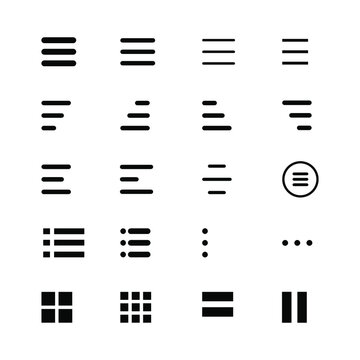
Consistently inconsistent burger menu designs. Is a burger menu the right solution in all your user’s contexts?

Consistency is a fundamental principle in design, and it is often cited as a key factor in creating a seamless and intuitive user experience – it’s easier to learn an interface that’s the same as those you’ve seen before. However, the blind pursuit of consistency can stifle innovation and lead to a lack of creativity and diversity in design solutions. In this blog post, I’ll explore why designers need to have confidence in inconsistency and break free from the overemphasis on consistency.

The way we think about consistency in design has been influenced by a moralistic, hectoring approach that emphasises consistency as a virtue, rather than a means to an end. This has led to a tendency to view inconsistency as a failure, rather than a potential innovative solution that provides a better match for user knowledge and needs. Instead of focusing solely on consistency, we should approach design critique with more consideration for the user and their unique context, asking questions that prioritise user experience and satisfaction over adherence to pre-existing patterns or rules.

The Problem with Mindless Consistency

Consistency can be a double-edged sword in design. While it can help users learn how to use interfaces easily and make products more usable, too much consistency can limit creativity and stifle innovation. In simple terms, it’s impossible to innovate and be consistent at the same time.

Overemphasis on consistency might lead to a lack of variety and visual interest in digital experiences. Users can quickly become bored or disengaged if all products and interfaces within a product suite look and feel the same. In some cases, this can lead to a decline in user engagement and adoption. In my experience working across financial services websites an obsessive desire for consistency meant that the numerous minor variations across, say, a portfolio of insurance or investment product pages meant that they all blended in to one homogenous impenetrable mess. And, when stepping back, did it even make sense that car insurance pages followed the same template as home insurance, or for that matter life insurance? Anna Arteva articulates a different scenario where the repetitive consistency of modules in their design reduced comprehension.

This is, of course seen most evidently in the band homogeneity shown with many web experiences within industry sectors like fashion, automotive, or SAAS. Leaving designs restricted by cut and paste design systems and left to play around with typefaces, colour, photography and illustrations to desperately cling to some sort of personality and identity.

Furthermore, consistency may not always be appropriate or necessary in certain contexts or for certain user groups. For example, a digital experience aimed at fashion or luxury markets with infrequent purchasing behaviour may benefit from more varied and unique designs, whereas a product aimed at more casual users or perfunctory behaviours may benefit from greater consistency to make it easier to use.

To an extent, consistency is human nature, and in many cases simply born out of a lack of time, funds and effort to do proper human centred design. As Jared Spool points out: “Why do we gravitate to consistency? Because it’s easier to think about. You don’t actually have to know anything about your users to talk about making things consistent. You only have to know about your design, which most designers are quite familiar with.”

Confidence in Inconsistency

While consistency is an important design principle, it is equally essential to know when to break free from it. Designers need to have confidence in inconsistency and recognise that sometimes, breaking from the norm can lead to better design solutions.

I particularly like the definition that consistency is “using the same solution for the same problem.” principally because it provides a strong hint about when you should not be consistent. If there’s already a good solution for a design problem, you should follow the existing pattern and be consistent. However, when you’re facing a new problem, you may well need a new solution, and you shouldn’t feel constrained to be consistent with preexisting patterns that don’t apply.

Designers need to be aware of the constraints of their design problem and recognise when consistency may not be the best approach. As in so much of human centred design, designers need to strike a balance between consistency and innovation, testing and iterating on their designs to ensure they are meeting user needs and expectations.

Analogy corner

An analogy from the world of music can help illustrate the point. While consistency is crucial in musical genres like classical music, where adherence to strict rules and conventions is essential, other genres like jazz rely heavily on improvisation and innovation. Jazz musicians break free from the constraints of a set melody and chord progression, creating new and unique music each time they play. Or perhaps we might look once again to architecture. Within a masterplan and operating within standards and building codes, too much slavish attention to the norms might lead to a monotonous townscape or cookie-cutter housing development. Architects rightly introduce variation based on the needs of the user, the vernacular but can still maintain cohesion in the design language.

To conclude, while consistency is an important principle in design, designers need to have confidence in inconsistency and recognise when breaking consistency can lead to better design solutions. Blindly following consistency can stifle creativity and limit innovation, leading to a lack of variety and visual interest in digital experiences.

From the smörgåsbord

  • Consistency can harm the user experience if used mindlessly or lazily.
  • Coherency is a more useful guide than consistency, where the latter leads to repetition and copy-paste solutions and the former is about seeking harmony.
  • Aim to balance consistency and flexibility based on a more astute understanding of your users’ mental models, visit patterns and sophistication.
  • Are you being consistent because it’s easier for you (e.g. using a burger menu in mobile and desktop) rather than thinking about the context?
  • What do you care about most, a ‘perfect’ design system or a flexibility, adaptable human-centred website? Mark Parnell is instructive here: “For designers there is often a trap we fall into as we start to create components in tools like Figma. We think our goal is to nurture a “perfect” design system. A system where every piece of typography is the same, where every component has the same states with the same colors and the same terminology.”

    Referenced above, but well worth also reading “When design consistency is harmful” and “Can consistency harm your product?

The views and opinions expressed in this article are solely those of the author, John Gibbard, in a personal capacity and do not necessarily represent those of the author’s employer or any other associated individuals or organisations. The information provided in this article is for general informational purposes only and should not be construed as professional advice.

Tagged , , , , , , , ,