The word itself is plain enough. A dent is what you notice on your car after some clumsy berk has parked too closely and biffed their door into yours. It’s a mark, a bruise, a reminder that force was applied – and something yielded. In English it comes from the same (ahem) root as tooth*. A bite-mark on the surface of things.
Somewhere along the way though it was promoted. No longer just damage, it became ambition. “Make a dent in the universe,” said Steve Jobs, and since then entrepreneurs have repeated the phrase as if the only worthwhile mark is a cosmic one. The dent as disruption, scale, transformation. Anything less is failure.
But the smaller dents are the ones that stay with you. It might have been the teacher who insisted (as one of mine did) that you should all learn the famous Hamlet soliloquy. Or it’s the neighbour who always walked their dog and said hello at the same time every. single. day. The colleague who set out all the chairs just-so before an important client pitch. None of these altered the universe, yet all left their trace. They changed the shape of memory.
I wrote recently on Facebook about how I think of my own father. He was never one for speeches or grand lessons, but I recall often the steady choreography of ordinary competence and reliability: how he chained the door and set the house alarm each night, how he did the family sums on the dining table, how his handwriting looked like copperplate. To a child, these things mattered. They were evidence of his authority, of order. They left their mark, quietly but permanently.
Years later, on a beach holiday, I read The Five People You Meet in Heaven. Its premise stuck: you pass through life leaving marks on people you barely notice, and they on you. The scale of influence is hidden, but no less profound for it.
My sister knows this now. She works in a primary school and (again, recently) received a thank-you so personal it landed hard, parents saying she was unforgettable in their child’s life. I shot back: “You’ve made a dent.” The phrase had lodged in my head decades earlier from a boss ** in the early 2000s (he must have picked it up from Jobs). Back then it sounded like a corporate battle cry. In her case it was entirely different: personal and resonant at a human scale.
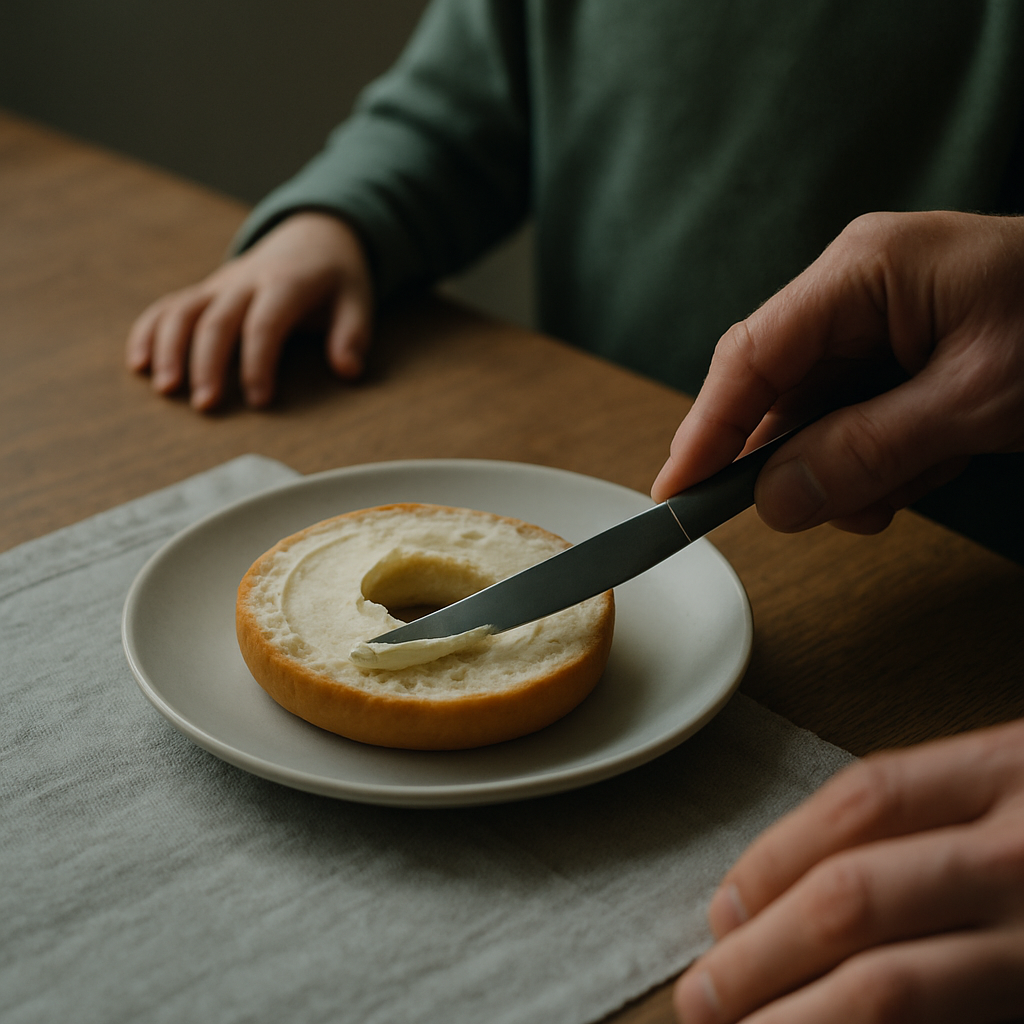
The same pattern plays out in reverse: not just what we do to others, but how they take it in and echo it. You see younger eyes taking in far more than you intended, in my case, with my son. The joke repeated, the mannerism borrowed, the odd seriousness with which a child observes how a bagel is buttered. It is flattering and unnerving in equal measure. You realise you are denting the surface whether you mean to or not.
This is why the Jobsian version rings hollow. It’s not the universe waiting to be dented. People are. And the dents that matter are not the ones scaled up for shareholders or history books, but the grooves worn into habit and recollection. They accumulate into something like folklore.
A dent, after all, is both damage and record. It tells you that contact occurred, that someone was here, that effort was made. The question is not whether we leave dents, we all do, but whether they are the sort of impressions others are glad to carry.
Perhaps that is enough. To dent memory. To be felt after the fact, in the small rituals and rhythms that survive us. Jobs aimed for galaxies. Most of us work closer to home, and the marks we make are no less real for it.
* hat tip to Leigh Thomas who always loved to expand on the etymology of words in her speeches to our agency. That is her dent on me.
** hat tip too to Darren Cornish who influenced me heavily on what customer experience really should and could be.
AI: This piece was written by me, and this time I used ChatGPT lightly as a sub-editor to smooth out some repetition and find the odd ragged grammar. The experiences, perspectives and final edits are mine. AI also produced the tag list, excerpt and, obv. the image that accompanies it.

 John Gibbard