
Tag Archives: creativity

The world doesn’t need another post on Ai and creativity, but here’s one anyway

Apropos of nothing, I keep circling back to Bjarke Ingels’ throwaway observation he shared recently on Instagram about Ai prompting feeling a bit like briefing a team. You describe an intention, something comes back, you adjust. Anyone who’s spent time in a design or strategy studio recognises that scenario instantly, the loose sketch of an idea, the return volley, the shrug, the “maybe try it with less… erm whatever that is.” It felt like it was a nice clean analogy and I was nodding along.

But a studio isn’t a stochastic mirror. It’s a small society of taste and memory. People remember your last terrible idea. Someone raises an eyebrow when a line of copy looks off or a Figma file has gone fully feral. Someone else brings up the project you swore you’d never repeat. The feedback loop is human, textured, occasionally bruising. There’s judgement, shared reference points, work blue-tac’d up on the walls and a quiet sense of “let’s not embarrass ourselves again.”

This is where Ingels’ analogy starts to wobble. When you brief a human, you’re drawing on their judgement, experience, and the unspoken etiquette of a team. When you brief Ai, it behaves nothing like a junior designer and everything like a very confident autocomplete. It gives you the shape of participation without the substance. A colleague can resist you, encourage you to slow you down, challenge the premise. A (poorly prompted) model can’t. It just accelerates whatever direction you gesture toward, even when said direction is wafer thin.

And that, dear reader, is the seduction.

You type a mood, an intention, a half-formed thought, and it hands you an almost-finished artefact that looks uncannily like something you might have made if you’d only had more time or fewer meetings. The danger isn’t metaphysical (“is it creative?” please f- off, of course it is, have you actually looked up the definition of creative?1). The danger is how easy it becomes to confuse fluency with thought.

In my view, craft survives when you know what good feels like before you’ve picked up the pen or clicked New Document. And that’s the bit people don’t want to hear. The reasoning, the taste, the internal guardrails — they’re all invisible, they take years. Instead we’ve bred a culture (particularly evident on LinkedIn) where commentary stands in for competence, and Ai’s instant coherence makes that substitution feel almost legitimate.

I’m genuinely unmoved by the theological wrangling over whether Ai creates. If it’s parrot or Picasso. It’s a probabilistic parlour trick. What matters is simpler: whether the person using it can spot when the output stops making sense and is in fact bullshitting. Shallow but shiny. A calculator is harmless until someone who never learned to add starts doing the accounts. As the kids say “Same energy”.

Used properly, Ai is a fast way to think aloud, and as a sole practitioner, it’s become one of my favourite ways to work. It’s my pressure valve. A drafting companion. It pushes out variations I’d never have the patience to make by hand. But it only works because I already have a decades long sense of structure and gut instinct, the bit that quietly mutters “nope, that’s wrong”, or more accurately “what the actual fuck?” before I can articulate why. Without that, the tool becomes the teacher, and its blind spots become your worldview. I keep thinking about graduates walking straight into roles heavily emboldened by Ai before their judgement has even started to calcify and in that sense it’s a bit like giving a BMW M3 to someone who’s just passed their test. The horsepower arrives long before the skill that stops you putting in a hedge.

This is why the creative and consultancy industries feel brittle. So many people want the polished thought without the unglamorous labour that gives it heft. They want the sketch without the sketching. The judgement without the years that make judgement possible. And Ai, obliging thing that it is, makes that performance look convincing enough to fool the untrained eye, and sometimes even the trained one.

None of this makes the technology good or bad. It just makes it pretty shouty. And once a tool starts talking back, the responsibility shifts to the person holding it. Which is really just to say: the work doesn’t get better because the software is clever. It gets better because someone in the room still knows what good feels like.

AI: This piece was assisted with Ai. I used it for the tags, excerpt, the image generation and a little sub-editing. The ideas, references, and anecdotes were, however all mine.

  1. If you want the long version of why the question “Is Ai creative?” is a trap, Lisa Talia Moretti does a tidy job of dismantling it. She walks through the mess of competing definitions, points out the extent of human labour and data sit behind every so-called “creative” output, and ends up arguing that generative Ai is better understood as a medium than a tool. ↩︎
Tagged , , , , , , , , , , , , ,

Confidence in inconsistency – human centred design should embrace thoughtful deviations from patterns and standards.

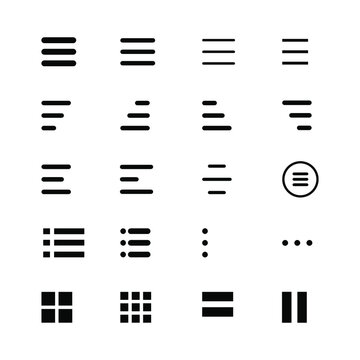
Consistently inconsistent burger menu designs. Is a burger menu the right solution in all your user’s contexts?

Consistency is a fundamental principle in design, and it is often cited as a key factor in creating a seamless and intuitive user experience – it’s easier to learn an interface that’s the same as those you’ve seen before. However, the blind pursuit of consistency can stifle innovation and lead to a lack of creativity and diversity in design solutions. In this blog post, I’ll explore why designers need to have confidence in inconsistency and break free from the overemphasis on consistency.

The way we think about consistency in design has been influenced by a moralistic, hectoring approach that emphasises consistency as a virtue, rather than a means to an end. This has led to a tendency to view inconsistency as a failure, rather than a potential innovative solution that provides a better match for user knowledge and needs. Instead of focusing solely on consistency, we should approach design critique with more consideration for the user and their unique context, asking questions that prioritise user experience and satisfaction over adherence to pre-existing patterns or rules.

The Problem with Mindless Consistency

Consistency can be a double-edged sword in design. While it can help users learn how to use interfaces easily and make products more usable, too much consistency can limit creativity and stifle innovation. In simple terms, it’s impossible to innovate and be consistent at the same time.

Overemphasis on consistency might lead to a lack of variety and visual interest in digital experiences. Users can quickly become bored or disengaged if all products and interfaces within a product suite look and feel the same. In some cases, this can lead to a decline in user engagement and adoption. In my experience working across financial services websites an obsessive desire for consistency meant that the numerous minor variations across, say, a portfolio of insurance or investment product pages meant that they all blended in to one homogenous impenetrable mess. And, when stepping back, did it even make sense that car insurance pages followed the same template as home insurance, or for that matter life insurance? Anna Arteva articulates a different scenario where the repetitive consistency of modules in their design reduced comprehension.

This is, of course seen most evidently in the band homogeneity shown with many web experiences within industry sectors like fashion, automotive, or SAAS. Leaving designs restricted by cut and paste design systems and left to play around with typefaces, colour, photography and illustrations to desperately cling to some sort of personality and identity.

Furthermore, consistency may not always be appropriate or necessary in certain contexts or for certain user groups. For example, a digital experience aimed at fashion or luxury markets with infrequent purchasing behaviour may benefit from more varied and unique designs, whereas a product aimed at more casual users or perfunctory behaviours may benefit from greater consistency to make it easier to use.

To an extent, consistency is human nature, and in many cases simply born out of a lack of time, funds and effort to do proper human centred design. As Jared Spool points out: “Why do we gravitate to consistency? Because it’s easier to think about. You don’t actually have to know anything about your users to talk about making things consistent. You only have to know about your design, which most designers are quite familiar with.”

Confidence in Inconsistency

While consistency is an important design principle, it is equally essential to know when to break free from it. Designers need to have confidence in inconsistency and recognise that sometimes, breaking from the norm can lead to better design solutions.

I particularly like the definition that consistency is “using the same solution for the same problem.” principally because it provides a strong hint about when you should not be consistent. If there’s already a good solution for a design problem, you should follow the existing pattern and be consistent. However, when you’re facing a new problem, you may well need a new solution, and you shouldn’t feel constrained to be consistent with preexisting patterns that don’t apply.

Designers need to be aware of the constraints of their design problem and recognise when consistency may not be the best approach. As in so much of human centred design, designers need to strike a balance between consistency and innovation, testing and iterating on their designs to ensure they are meeting user needs and expectations.

Analogy corner

An analogy from the world of music can help illustrate the point. While consistency is crucial in musical genres like classical music, where adherence to strict rules and conventions is essential, other genres like jazz rely heavily on improvisation and innovation. Jazz musicians break free from the constraints of a set melody and chord progression, creating new and unique music each time they play. Or perhaps we might look once again to architecture. Within a masterplan and operating within standards and building codes, too much slavish attention to the norms might lead to a monotonous townscape or cookie-cutter housing development. Architects rightly introduce variation based on the needs of the user, the vernacular but can still maintain cohesion in the design language.

To conclude, while consistency is an important principle in design, designers need to have confidence in inconsistency and recognise when breaking consistency can lead to better design solutions. Blindly following consistency can stifle creativity and limit innovation, leading to a lack of variety and visual interest in digital experiences.

From the smörgåsbord

  • Consistency can harm the user experience if used mindlessly or lazily.
  • Coherency is a more useful guide than consistency, where the latter leads to repetition and copy-paste solutions and the former is about seeking harmony.
  • Aim to balance consistency and flexibility based on a more astute understanding of your users’ mental models, visit patterns and sophistication.
  • Are you being consistent because it’s easier for you (e.g. using a burger menu in mobile and desktop) rather than thinking about the context?
  • What do you care about most, a ‘perfect’ design system or a flexibility, adaptable human-centred website? Mark Parnell is instructive here: “For designers there is often a trap we fall into as we start to create components in tools like Figma. We think our goal is to nurture a “perfect” design system. A system where every piece of typography is the same, where every component has the same states with the same colors and the same terminology.”

    Referenced above, but well worth also reading “When design consistency is harmful” and “Can consistency harm your product?

The views and opinions expressed in this article are solely those of the author, John Gibbard, in a personal capacity and do not necessarily represent those of the author’s employer or any other associated individuals or organisations. The information provided in this article is for general informational purposes only and should not be construed as professional advice.

Tagged , , , , , , , ,