In The Times yesterday, as we descend into a storm-filled few days of autumn, there was a little glimpse of Spring ’26: the line-up for the RHS Chelsea Flower Show in May. Britain’s annual proof that we can still grow things even if we can’t quite govern them. Every year the press release reads a little more like a mindfulness pamphlet, hope, resilience, healing through nature. May’s line-up is depressingly familiar: Parkinson’s, asthma, gynaecological cancer – each of course exquisitely planted, each designed to make one feel faintly guilty for not being ill yourself (or worse, triggering the health anxiety you fight almost daily).
This is far from a dig (!) at the designers. They’re extraordinary – and the reason I return year after year. Some of the most inventive visual thinkers and horticultural artisans in the country. You could hand them a brief about midlife ennui and they’d produce something quietly transcendental. But notwithstanding this world-class craft, the culture that surrounds them (the commissioners, sponsors and curators, the gushing BBC scripts for reverent narrators describing the “healing”) rather wrings the joy out of horticulture. And, I might argue, severs the connection from our own plots where we aren’t putting in corten steels laser-etched with messages from sympathy cards sent to Grandma when Grandad died.
For the last decade, Chelsea has sounded less like a flower show and more like a group therapy retreat funded by Coutts and serving South African rosé. Every garden, sine qua non, must mean something. Every sponsor must emote through the plant list and recycled-paper design statement. The law firms are at it too, Corporate Britain has discovered mortality and it must keep workshopping it.
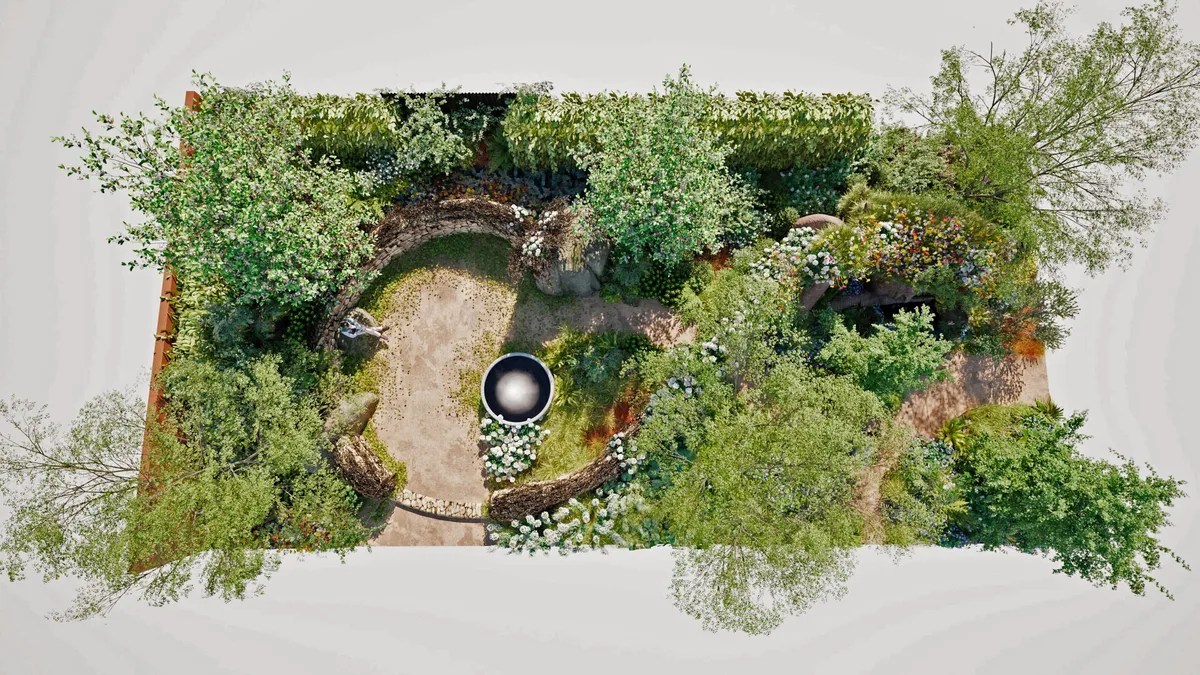
Of course, a sombre brief needn’t make a sombre garden. Most of these designers still find moments of light and sometimes even laughter amid the gravity, that’s their genius, natch. But the problem is saturation. When every garden carries a diagnosis, the cumulative effect is numbing at best and quietly oppressive at worst. You can admire the craft, the planting, the colour, and still feel the weight of mortality pressing against the rope fence. One or two gardens about illness are moving; a dozen and it starts to feel like palliative care with mottled sunlight. The tragedy therefore isn’t in the planting, it’s in the packaging. Even when a designer finds joy, the institution rushes in to label it therapy.
Ten years ago (and perhaps I misremember) you might have had one or two charity gardens, their presence was powerful precisely because of that juxtaposition. Now almost every plot is tied to a medical condition, social cause or climate anxiety. The messaging has become so homogeneous it borders on satire: “healing,” “hope,” “resilience,” the RHS bingo card of benevolence. The poignancy cancels itself out among a cacophony of good intentions, white noise amid the frothy borders and swept pavers.
Of course these causes matter; it’s simply that the monoculture of worthiness leaves little room for unfettered joy. The very people (RHS members and the paying public) say it outright in the comments: “God forbid we could just have lovely, liveable gardens.” Others confess they no longer bother going, the crowds, cost and piety becoming too much of a hurdle to clear just to enjoy the flora. It makes one wonder whether the charities have done a cost-benefit analysis on being yet another earnest voice in a field of them.
A while back I wrote about human-centred garden design, the idea that landscapes should serve the people who live in them, not the narratives imposed upon them. I still believe that. But the pendulum has swung from self-expression to self-help. Designers stopped building for themselves, only to start building for someone’s trauma instead. The irony is that true human-centred design, the kind practised by Zetterman, Pearson, Wilkinson or Nordfjell, already is healing, precisely because it doesn’t insist on it. Their shared language of calm geometry, natural materiality and measured restraint gives people space to feel, rather than instructing them what to feel, elegant evidence that joy and contemplation can coexist without a press release or a prime-time TV walkthrough to explain it. A well-made garden gives you peace without telling you you’re broken.
Every so often, something still slips through, a garden like 2025’s Monty’s Radio 2 Dog Garden plot, joyous, affectionate, full of warmth, and you remember how good Chelsea can be when it drops the self-consciousness and simply revels in life.
If I were a bank or a law firm with money to spend, I’d commission rebellion: a garden about the thrill of travel, the dynamism of the next generation, the sheer optimism of growth. Not a metaphor. Not a manifesto. Just a riot of clever planting that exists because it can.
Because all beautiful gardens are healing. They always have been. They don’t need to say they’re healing; they just are. And that’s the point the RHS seems to have forgotten – that beauty itself is the therapy. If the great British flower show can’t find joy in flowers any more, if every petal must carry a moral story, then perhaps it’s not resilience we need, but relief.
Come on, RHS. Lighten up.
 John Gibbard