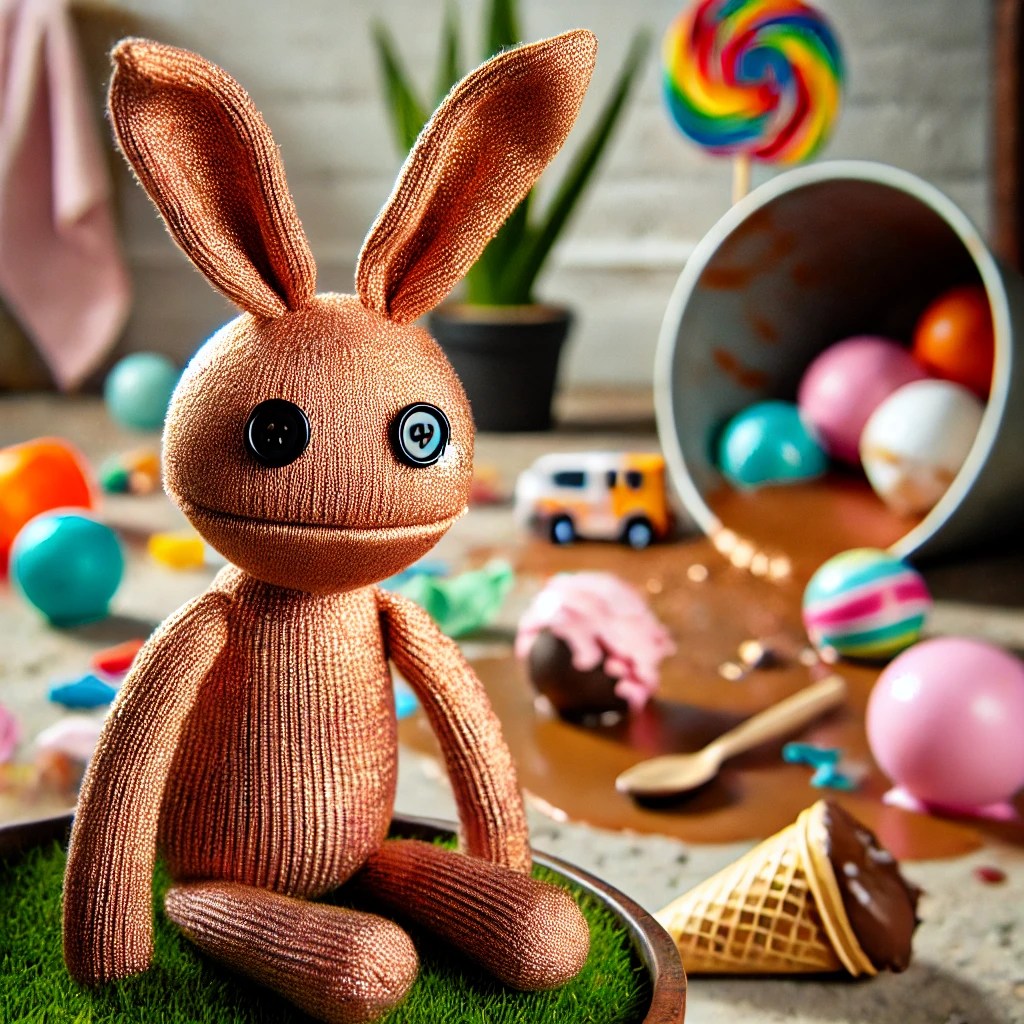
It’s 5:47 AM. You’ve been wrenched from sleep by a tiny, sticky hand slapping your face. Your crime? Not waking up before the toddler. Bleary-eyed, you stumble downstairs, pop on Bing in a desperate bid for ten minutes of peace, and – congratulations! – you’ve made a terrible mistake.
Because Bing is not a break. It’s emotional guerrilla warfare disguised as children’s television. A relentless cycle of mild disasters, narrated by pure, undiluted toddler whinge. And parents, trapped in its slow, syrupy clutches, are left questioning their life choices.
At first, Bing seems like a sweet, low-stakes show about a rabbit child navigating the small traumas of everyday life. And that’s true, if by “navigating,” we mean “flailing headlong into catastrophe over incidents as minor as a dropped ice cream.”
Developmental psychologists call this emotional mirroring: a way for toddlers to see their own feelings validated on screen. Lovely in theory. In practice, it means you, the long-suffering adult, are subjected to twenty full minutes of Bing catastrophising about a balloon. Or yoghurt. Or the unbearable injustice of having to share.
Toddlers see themselves. Parents see a replay of their actual Tuesday morning. We don’t need Bing to remind us how excruciating it is when a small, irrational dictator loses their mind over the wrong-coloured spoon. We were there. We lived it. We cleaned up the spoon-related carnage. We need a break.
Enter Flop, Patron Saint of Impossible Patience
Then there’s Flop, Bing’s eternal, unnervingly calm carer. If you’ve ever thought, I should be more like Flop, congratulations. You are now burdened with a brand-new source of parental guilt.
Because Flop never sighs. Flop never raises his voice. Flop watches Bing make the same godforsaken mistake for the seventeenth time that week and responds only with gentle understanding.
If I reacted to my child smearing peanut butter into their hair with a serene “Ah, peanut butter. It’s no big thing,” I would be swiftly clubbed to death by my fellow parents.
Flop isn’t a role model. He’s a fantasy construct of saintly patience. And he is the reason so many of us sit, seething in the glow of CBeebies, knowing in our hearts that we will never achieve his level of Zen.
Meanwhile, Bing makes a mess. Bing refuses to listen. And yet, nothing happens. No time-outs. No firm words. No hint of consequence beyond a gentle discussion of feelings.
The Cult of Gentle Parenting
This is intentional. Bing is built on a constructivist approach to learning, where children explore mistakes safely, absorbing the lesson without fear of punishment.
Lovely, right?
Sure. Except in real life, when a toddler empties an entire box of cereal onto the floor while maintaining furious eye contact, they need more than a kind discussion about oats. They need to help clean it up. They need to understand that some mistakes have consequences beyond personal emotional growth.
At the very least, they need to stop f-ing smirking.
The Bing Paradox: Well-Made, Deeply Infuriating
To be fair, Bing isn’t some half-baked accident of children’s television. It’s an Emmy-winning, heavily researched, beautifully animated show, based on books by Ted Dewan and shaped by years of child psychology expertise.
Mikael Shields, the guy who helped bring us Teletubbies and Wallace & Gromit, says Bing is meant to teach emotional resilience. And model conflict resolution. For parents.
Which is all very admirable.
But here’s the problem. We don’t particularly want a lecture in emotional resilience when we’re one rabbit crisis away from pouring a large Waitrose red.
That’s what Bluey gets right. It respects both the toddler and the exhausted adult watching alongside them. It gives us light and shade. It offers moments of humour and self-awareness, winking at the reality of parenting while still making space for childhood wonder.
Bing, on the other hand, commits so fully to the toddler experience that it leaves parents stranded, silent, passive witnesses to yet another yoghurt-related meltdown. And while that’s certainly realistic, it’s not exactly soothing.
Just The One Episode, Yeah?
So no, parents aren’t wrong to loathe Bing. It’s not just the whining, or the flailing, or the slow, excruciating dissection of minor toddler crises.
It’s that Bing asks us to relive our own parenting nightmares without offering us an ounce of relief.
Another Bing-induced crisis and I’m invoicing CBeebies for psychological distress.
AI disclosure: This post used AI to help generate the image, select blog tags, craft the excerpt, and sub-edit the text to match my tone of voice.
 John Gibbard